

Open Online Brokerage Account: Brokers for Stock Trading in 2026
07/24/2026
Choosing among today's online brokerage accounts can feel overwhelming when every platform promises zero commissions and powerful tools. This guide cuts through the noise. Whether you're comparing the online brokers for stock trading for beginners or upgrading to a more advanced platform, you'll find transparent breakdowns of fees, regulation, safety, and standout features, so you can open a good brokerage account with confidence and start investing on terms that fit your goals.
Table of Contents
Part 1: What Are Online Brokerage Accounts and How Do They Work?
Part 2: Online Brokers for Stock Trading in 2026
Part 3: How to Choose and Open a Good Brokerage Account
FAQs
The Bottom Line
Part 1: What Are Online Brokerage Accounts and How Do They Work?
An online brokerage account is the foundation of self-directed investing in the US market. Understanding how these accounts function helps you separate genuinely good brokerage accounts from platforms that simply market well. This digital investment account lets you buy and sell securities, such as stocks, ETFs, options, and mutual funds, through a licensed brokerage firm. The broker executes your trades, holds your assets, and reports activity to you and the IRS.
When you fund an account and place an order, your broker routes it to an exchange or market maker for execution. Your cash and securities are held in custody by the firm, protected under federal safeguards discussed in Part 3. This is why the most reliable online brokers for stock trading are transparent about order routing, execution quality, and where your money actually sits.
1.1 Types of Online Brokerage Accounts
Different account types serve different goals. Most online brokerage accounts fall into these categories:
Individual taxable brokerage account: Flexible, no contribution limits, taxed on gains and dividends.
Joint brokerage account: Shared ownership, common for spouses or partners.
Traditional and Roth IRAs: Tax-advantaged retirement accounts with annual contribution limits.
Margin account: Lets you borrow against holdings to trade; increases both potential returns and risk.
Cash account: Trades settle with your own funds only, no borrowing.
1.2 What Makes a Good Brokerage Account?
For a featured-snippet-ready answer: a good brokerage account combines low costs, strong regulation, an intuitive trading platform, quality research tools, and responsive customer support. When evaluating an online brokers for stock trading, weigh these core factors:
Commissions and fees on stocks, options, and other products
Account minimums required to open and maintain
Regulatory protection (SEC, FINRA, SIPC membership)
Platform usability across web and mobile
Investment selection (stocks, ETFs, options, fractional shares, crypto)
Research, education, and analytics tools
Full-Service vs. Discount Online Brokers
Feature | Full-Service Broker | Discount / Online Broker |
Advice model | Personal financial advisor | Self-directed |
Cost | Higher fees, often % of assets | Low or $0 commissions |
Best for | Hands-off, high-net-worth investors | Cost-conscious, DIY investors |
Tools | Managed portfolios | Charting, screeners, mobile apps |
Most modern online brokerage accounts fall into the discount category, giving everyday investors institutional-grade tools at a fraction of legacy costs.
Part 2: Online Brokers for Stock Trading in 2026
The following comparison highlights leading online brokers for stock trading in the US. Rankings reflect fees, platform depth, regulation, and overall value for self-directed investors seeking good brokerage accounts.
Quick Comparison: Top Online Brokerage Accounts
Broker | Stock/ETF Commission | Options (per contract) | Account Minimum | Standout Strength |
Webull | $0 | $0 | $0 | Advanced tools + AI features |
Fidelity | $0 | $0.65 | $0 | Research & retirement |
Charles Schwab | $0 | $0.65 | $0 | Full-service breadth |
E*TRADE | $0 | $0.65/$0.50 | $0 | Options platform |
Robinhood | $0 | $0 | $0 | Simplicity |
1. Webull — For Active and Data-Driven Traders
Webull stands out among online brokerage accounts by pairing commission-free trading with a professional-grade toolset that rivals platforms costing far more. It's built for investors who want depth without complexity, from first-time buyers of fractional shares to active options traders. Below is the most detailed breakdown in this guide, because Webull delivers the widest feature set for the price.
Webull is a commission-free US brokerage offering stocks, ETFs, options, fractional shares, and more through advanced desktop, web, and mobile trading platforms, with securities offered by Webull Financial LLC, member SIPC and FINRA. Webull's ecosystem spans a powerful desktop application, a full-featured web platform, and a top-rated mobile app, all synced in real time. This makes it one of the most versatile online brokers for investors who move between screens throughout the day.
1.1 Webull Key Features
$0 commissions on stocks, ETFs, and options
Advanced charting with 50+ technical indicators and drawing tools
Fractional shares so you can invest with as little as $1
Extended-hours trading, including pre-market and after-hours sessions
Options trading with strategy tools and a probability calculator
Paper trading to practice strategies risk-free
Real-time market data and customizable watchlists
IRA accounts (Traditional, Roth, and Rollover) for retirement investing
Smart tools and AI-powered analytics to help surface insights and streamline research
1.2 Webull for Beginners
New investors benefit from Webull's paper trading simulator, in-app education, and fractional shares, a combination that lets you learn the mechanics of a good brokerage account before committing significant capital. The clean interface reduces the intimidation factor common to advanced platforms.
1.3 Webull for Active and Options Traders
For experienced traders, Webull offers multi-leg options strategies, advanced order types, customizable layouts, and deep technical analysis. Extended-hours trading and real-time data make it one of the more capable online brokerage accounts for those reacting to earnings and market-moving news.
1.4 Webull for Long-Term and Retirement Investors
Webull isn't only for active traders. Its IRA lineup, fractional investing, and recurring investment options support buy-and-hold strategies, letting long-term investors build diversified portfolios within the same platform.
1.5 Webull AI and Advanced Analytics
Webull continues to expand its data-driven and AI-assisted tools, helping investors analyze securities, monitor positions, and research ideas more efficiently. These features are designed for informational and educational use and should complement, not replace, your own judgment.
1.6 Webull Regulation and Safety
Securities trading is offered to self-directed customers by Webull Financial LLC, a member of SIPC and FINRA. SIPC membership protects customers up to $500,000 (including a $250,000 limit for cash) if the brokerage fails, adding a critical layer of trust for anyone opening one of these online brokerage accounts.
2. Fidelity — For Research and Retirement
Fidelity is a well-rounded choice among online brokers for stock trading, known for deep research, strong retirement accounts, and $0 stock and ETF commissions. It suits investors who prioritize long-term planning and fund selection.
3. Charles Schwab — For Full-Service Breadth
Schwab combines discount pricing with full-service resources, extensive branch access, and a broad product lineup, making it a dependable option for investors who want everything under one roof.
4. E*TRADE — For Options Platforms
E*TRADE offers robust options tools and a polished platform, appealing to traders who focus on derivatives while still wanting reliable online brokerage accounts for stocks and ETFs.
5. Robinhood — For Simplicity
Robinhood popularized commission-free investing with a stripped-down mobile app. It's approachable for beginners, though it offers fewer research tools than more comprehensive good brokerage accounts.
Part 3: How to Choose and Open a Good Brokerage Account
Selecting from dozens of online brokerage accounts comes down to matching a platform's costs, protections, and features to your investing style. This section focuses on the trust factors that separate reputable online brokers for stock trading from the rest.
Understand Brokerage Fees Before You Commit
Even "commission-free" platforms may carry other charges. Review these before funding any account:
Trading commissions: Most top brokers charge $0 for stocks and ETFs.
Options contract fees: Often $0–$0.65 per contract.
Account transfer (ACAT) fees when moving assets out.
Margin interest if you borrow to trade.
Regulatory and exchange fees passed through on sales.
Platform Safety and Security
Beyond regulation, evaluate account-level protections that keep good brokerage accounts secure:
Two-factor authentication (2FA)
Biometric login on mobile apps
Data encryption in transit and at rest
Fraud monitoring and account alerts
Risk Disclosure
All investing carries risk. The value of securities in your online brokerage accounts can rise or fall, and you may lose some or all of your principal. Margin trading and options amplify both gains and losses. Past performance never guarantees future results, so align every decision with your risk tolerance and time horizon.
How to Open an Online Brokerage Account: Step-by-Step
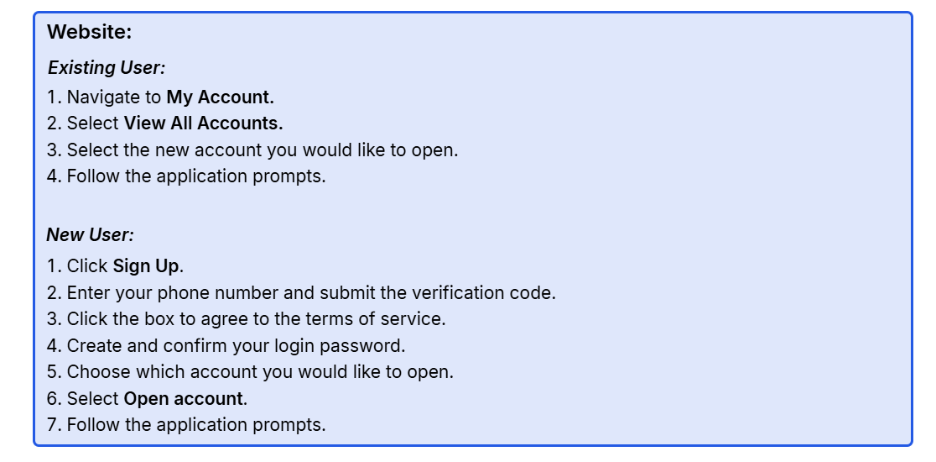
Opening one of these online brokerage accounts typically takes about 15 minutes:
Choose your broker based on fees, features, and regulation.
Select an account type (individual, joint, or IRA).
Complete the application with your personal and financial details.
Verify your identity using a government-issued ID (required by law).
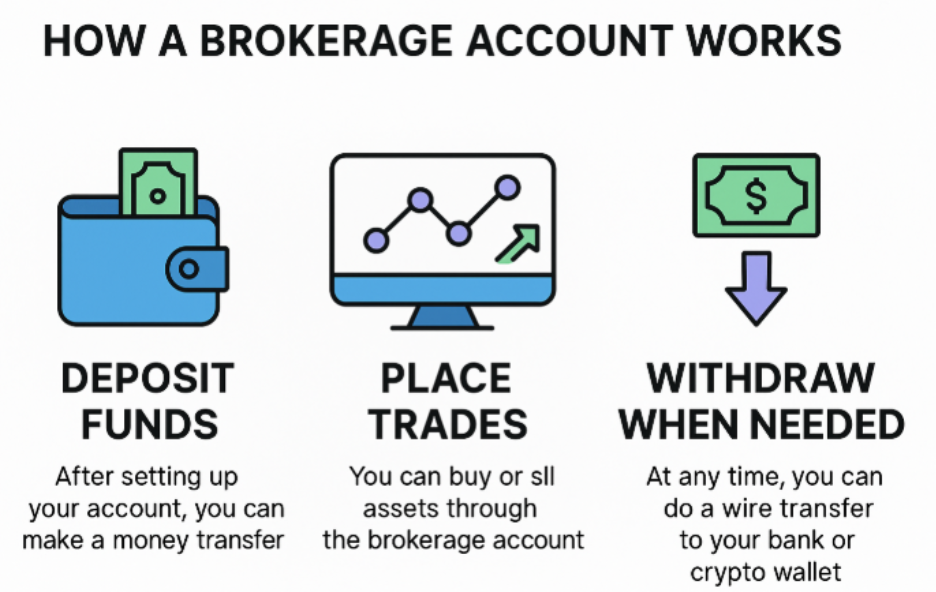
Fund your account via bank transfer, wire, or ACAT transfer.
Place your first trade once funds settle.
FAQs
1. What is a good online brokerage account for beginners?
The user-friendly online brokerage accounts for beginners combine $0 commissions, fractional shares, and educational tools. Webull is a strong choice because it pairs a comprehensive app with paper trading, letting new investors practice before risking real money.
2. Are online brokers for stock trading safe?
Yes, provided they are registered with the SEC and are members of FINRA and SIPC. SIPC protects eligible assets up to $500,000 if the brokerage fails. Always verify membership before funding an account.
3. How much money do I need to open a good brokerage account?
Many leading online brokerage accounts, including Webull, have a $0 minimum. With fractional shares, you can begin investing with as little as $1, making stock trading accessible to nearly everyone.
4. Do online brokerage accounts charge fees?
Most top brokers offer $0 commissions on stocks and ETFs. However, you may still encounter options contract fees, margin interest, account transfer fees, and small regulatory charges, so review the fee schedule first.
5. Can I have multiple online brokerage accounts?
Yes. Many investors hold multiple accounts to access different tools, diversify features, or separate trading from retirement investing. There's no legal limit on how many good brokerage accounts you can open.
6. What's the difference between a cash and margin account?
A cash account uses only your deposited funds, while a margin account lets you borrow against your holdings to trade. Margin increases buying power but also magnifies risk and adds interest costs.
The Bottom Line
The right online brokerage account matches your goals, budget, and experience. For most self-directed US investors, Webull delivers standout value, commission-free trades, advanced tools, and strong SIPC and FINRA-backed protection. Compare the options above, verify the regulatory safeguards, and open the account that fits your strategy so you can start investing with confidence.
Disclamer:
Securities trading is offered to self-directed customers by Webull Financial LLC, member SIPC, FINRA. All investments involve risk, including the possible loss of principal. You should consider your investment objectives carefully before investing. This is not a recommendation, investment advice, or a solicitation for the purchase or sale of a security. Additional info: webull.com/disclosures
Disclosure:
Webull Financial LLC, Member SIPC, FINRA. Investing involves risk. More info at webull.com/policy
Read More
Prediction Markets: How They Work and What US Investors Should Know
07/22/2026
How do prediction markets work? Learn how event contracts turn real-world outcomes into tradable probabilities and compare leading platforms for US traders.
Screener for Stocks: How Stock Screening Works in 2026
07/22/2026
What is a stock screener and how does it work? Learn how to filter stocks, choose key metrics, and compare the screening tools for US investors in 2026.
How to Practice Trading with a Free Paper Trading Stimulator
07/21/2026
Learn how to practice trading with a free paper trading simulator. Explore paper trading accounts, Webull paperTrade features, and tips to test strategies before investing real money.