
What Target Bulls Got Right
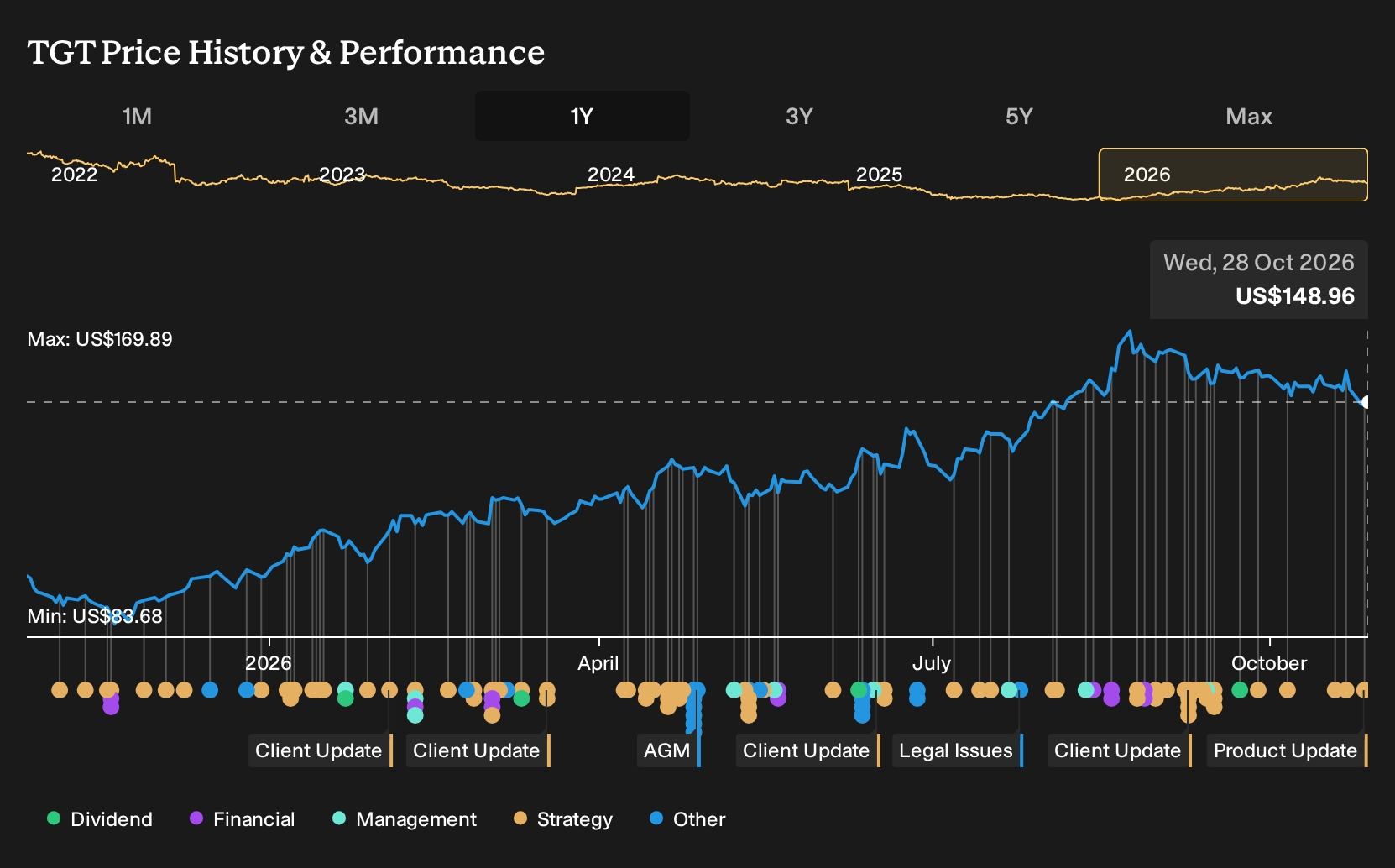
Target’s Q2 2027 report highlighted one concrete shift. Net income excluding one off items reached US$1,877m on revenue of US$26,539m, and net margin was recorded at 7.1%. Holding Target over the past year would have returned 64.7%, including dividends. If you had been deciding on 28 October 2025, what would you have needed to believe about Target’s edge against Walmart and Amazon to support that outcome?
The easy part of this move is behind Target. Zero in on 29 high quality undervalued stocks for companies trading below our estimates.
The Argument You Would Have Been Weighing On Target
The shares cost US$97.11 at the start of the period, and Target sat between two competing stories about how hard Walmart and Amazon could squeeze it.
The more constructive view pointed to a Fair Value of US$103, a notional price based on expectations that revenue would grow 1.4% a year and profit margins would settle at 3.4%, helped by technology spending, private labels, and digital platforms.
The harsher narrative anchored on a Fair Value of US$82, built on assumptions that revenue would decline 0.6% annually and margins would compress to 3.0% as e-commerce pressure and rising labor and regulatory costs bit harder into earnings.
What The Evidence Around Target Actually Tested
Target’s Q2 2027 result, with revenue at US$26,539m and net income excluding one off items at US$1,877m, pushed net margin to 7.1%. That level of profitability sat closer to the optimistic case that assumed mid single digit margins, although activist pressure and criticism of governance kept the harsher story about brand and execution risk alive. Overall the evidence cut both ways.
The lesson for readers is simple. When a thesis hinges on competitive advantage, track where margin settles, not just whether sales move. Comparing net margin against prior periods and against stated investment plans gives a cleaner read on whether an edge over rivals like Walmart and Amazon is actually showing up in the economics.
What Target’s Run Already Prices In
Target trades at US$149 after a 64.7% gain over the past year. The selected Narrative’s Fair Value sits below the current price, which frames this as a story where expectations are already demanding.
The Narrative hinges on whether merchandising changes, new value promises, and higher margin side businesses can keep traffic and profitability strong despite heavier spending.
"The numbers imply the share price already reflects robust execution on higher sales guidance, improved operating margin targets, and scaling high margin alternative revenue streams, leaving limited room for disappointment if these benefits do not fully materialize."
The price and this Narrative do not agree. → Uncover what this Narrative says Target is actually worth
Go Straight To The Source
The story behind this run has already been told. The next one could be taking shape somewhere else. Where could you start looking before it becomes the headline?
- Company 1 - 43% below our estimate - converts a record backlog of data center and modular builds into higher margin infrastructure work.
- Company 2 - 23% below our estimate - embeds AI copilots and developer tools into subscription workflows across core enterprise functions.
- Company 3 - 37% below our estimate - tackles complex AI safety, failure and regulatory challenges with specialized technical advisory services.
Three companies from the same screener. Open the full list of 24 financially solid companies →
Have feedback on this article? Concerned about the content? Get in touch with us directly. Alternatively, email editorial-team@simplywallst.com