
Eli Lilly (LLY) Keeps Obesity Ads Live As Court Rules And AI Program Launches
- Eli Lilly (NYSE: LLY) kept its obesity drug ads running after a U.S. federal court rejected Novo Nordisk's request for an injunction.
- Judges declined Novo Nordisk's bid to curb claims in Eli Lilly's GLP-1 obesity marketing as legal disputes between the rivals continue.
- Primary care platform Counsel Health launched an AI-powered weight management program that plugs into Eli Lilly's LillyDirect service for GLP-1 access.
- The court refusal to halt obesity ads and the new AI-based Counsel Health partnership only capture one slice of today's Eli Lilly story. Our analysis turns up 1 warning sign for Eli Lilly as well.
For a wider view on how AI is reshaping treatment access, screening a broader basket of healthcare and weight-loss tech names starts with 34 healthcare AI stocks.
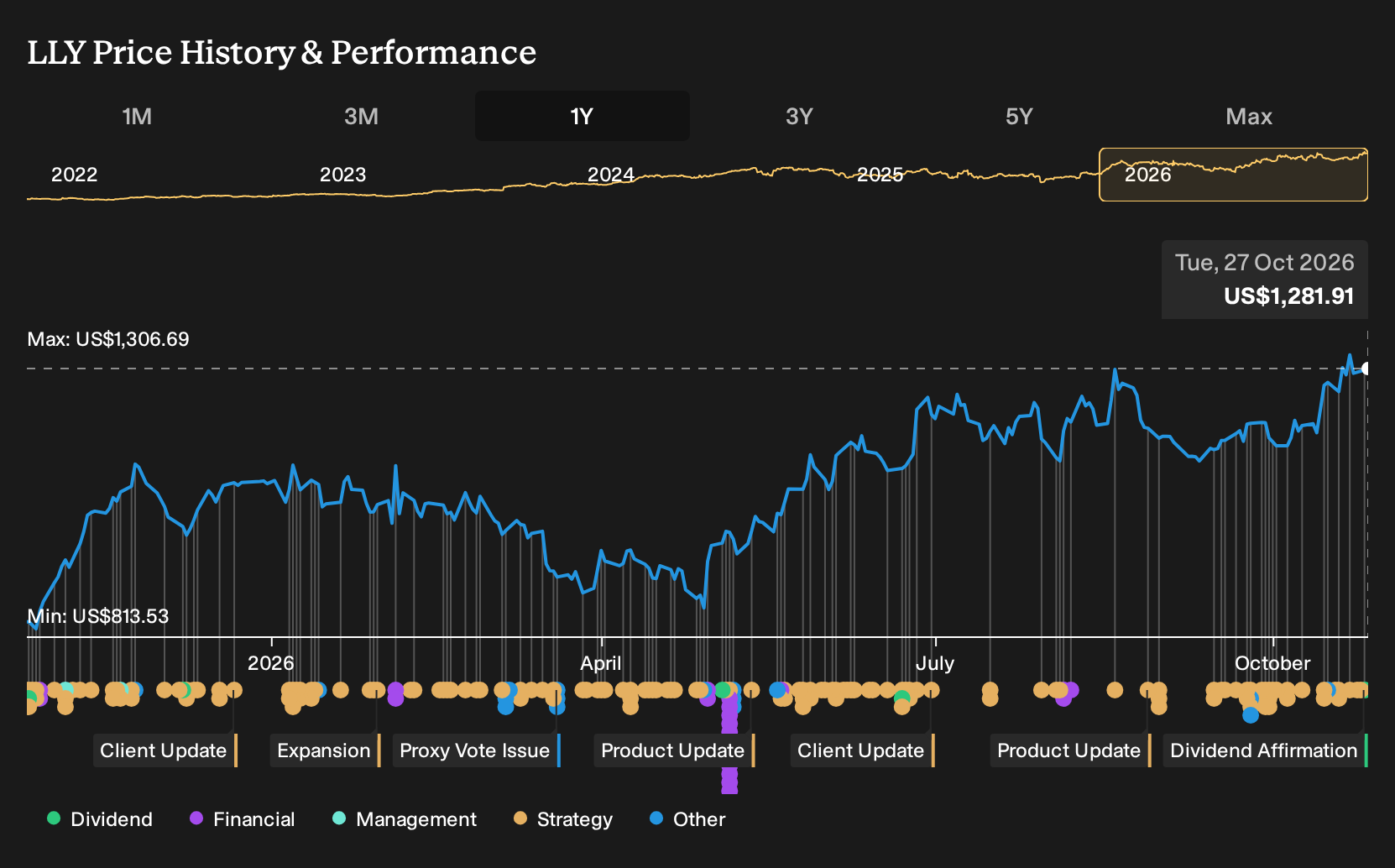
Eli Lilly, a US-based pharmaceuticals heavyweight with a market value of about $1.1 trillion, is using its global drug development and distribution footprint to push deeper into obesity care and digital health tools, such as AI-assisted weight management programs.
See how Eli Lilly's balance sheet measures up.
Obesity ad fight tests how much legal risk the Eli Lilly Narrative can absorb
The current Eli Lilly Narrative assumes the GLP-1 franchise can keep pulling more patients into treatment while pricing and legal friction stay manageable, and this ad ruling plus the Counsel Health tie-up both poke at that assumption directly.
"The main thing that has to go right is that Eli Lilly continues to turn strong demand for GLP-1 and related cardiometabolic drugs into durable access and reimbursement, including through programs such as Medicare’s GLP-1 Bridge and expanding self-pay and employer channels, while managing pricing pressure and legal risks..."
See how the full story points towards a $1,329 fair value for Eli Lilly.
The court’s refusal to halt Eli Lilly’s obesity ads removes the risk of an immediate marketing stop, so the GLP-1 thesis is not facing a near term advertising ban. It does not settle the underlying false advertising case though, so legal costs and the chance of future restrictions still sit alongside existing GLP-1 lawsuits that analysts already flag as a risk.
What looks underappreciated is how the Counsel Health AI-powered program leans into the Narrative’s access plank by tying obesity prescriptions to continuous, primary-care-style support through LillyDirect. Novo Nordisk and other peers are pushing digital tools too, but this partnership suggests Lilly is trying to defend share with service layers, not just dosing charts, which could matter if pure advertising claims come under tighter scrutiny later.
News like this only really makes sense once you have a clear view of where Eli Lilly is trying to take its GLP-1 business over the next few years, which is exactly what a well-framed Narrative sets out in advance.
Add Eli Lilly to your Watchlist and get alerts as these catalysts play out.
Have feedback on this article? Concerned about the content? Get in touch with us directly. Alternatively, email editorial-team@simplywallst.com