
UK Stock Market Today: FTSE 100 Futures Tick Higher On Sticky Shop Inflation Test
The Morning Bull - UK Market Morning Update Wednesday, 28 Oct 2026
UK stocks look set for a cautiously positive open, with sentiment dominated by fresh evidence of stubborn domestic price pressures. The acceleration in UK shop price inflation is pulling focus back to the inflation fight rather than growth hopes.
Shop price inflation picked up to 2.1% year on year in October 2026, the quickest pace since February 2024. Both food and non food categories moved higher, which points to broader cost pressures that matter for Bank of England policy debates.
Persistent retail inflation can keep borrowing costs higher for longer as policymakers try to contain second round effects. That pressures interest sensitive borrowers and squeezes consumer spending power, while also challenging profit margins for businesses that struggle to pass on every cost increase.
The unresolved question is whether this latest inflation pulse forces the Bank of England to lean more hawkish just as the CBI retail sales gauge hints at early stabilization. Upcoming UK credit and mortgage data now become a key test of how much pain households can absorb.
Stocks to Watch Before the Opening Bell
Vesuvius (VSVS)
RHI Magnesita has more time to decide on a firm offer for Vesuvius, with the deadline pushed to 24 November 2026. The parties have agreed headline terms on a disposal revenue threshold tied to possible antitrust remedies, as well as a reverse break fee. Watch how regulators react and whether the extended timetable shifts deal expectations.
RHI Magnesita (RHIM)
The possible Vesuvius bid keeps RHI Magnesita in focus. The extended deadline and agreement on disposal revenue thresholds indicate that antitrust issues are a key swing factor. A reverse break fee framework and the ongoing support from Vesuvius’ largest shareholder, Cevian Capital, give more structure to talks. Investors will look for clarity on required asset sales.
HSBC Holdings (HSBA)
HSBC is folding Hang Seng Bank’s $50b asset management arm into HSBC Asset Management, which oversees $876b. The group aims to streamline fund operations while keeping Hang Seng as a separate brand and licence. Planned role cuts in UK wealth management tied to AI driven efficiencies raise questions on cost savings and service levels in the unit.
Top Movers
- Dar Global (LSE:DAR) jumped 23.42% after Dar Global Capital Partners outlined an expanded international real estate investment focus.
- Vistry Group (LSE:VTY) gained 8.23% following news that Severn Trent CFO Helen Miles will join as Vistry's new finance chief.
- Oxford Nanopore Technologies (LSE:ONT) climbed 4.93% after securing a preliminary injunction restricting rival MGI Tech's CycloneSEQ platform across several European markets.

Top Losers
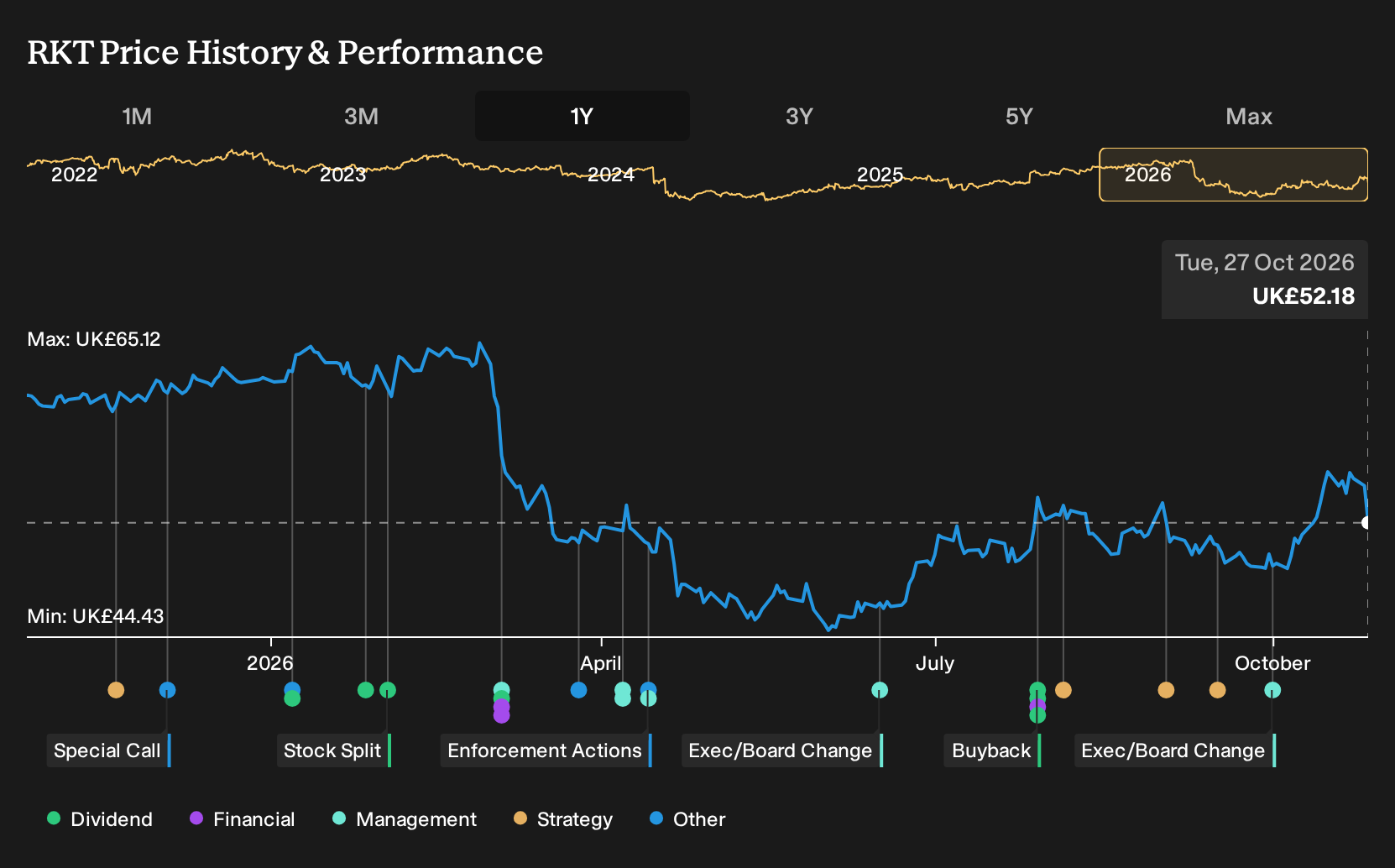
- Reckitt Benckiser Group (LSE:RKT) fell 4.85% after trimming its 2026 sales growth outlook and reporting softer Q3 revenue.
- Pearson (LSE:PSON) declined 3.43%.
- Trainline (LSE:TRN) slipped 3.42%.
On The Radar
UK banks and energy heavyweights line up Q3 earnings just as fresh UK housing and credit data meet a Fed decision that could sway global rates and commodity pricing.
- GSK, Wed 28 Oct. Q3 2026 numbers land against UK shop price inflation of 2.1% and higher food and non food costs, so any change in drug pricing power or cost lines matters for how defensives cushion consumers.
- Standard Chartered, Wed 28 Oct. Q3 2026 results arrive before the Fed decision and with global trade data mixed, so commentary around Asia focused lending and funding costs feeds into how investors view cross border UK listed banks.
- Shell, Thu 29 Oct. Q3 2026 figures will sit beside oil prices supported by Middle East conflict and US reserve drawdowns, which puts cash flow and capital allocation from Shell’s upstream and trading units under the microscope for FTSE 100 energy exposure.
- Lloyds Banking Group, Thu 29 Oct. Q3 2026 earnings drop a day before UK mortgage approvals and consumer credit for September, and any shift in net interest margins or arrears will colour how you read those £54.3K and £2.2b forecasts.
- BoE Consumer Credit, Mortgage Approvals and Mortgage Lending (UK), Thu 29 Oct. September forecasts of £2.2b credit, 54.3K approvals and £4.5b lending will show whether higher shop price inflation and borrowing costs are starting to restrain UK household borrowing more sharply.
- Fed Interest Rate Decision (US), Wed 28 Oct. A call around the current 4% policy rate will influence the US dollar and global funding costs, which in turn affects Sterling, UK bank funding and the valuation backdrop for internationally focused UK stocks.
Sector & Industry Watch
Banks: Rate worries hit UK lenders
Banks have fallen over the past week and over the month, underperforming the wider Financials sector after HSBC’s results triggered a broad pullback in UK lenders. Higher UK shop price inflation keeps talk of sticky borrowing costs alive, which matters for what you pay on mortgages and what banks can charge on loans.
The next sector specific test is Thursday’s Bank of England data on consumer credit and mortgage approvals, which will show how households are responding to this mix of higher prices and still elevated interest rates.
Oil and Gas: Strong run faces policy pushback
Oil and Gas has inched higher over seven days and kept a solid year to date gain, helped by firm crude prices linked to Middle East supply worries and tight US reserves. Local headlines are less comfortable, with Ithaca Energy openly questioning future UK investment if the Rosebank project is rejected.
For anyone holding UK energy producers, the key near term influence is tonight’s US Federal Reserve decision, because any move that shifts the US dollar or growth expectations can quickly feed into global oil prices and share prices in the sector.
Real Estate: Rate sensitive bounce meets inflation
Real Estate has risen over the past week and month, beating the slightly weaker GB Market over seven days as investors reassess how long high rates stick around. Groups such as Primary Health Properties are still selling assets into joint ventures to cut debt, which shows how funding costs remain front of mind even as sector returns improve.
The clearest near term signal is Thursday’s Bank of England mortgage approvals and mortgage lending figures, which will help you judge whether higher shop price inflation and borrowing costs are starting to bite harder into housing demand.
Pharmaceuticals & Biotech: Drug news offsets rate noise
Pharmaceuticals & Biotech has gained over the past week and month, helped by positive trial and approval updates from AstraZeneca and a supportive read across for Scancell’s cancer vaccine plans. This corner of the market often draws interest when inflation headlines worry investors, because demand for many treatments is less tied to day to day consumer confidence.
For healthcare focused portfolios, the next key moment is GSK’s Q3 results this morning, where any detail on pricing, cost pressures and research spending will influence how investors think about UK listed pharma and biotech houses.
Consumer Discretionary: Retail relief but tax clouds
Consumer Discretionary has moved higher over the last seven days and over the past month, helped by a stabilising CBI retail sales gauge and pockets of strength in areas such as homebuilding and online retail. At the same time, the Autumn Budget is expected to bring fresh tax pressure on gambling groups like Flutter Entertainment, which reminds you how exposed this sector is to policy changes.
If you have meaningful exposure to retailers, homebuilders or leisure stocks, the figure to track next is UK shop price data alongside Thursday’s consumer credit release, since both speak directly to how much room households have left to spend on non essentials.
Don't Wait For The Winners, Find Them
With UK shop price inflation at 2.1% and borrowing costs still biting, consider focusing on sturdier holdings by starting with this list of 223 resilient stocks with low risk scores
Have feedback on this article? Concerned about the content? Get in touch with us directly. Alternatively, email editorial-team@simplywallst.com