
Insiders Who Purchased CN¥23.8m Of CStone Pharmaceuticals Stock May Not Have Expected 10% Tumble
Insiders who bought CN¥23.8m worth of CStone Pharmaceuticals' (HKG:2616) stock at an average buy price of CN¥5.15 over the last year may be disappointed by the recent 10% decrease in the stock. This is not good as insiders invest based on expectations that their money will appreciate over time. However, as a result of recent losses, their original investment is now worth only CN¥21.1m.
While we would never suggest that investors should base their decisions solely on what the directors of a company have been doing, we would consider it foolish to ignore insider transactions altogether.
The Last 12 Months Of Insider Transactions At CStone Pharmaceuticals
The Non-Executive Director Zhengguo Hu made the biggest insider purchase in the last 12 months. That single transaction was for HK$5.8m worth of shares at a price of HK$5.75 each. That means that even when the share price was higher than HK$4.57 (the recent price), an insider wanted to purchase shares. Their view may have changed since then, but at least it shows they felt optimistic at the time. In our view, the price an insider pays for shares is very important. It is generally more encouraging if they paid above the current price, as it suggests they saw value, even at higher levels.
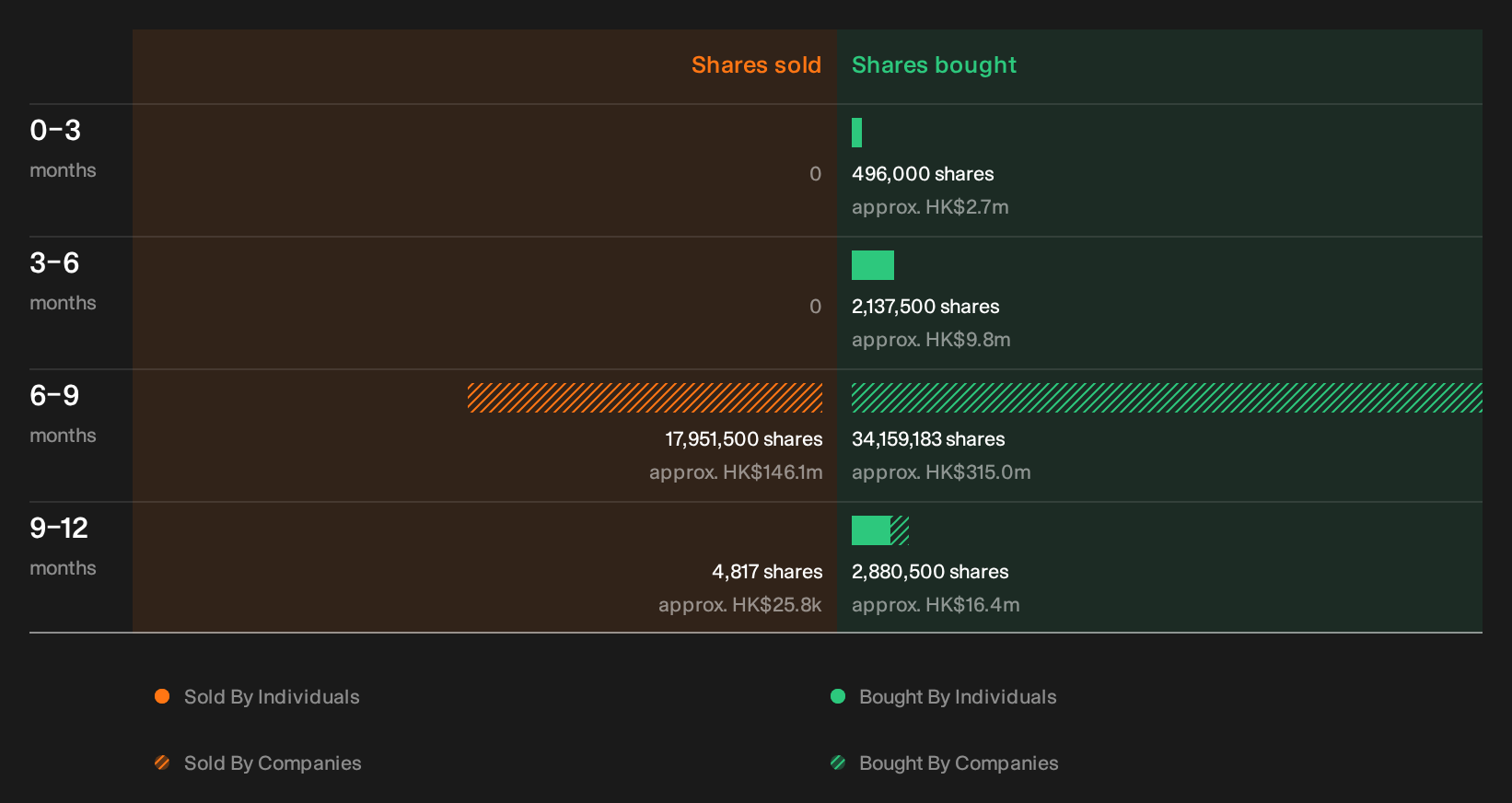
Over the last year, we can see that insiders have bought 4.61m shares worth HK$24m. On the other hand they divested 4.82k shares, for HK$26k. In total, CStone Pharmaceuticals insiders bought more than they sold over the last year. Their average price was about HK$5.15. This is nice to see since it implies that insiders might see value around current prices. The chart below shows insider transactions (by companies and individuals) over the last year. If you click on the chart, you can see all the individual transactions, including the share price, individual, and the date!
Check out our latest analysis for CStone Pharmaceuticals
CStone Pharmaceuticals is not the only stock insiders are buying. So take a peek at this free list of under-the-radar companies with insider buying.
CStone Pharmaceuticals Insiders Bought Stock Recently
It's good to see that CStone Pharmaceuticals insiders have made notable investments in the company's shares. Specifically, CEO, President of R&D and Executive Director Jianxin Yang bought HK$2.7m worth of shares in that time, and we didn't record any sales whatsoever. This makes one think the business has some good points.
Insider Ownership Of CStone Pharmaceuticals
Another way to test the alignment between the leaders of a company and other shareholders is to look at how many shares they own. I reckon it's a good sign if insiders own a significant number of shares in the company. CStone Pharmaceuticals insiders own about HK$140m worth of shares. That equates to 1.8% of the company. We've certainly seen higher levels of insider ownership elsewhere, but these holdings are enough to suggest alignment between insiders and the other shareholders.
What Might The Insider Transactions At CStone Pharmaceuticals Tell Us?
It is good to see the recent insider purchase. And an analysis of the transactions over the last year also gives us confidence. But on the other hand, the company made a loss during the last year, which makes us a little cautious. Along with the high insider ownership, this analysis suggests that insiders are quite bullish about CStone Pharmaceuticals. One for the watchlist, at least! In addition to knowing about insider transactions going on, it's beneficial to identify the risks facing CStone Pharmaceuticals. Every company has risks, and we've spotted 1 warning sign for CStone Pharmaceuticals you should know about.
But note: CStone Pharmaceuticals may not be the best stock to buy. So take a peek at this free list of interesting companies with high ROE and low debt.
For the purposes of this article, insiders are those individuals who report their transactions to the relevant regulatory body. We currently account for open market transactions and private dispositions of direct interests only, but not derivative transactions or indirect interests.
Have feedback on this article? Concerned about the content? Get in touch with us directly. Alternatively, email editorial-team (at) simplywallst.com.