
Seacoast Banking’s (NASDAQ:SBCF) Q3 2026 earnings results: revenue in line with expectations

Florida regional bank Seacoast Banking (NASDAQ:SBCF) met Wall Street’s revenue expectations in Q3 2026, with revenue up 35.6% year on year to $215 million. Its non-GAAP profit of $0.66 per share was in line with analysts’ consensus estimates.
For more on Seacoast Banking, read our free full research report.
Seacoast Banking (SBCF) Q3 2026 highlights:
- Net interest income $183.4 million vs analysts’ consensus estimates of $187 million (37.4% year-on-year growth, 2% miss)
- Net interest margin 3.8% vs analysts’ consensus estimates of 3.8% (in line)
- Revenue $215 million vs S&P analysts’ consensus estimates of $215.6 million (35.6% year-on-year growth, in line)
- Adjusted EPS $0.66 vs S&P analysts’ consensus estimates of $0.65 (in line)
- Tangible book value per share $15.96 vs analysts’ consensus estimates of $17.36 (10.5% year-on-year decline, 8.1% miss)
- Market capitalization $3.22 billion
Shaffer concluded, “As we enter our second century, I believe Seacoast has never been better positioned. We are larger, stronger, and more capable, with an exceptional team, a strong culture, and the financial strength to capitalize on the opportunities ahead. This quarter’s results reinforce our confidence in Seacoast’s ability to continue growing, improving returns, and creating enduring value for our customers, communities, and shareholders.”
Revenue growth
Two primary revenue streams drive bank earnings. While net interest income, which is earned by charging higher rates on loans than paid on deposits, forms the foundation, fee-based services across banking, credit, wealth management and trading operations provide additional income. Over the last five years, Seacoast Banking grew its revenue at a strong 19.7% compounded annual growth rate. Its growth beat the average banking company and shows its offerings resonate with customers.
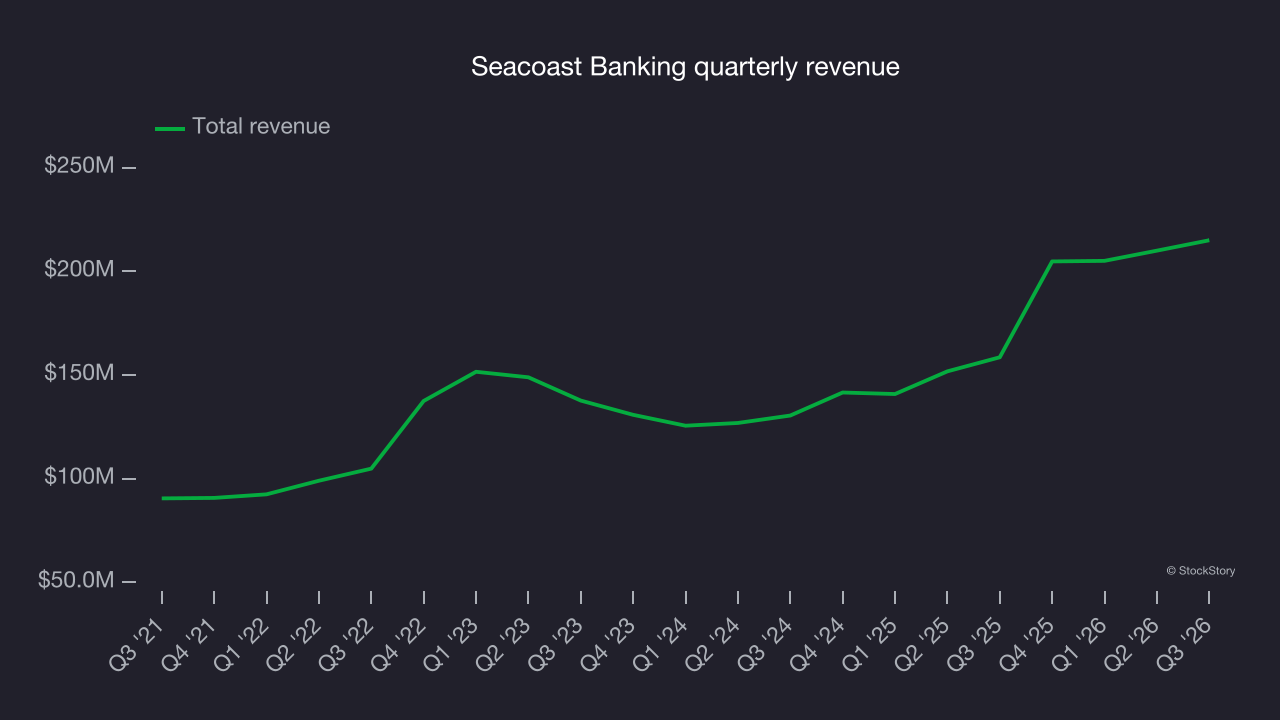
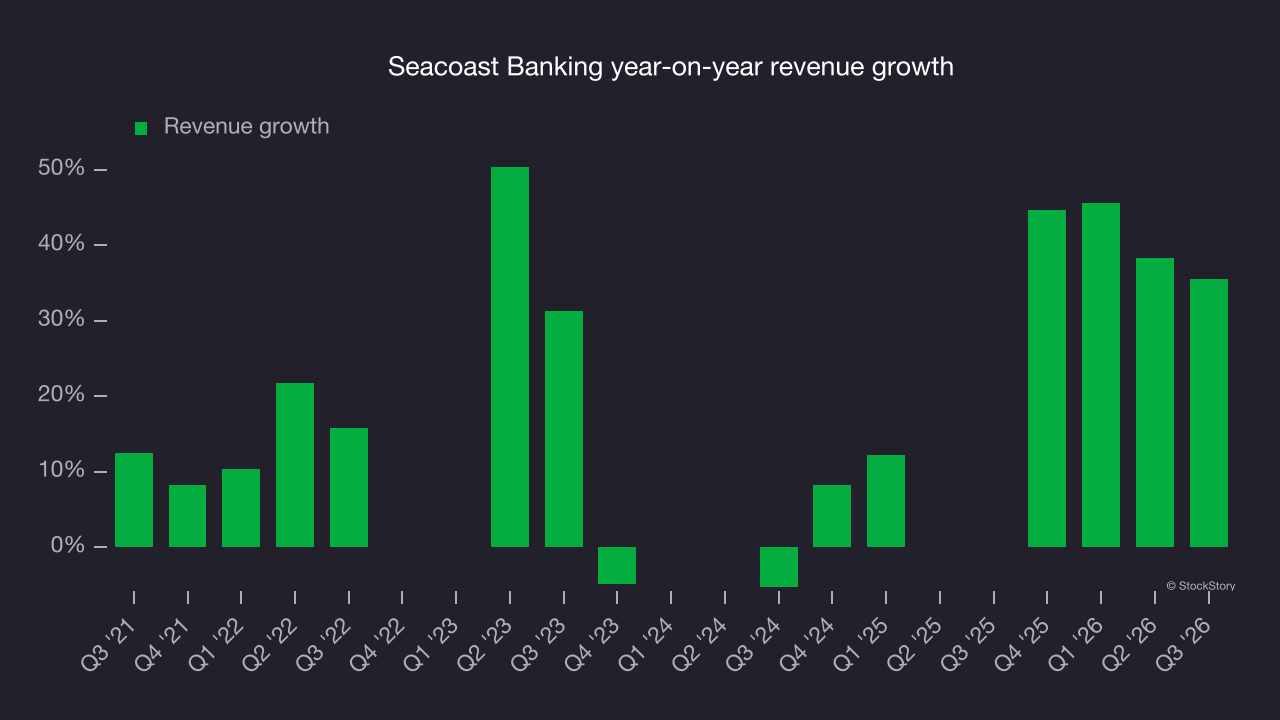
This quarter, Seacoast Banking’s year-on-year revenue growth of 35.6% was strong, and its $215 million of revenue was in line with Wall Street’s consensus estimates.
Net interest income made up 86.5% of the company’s total revenue during the last five years, meaning Seacoast Banking barely relies on non-interest income to drive its overall growth.
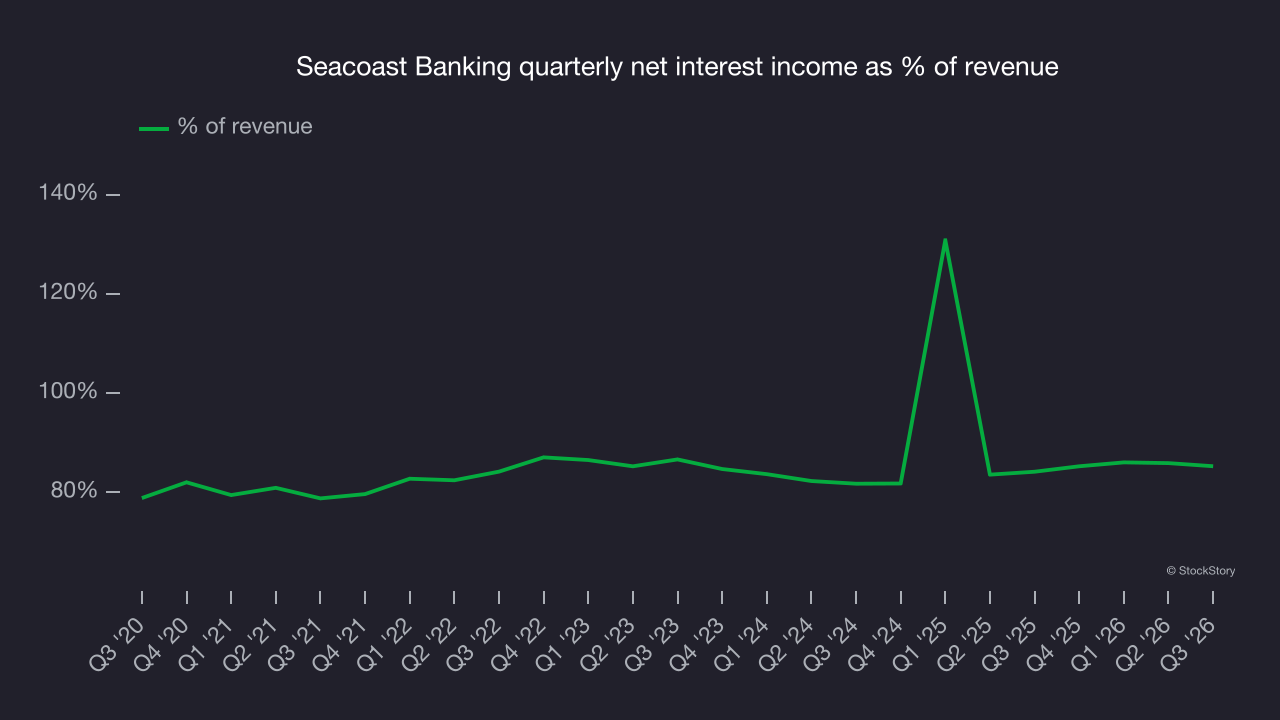
While banks generate revenue from multiple sources, investors view net interest income as the cornerstone – its predictable, recurring characteristics stand in sharp contrast to the volatility of non-interest income.
Tangible book value per share (TBVPS)
Banks operate as balance sheet businesses, with profits generated through borrowing and lending activities. Valuations reflect this reality, emphasizing balance sheet strength and long-term book value compounding ability.
When analyzing banks, tangible book value per share (TBVPS) takes precedence over many other metrics. This measure isolates genuine per-share value by removing intangible assets of debatable liquidation worth. Traditional metrics like EPS are helpful but face distortion from M&A activity and loan loss accounting rules.
Seacoast Banking’s TBVPS declined at a 2% annual rate over the last five years. The trend shows few signs of slowing as TBVPS also declined by 1.2% annually on a two-year basis, falling from $16.34 to $15.96 per share.
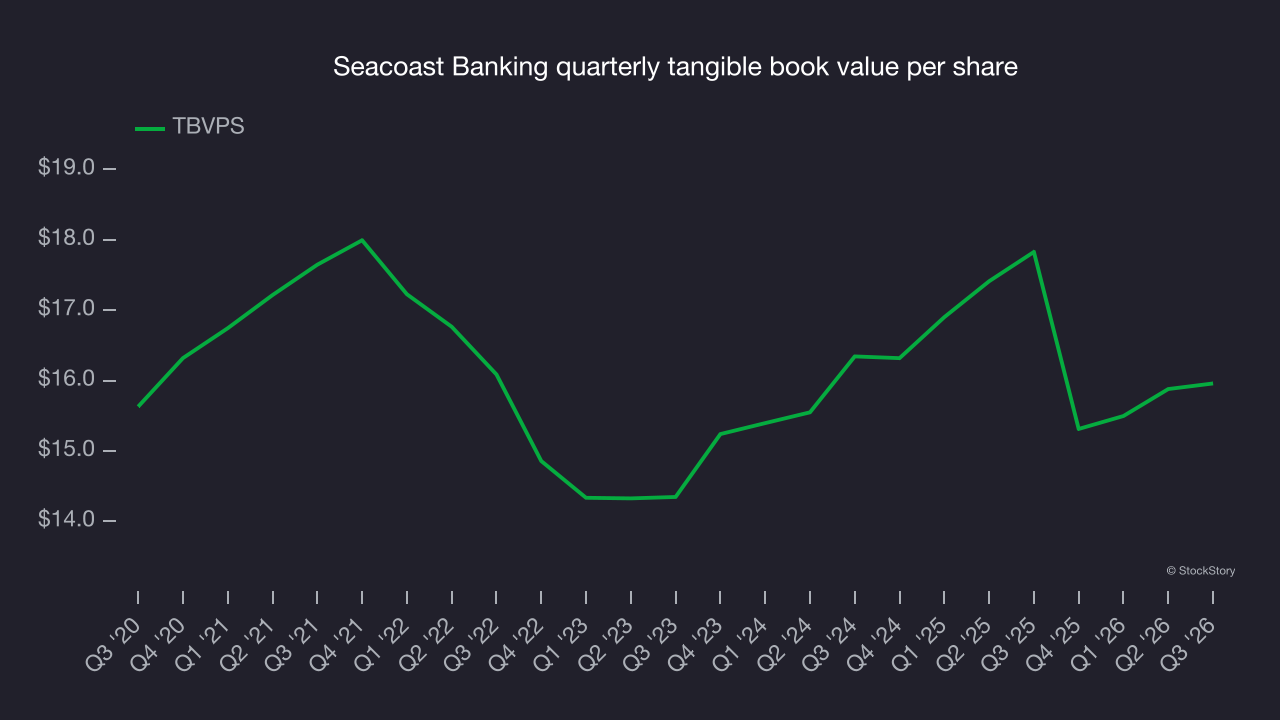
Over the next 12 months, consensus estimates call for Seacoast Banking’s TBVPS to grow by 20.7% to $19.26, a strong growth rate.
Key takeaways from Seacoast Banking’s Q3 results
Seacoast Banking delivered a softer quarter with few positives, as tangible book value per share missed expectations and net interest income fell short of Wall Street’s consensus estimates. Shares remained flat at $33.73 immediately after the release.
Considering an investment in Seacoast Banking? Look at valuation and business quality alongside the latest earnings. For more, read our full research report here (it’s free).