
Micron Just Rejected a Technology Its Biggest Rivals Are Chasing. Here’s Why.
Micron Technology (MU) is taking a different approach to the future of memory chips, and by doing so is challenging a technology pursued by some of its biggest competitors.
The Boise, Idaho-based chipmaker is passing on a memory architecture known as 4F² DRAM, which promises to squeeze more memory onto individual chips. Instead, Micron plans to continue improving its existing technology while developing three-dimensional DRAM as its next major advance.
Samsung Electronics (SMSN.L.IX), SK Hynix (SKHY), and China's ChangXin Memory Technologies are pursuing 4F² technology.
But here's the twist. Micron actually invented 4F² DRAM more than two decades ago. And after years of research, the company believes the technology isn't worth pursuing commercially.
Why Micron Is Passing on 4F² DRAM
First, let’s talk about what 4F² DRAM is. DRAM is short for dynamic random-access memory and is temporary storage space for computer processors. DRAM is important for artificial intelligence applications, as data centers must move enormous amounts of data quickly between memory and processors.
Most conventional DRAM uses a memory-cell architecture known as 6F². The proposed 4F² design reduces the theoretical footprint of the cell by one-third, potentially allowing manufacturers to pack more memory onto a silicon wafer.
During an Oct. 21 technology presentation, Micron President and Chief Technology and Products Officer Scott DeBoer said that the company has researched 4F² for roughly 20 years and developed multiple prototypes.
But manufacturing complexity and costs were obstacles to development, DeBoer said. In addition, switching from 6F² to 4F² doesn't necessarily allow manufacturers to squeeze more memory onto a wafer, he said. In fact, DeBoer was unusually direct when questioned about the technology by UBS analyst Timothy Arcuri.
“I can't comment on why other customers or other suppliers would do things,” he said. “I can only say from our investigation of this technology over the past couple of decades. First off, it's a bit of a myth that 4F² actually provides anything versus 6F². It's the capacitor pitch that defines the DRAM. You can build the cells, the transistors underlying in different ways, but they still have to fit under the capacitor pitch, which sets the DRAM. So some of that is just kind of smoke and mirrors in terms of talking about 4F² versus 6F².”
Micron Sees a Better Opportunity in 3D DRAM
Rather than pursue 4F², Micron plans to continue improving its conventional DRAM while developing three-dimensional memory technology. Traditional DRAM manufacturing largely depends on shrinking components to fit more memory cells onto a chip. Three-dimensional DRAM takes a different approach by stacking memory cells vertically.
Micron isn't making that transition immediately.
Its current 1-gamma manufacturing process is already in high-volume production, while the next-generation 1-delta process is scheduled to enter volume production in the second half of 2027.
Micron expects 1-delta to deliver a bit-density improvement in the mid-20% range. Additional conventional DRAM generations are already under development.
Meanwhile, 3D DRAM is progressing on a parallel research path.
What the Decision Means for MU Investors
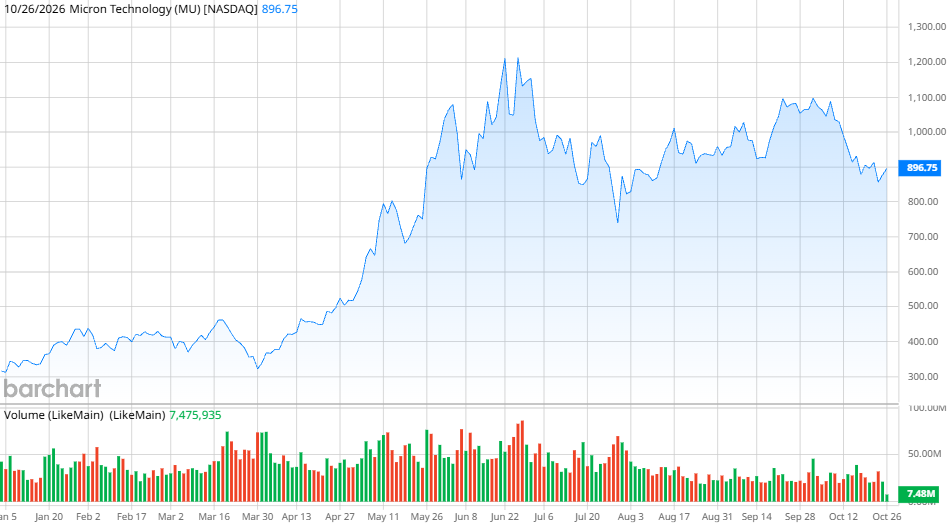
Micron has been an outstanding investment all year—the stock is up 225% in 2026, which not only beats the S&P 500’s ($SPX) 12.5% gain, but also makes it one of the best-performing stocks in the entire index.
The company ended its 2026 fiscal year on Sept. 3, generating $133.19 billion in revenue, with GAAP net income of $84.97 billion and EPS of $74.33. The company’s fourth-quarter revenue was $54.23 billion, up a remarkable 379% from the previous year. Net income was $37.70 billion, up 1,078% year-over-year (YoY).
Revenue in the company’s cloud memory business was $16.28 billion, up 258% from last year. And revenue in the company's core data center business was $18 billion, up an incredible 1,041% from the previous year.
And revenue will continue to roll in—the company’s first-quarter guidance calls for revenue between $60 billion and $63 billion; at the midpoint, that would be an increase of 352% from the first quarter of fiscal 2026.
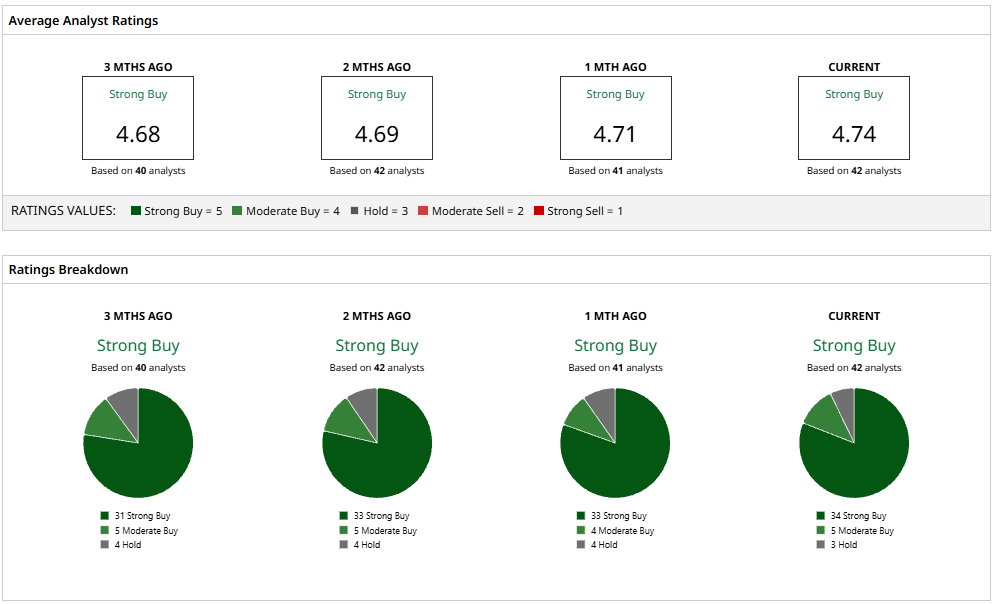
That kind of performance helps explain why analysts like Wedbush’s Matt Bryson remain so bullish on Micron and why he endorses the company’s decision to forgo 4F² DRAM. “Micron in our view has advanced its designs further than any of its peers during this timeframe with Micron going from lagging Korea/Japan badly to offering products that are arguably best-in-class for both DRAM and NAND,” Bryson wrote in a research note. The company has a price target of $1,400 on MU stock, which represents a potential upside of 56%.
Micron isn't simply betting that 3D DRAM will eventually replace conventional memory. It's betting that continuing to improve its existing architecture is a better business decision than adopting 4F² while it prepares for the next generation.
And if Micron's assessment of 4F² proves correct, passing on the technology could turn out to be one of its better calls—and a profitable choice for Micron stock.
On the date of publication, Patrick Sanders did not have (either directly or indirectly) positions in any of the securities mentioned in this article. All information and data in this article is solely for informational purposes. For more information please view the Barchart Disclosure Policy here.