
Why BJ's Wholesale Club Stock Fits The Trade Down Shift In US Retail
Workers are taking home a smaller slice of the pie while profits increasingly flow to shareholders, AI and automation keep reshaping who captures each extra dollar of output, and everyday budgets are stretched. That mix can reward businesses that help households trade down without dropping out. This article explores how that story connects to 3 US discount and value-focused stocks that are most exposed to these trends right now.
The stocks covered below are only a small sample of the opportunity, and the full screen surfaced 22 more US discount retail and value-oriented consumer staples companies with equally compelling narratives that are not included here. To identify which ones best fit your own thesis, head straight into the US Discount Retail & Value-Oriented Consumer Staples screener to filter, analyze, and focus on your highest-conviction ideas.
BJ's Wholesale Club Holdings (BJ)
BJ's Wholesale Club plays directly into the trade down theme, giving members bulk access to groceries, fuel and everyday essentials at warehouse prices. It runs a single, core Club Retail Operations segment that produced about US$22.8b of sales and a market value near US$13.4b.
Membership fee income trajectory: The May call committed to a directional expectation. MFI growth running at roughly 10% would moderate as the year progressed and the prior year fee increase normalized, with no specific exit rate named.
The real swing factor is how one unseen pressure on its value-for-money promise ultimately feeds through to renewal rates and merchandise margins.
That pressure point is exactly where the full narrative for BJ's Wholesale Club Holdings shows how pricing power, wages and member behaviour could be quietly decoupling before it shows up in the headline numbers.

Church & Dwight (CHD)
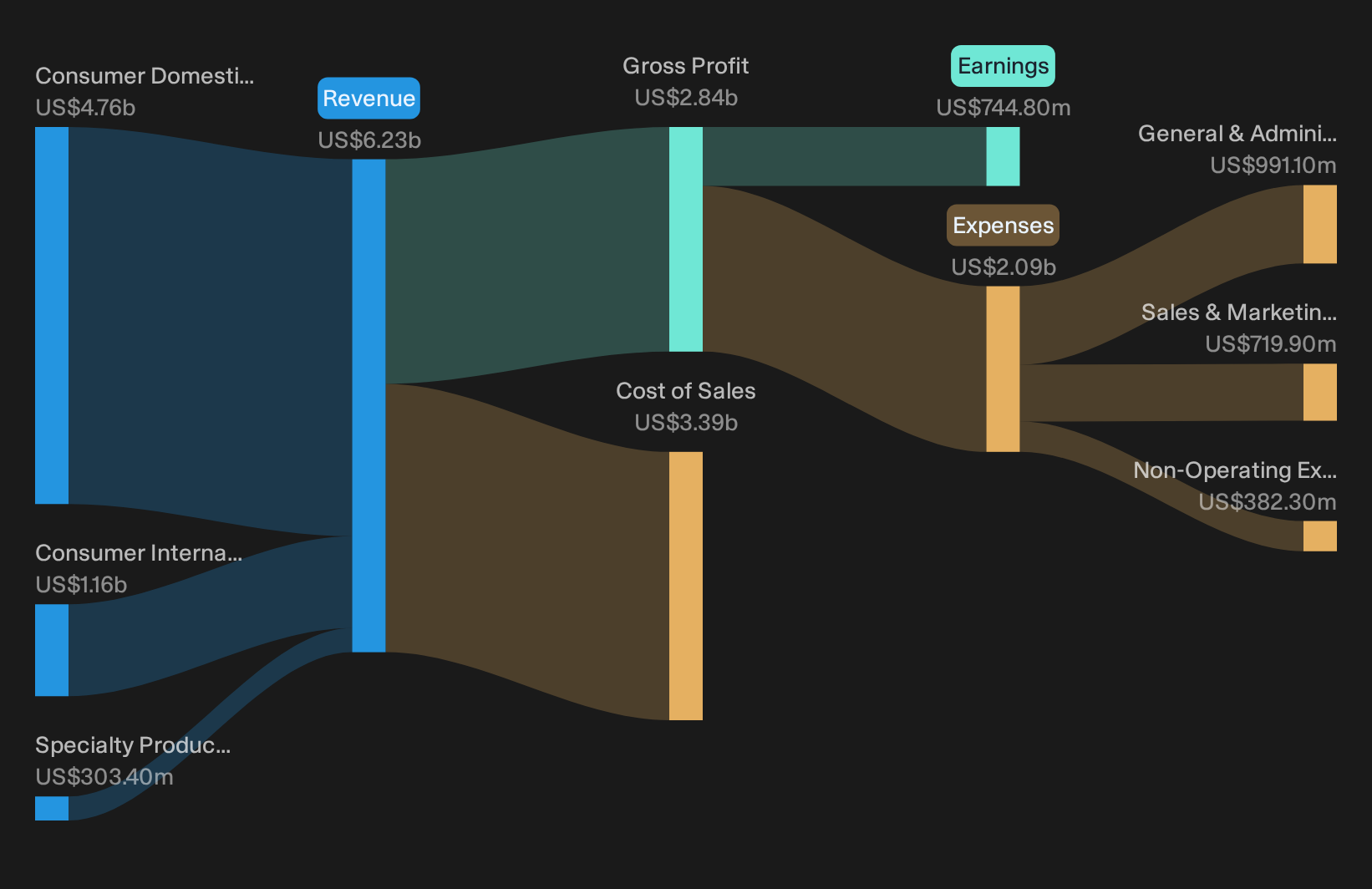
Church & Dwight leans into the trade down story through value-focused staples like Arm & Hammer, giving price sensitive households cheaper everyday options across cleaning, personal care and health products. Its Consumer Domestic arm delivers about US$4.8b of the US$6.2b business and supports a roughly US$25b market cap.
The strong trajectory of e commerce and online sales, with Church & Dwight's online channel now accounting for roughly 25% of global consumer sales, continues to support a mix shift toward higher margin, data rich distribution that can lift revenue and earnings quality over time.
What happens if one quietly building cost line stops moving in step with that higher quality online and premium wellness mix?
If that cost curve is quietly decoupling from mix, the full narrative for Church & Dwight indicates where Church & Dwight’s earnings power could be accelerating or quietly capped next.
Citi Trends (CTRN)
Citi Trends leans directly into the US discount retail and value-focused staples theme, running a single Retail Operations segment that generated about US$870 million of sales in the United States, wrapped around budget fashion and home goods, with a market value near US$369 million.
Citi Trends taps into the trade down effect by targeting lower income shoppers who still want fresh fashion, turning budget pressure into foot traffic and opening the door for a very different kind of growth story.
Expansion of neighborhood based stores in proven demographic markets, with plans to reach roughly 650 locations by 2027, is expected to build on recent double digit traffic and support revenue growth and higher EBITDA.
What hangs in the balance is how one emerging pressure on profitability shapes the gap between that store footprint and the earnings power behind it.
That hinge point is exactly where the full narrative for Citi Trends explains whether Citi Trends’ expanding footprint is accelerating hidden earnings power or masking pressure on its model.

Curious About Alternative Opportunities?
Fresh ideas move first. Markets reprice quickly when momentum builds, so under the radar stories do not stay quiet for long. Scan these focused stock lists and consider your options.
- Target dependable income streams by reviewing the 5 dividend fortresses that aim to keep cash flowing even when share prices are jumping or dropping.
- Explore early upside potential by scanning the 21 high quality undiscovered gems that remain under the radar for now but could see increased attention if market interest grows.
- Position around structural demand by checking the 42 power grid technology and infrastructure stocks as electricity networks expand and supporting businesses work to meet changing grid and infrastructure needs.
Have feedback on this article? Concerned about the content? Get in touch with us directly. Alternatively, email editorial-team@simplywallst.com