
3 European Industrial Stocks Tied To Cheaper Low Carbon Gas
Rivan Industries’ synthetic natural gas breakthrough has put a spotlight on energy intensive sectors that rely on cheap, predictable fuel. If this tech really can deliver carbon neutral gas at a fraction of current wholesale prices, the gap between high and low energy cost businesses could widen sharply. This piece breaks down how that story links to three specific stocks exposed to the Rivan news and why their positioning matters for your portfolio.
The stocks covered below are only a first pass at the idea. The full screen on Simply Wall St surfaced 12 more large European and UK industrials and data center operators with equally compelling energy exposure stories that are not in this article sample. To size up the wider opportunity set and identify which tickers best fit your own risk and return goals, go straight to the Energy-Intensive Industrials & Data Centers Benefiting from Cheaper Low-Carbon Gas screener.
Evonik Industries (XTRA:EVK)
Overview: Evonik Industries is a large German chemicals group running energy intensive plants that supply specialty and basic products to global industries.
Operations: Evonik generates about €6.0b from Advanced Technologies, €5.5b from Custom Solutions and €3.0b from Infrastructure across Europe, the Americas and Asia.
Market Cap: €9.9b
Evonik Industries sits close to the center of this screen’s story because its European chemical plants depend heavily on feedstock and gas costs. This makes any credible route to cheaper, low carbon fuel particularly important for future profitability.
"Long dated revenue ambitions tied to green hydrogen, biotech and circularity projects, including AEM membrane scale up and chemical recycling solutions, may be capitalised into current valuations ahead of proof that these programs can reach the targeted revenue contribution and associated earnings."
What happens if one unseen pressure on Evonik Industries’ cost base shifts faster than the carefully laid plans assume?
If that pressure is accelerating faster than it looks, the full narrative for Evonik Industries shows how Evonik Industries could still decouple margins from volatile energy inputs.

SSAB (OM:SSAB A)
Overview: SSAB is a Swedish steel producer that supplies high strength and fossil free steel products to industrial customers worldwide.
Operations: SSAB generates about SEK40.3b from SSAB Europe, SEK27.1b from SSAB Special Steels and SEK21.0b from SSAB Americas, with smaller contributions from Tibnor and Ruukki Construction.
Market Cap: SEK97.4b
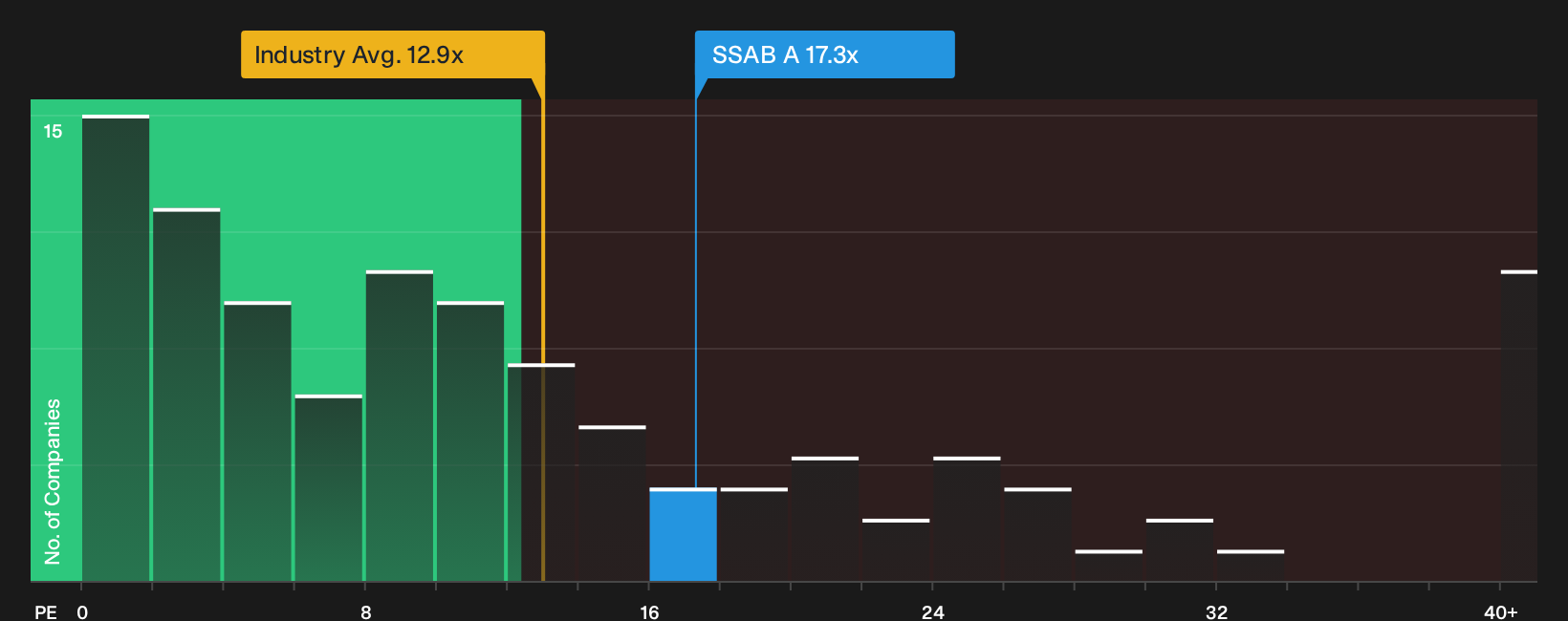
SSAB matters for this energy intensive screen because its blast furnaces and premium steel lines are highly exposed to power prices, trade rules and the cost of cutting emissions over the next decade.
"Building on the narrative below, SSAB now even stands to profit from the EU's recently announced protectionist measures against artificially cheep Chinese steel products, a long-standing demand of the industry. Should the global economy cool dramatically due to persistently high energy prices over the course of the next few months, basic resources will be among the first to take the hit."
The real tension for SSAB is what happens to long term margins if one assumption about cleaner, cheaper gas pricing proves too optimistic.
If that assumption is already fraying, the full narrative for SSAB shows how SSAB’s shift toward fossil free steel could turn today’s cost risk into accelerating pricing power.
Salzgitter (XTRA:SZG)
Overview: Salzgitter is a German steel and technology group that makes and processes steel products and machinery, all heavily exposed to energy costs.
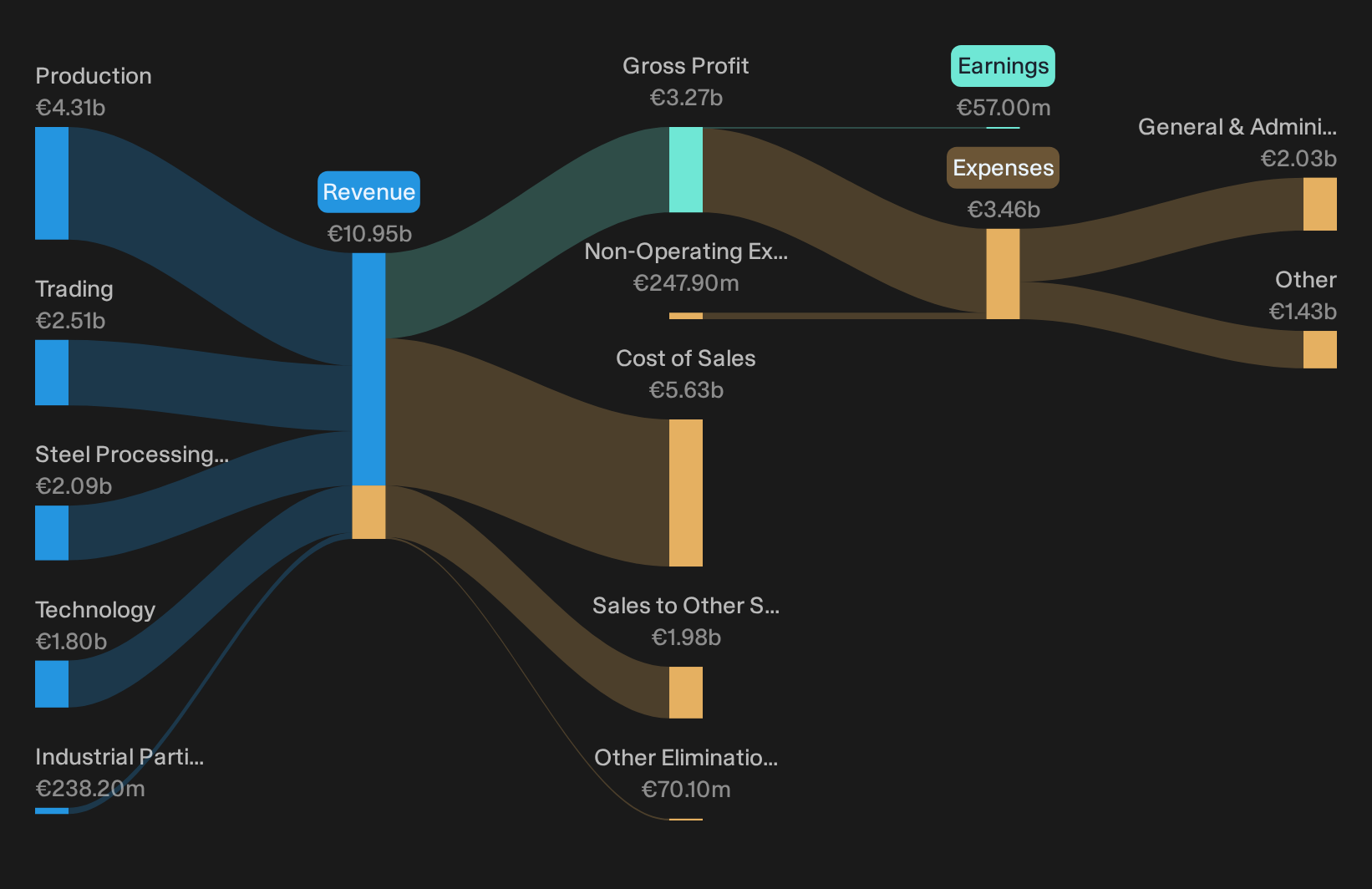
Operations: The group generates about €4.3b from Production, €2.5b from Trading, €2.1b from Steel Processing and €1.8b from Technology, before internal eliminations.
Market Cap: €2.5b
Salzgitter fits this energy intensive screen because blast furnaces, rolling mills and the planned low carbon route tie future earnings power directly to the cost of gas and electricity.
"The planned acquisition and electrification of HKM, including roughly €900m of EAF transformation capex, a downsized crude steel capacity range of 2m to 2.5m tonnes and a workforce reduction from about 3,000 to 1,000 employees, points to a structurally leaner footprint that can shift HKM from a capital drag into an additional earnings and ROCE contributor over the next cycle."
What ultimately matters for Salzgitter investors is how one shifting input cost curve reshapes the balance between capital intensity and long term margins.
To see how that cost curve could re-rate Salzgitter’s earnings power, read the full narrative for Salzgitter for the full picture on risks and upside inflection.
Seeking Alternatives Before The Crowd Moves
Fresh ideas move first. Breakout momentum is often caught early, while it matters, before stories stop flying under the radar. The clock is ticking, act now.
- Spot resilient cash generators before momentum traders notice by scanning the list of solid balance sheet and fundamentals (207 results) and filtering for businesses that pair sturdy finances with grounded fundamentals.
- Target income streams that aim to stay standing when markets wobble by tapping into a curated pool of 224 dividend fortresses built around durability first.
- Hunt for under-followed opportunities before attention floods in by reviewing a focused shortlist of 610 high quality undiscovered gems that screen strongly on quality signals.
Have feedback on this article? Concerned about the content? Get in touch with us directly. Alternatively, email editorial-team@simplywallst.com