
Japanese Cybersecurity Stocks In Focus After GMO Internet Breach
A single cyberattack on GMO Internet has just shown how quickly trust, data and share prices can be hit, and it throws a harsh spotlight on every cybersecurity linked stock in Japan. This shock creates potential openings for investors who can distinguish between companies under pressure and those positioned to address rising digital risk. This article examines three stocks affected by the news, each with potential implications for investors.
The stocks in the article below are only a first pass, and the full screen surfaced 18 more Japanese cybersecurity linked companies with equally compelling stories that are not covered here. If you want to identify potential opportunities quickly, head straight to the Cybersecurity Stocks in Japan screener to filter the universe and analyze the highest conviction plays.
Trend Micro (TSE:4704)
Overview: Trend Micro is a global cybersecurity software company that protects enterprises, governments and consumers with cloud, endpoint, network and AI driven security platforms.
Market Cap: ¥942.3 billion
Trend Micro is the pure cybersecurity heavyweight in this screen, and the GMO Internet breach throws fresh attention on how its recurring platform revenues could react if Japanese organisations accelerate security spending.
"The shift to ARR based incentives across Trend Micro, with total ARR above US$1.7b and growth improving from 3% to a range of 5 to 6% across early 2026, creates scope for a later re rating of reported net sales and earnings as this recurring base seasons and renewal cycles catch up with the ARR trajectory."
How Trend Micro’s margins and growth evolve will depend on how one unseen cost and pricing pressure plays out over the next few years.
Those pressures sit at the heart of the full narrative for Trend Micro, which explains how accelerating ARR, margin strain and security demand could still reshape Trend Micro’s long term equity story.

Digital Arts (TSE:2326)
Overview: Digital Arts develops internet security software and appliances in Japan, providing direct exposure to web filtering, email protection, and data security demand.
Operations: Digital Arts generates ¥11,276 million from its Security Business, with all reported revenue currently coming from customers in Japan.
Market Cap: ¥80.2 billion
Digital Arts provides focused exposure to Japanese cybersecurity spending, with ¥11,276 million in domestic security revenue and an emphasis on web, mail, and file protection that aligns with the concerns raised by the GMO Internet attack. The company’s margins, share buybacks, and sales trajectory depend in part on how one currently unseen pressure on profitability ultimately resolves.
Those margin questions make the next step clear: go to the 3 key rewards and 1 important warning sign to see what could be quietly shaping Digital Arts’ next chapter.

Cybertrust Japan (TSE:4498)
Overview: Cybertrust Japan runs digital certificate and authentication services that secure government and enterprise systems, alongside IoT and Linux based solutions.
Operations: Cybertrust Japan generates ¥8,589 million in revenue from its Digital Trust Business, with all of that coming from customers in Japan.
Market Cap: ¥40.6 billion
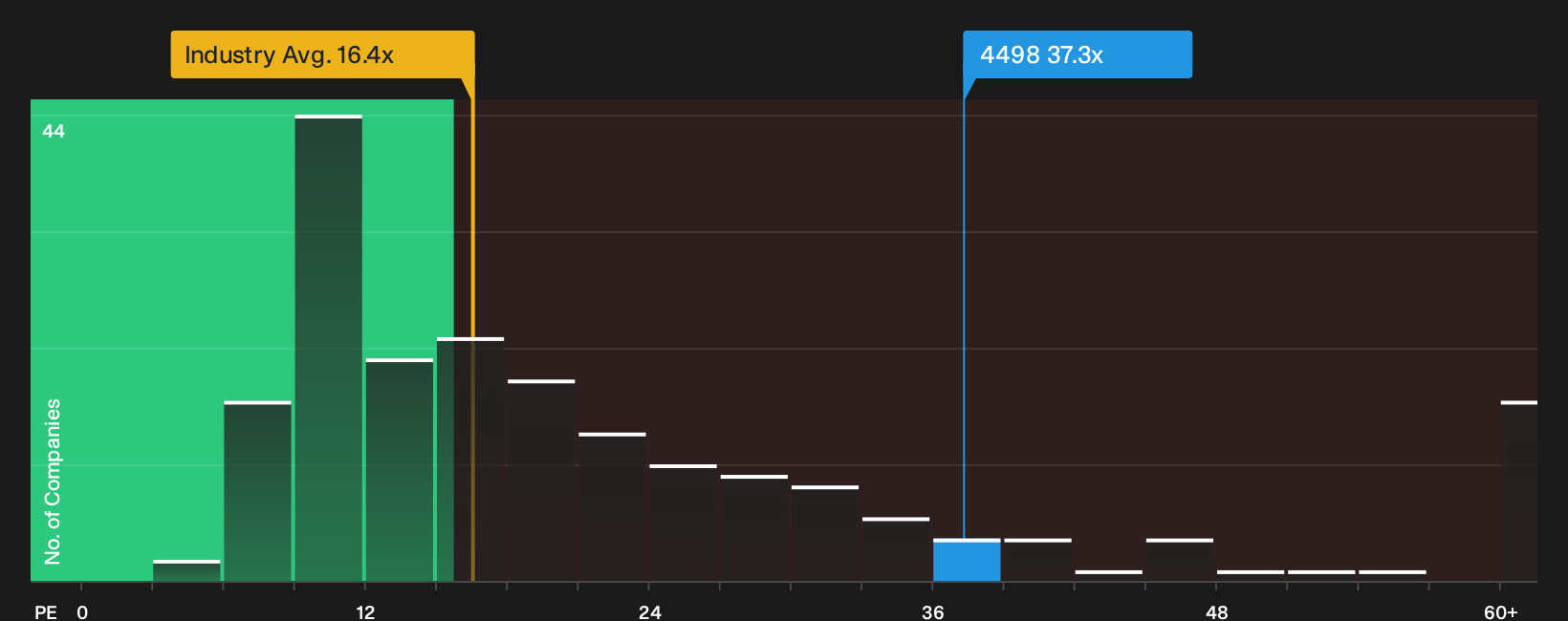
Cybertrust Japan aligns directly with the screener theme as a certification authority for Japanese government and enterprise infrastructure, reporting earnings growth above the broader IT market and net profit margins of 13.2%. The company provides focused exposure to trust services and security infrastructure, while its premium P/E of around 35.8x depends heavily on how a single key assumption plays out.
That hinge assumption is exactly what the analysis report for Cybertrust Japan is built around. As a result, you can see where Cybertrust Japan’s premium P/E could start to decouple.
Seeking Alternatives Before Momentum Flies
Fresh ideas move first, and slow research often gets caught chasing someone else’s breakout. Scan new momentum while it matters, under the radar for now, and consider acting before attention broadens.
- Target reliable cash generators before the crowd notices by scanning the curated 14 high quality undervalued stocks that still trade away from the fastest money.
- Ride the build out of next generation computing by reviewing the hand picked 25 quantum computing stocks already attracting quiet institutional attention.
- Position ahead of electrification spending by tracking the focused 42 power grid technology and infrastructure stocks that could benefit if grid upgrades stay in the headlines.
Have feedback on this article? Concerned about the content? Get in touch with us directly. Alternatively, email editorial-team@simplywallst.com