
Has Fiserv (FISV) Fallen Too Far Or Does Risk Keep It Reasonable?
Fiserv has seen its share price fall sharply over the past year, and that kind of reset naturally puts the focus on what investors are paying for its earnings today. With fresh questions raised by shareholder litigation and new product launches in areas like digital assets and cross border commerce, the market is being asked to reassess how much of the business performance is already reflected in the valuation.
- The stock has declined 60.6% over the past year, which puts a lot of weight on whether the current earnings profile can support even this lower share price.
- Allegations that past growth was flattered by hyperinflation effects and accounting around the Clover platform may influence how investors interpret the quality and durability of Fiserv's reported profits.
- Your read on Fiserv is one view; the desks covering it have another. See what analysts think Fiserv's shares could be worth.
For investors, the debate is whether Fiserv's current market value is adequately supported by the earnings it is generating today.
If you are reassessing Fiserv after this reset and want a broader set of ideas built around valuation and quality, a focused stock screen is a useful second lens. You can start with 29 high quality undervalued stocks.
Is Fiserv a Bargain on Earnings?
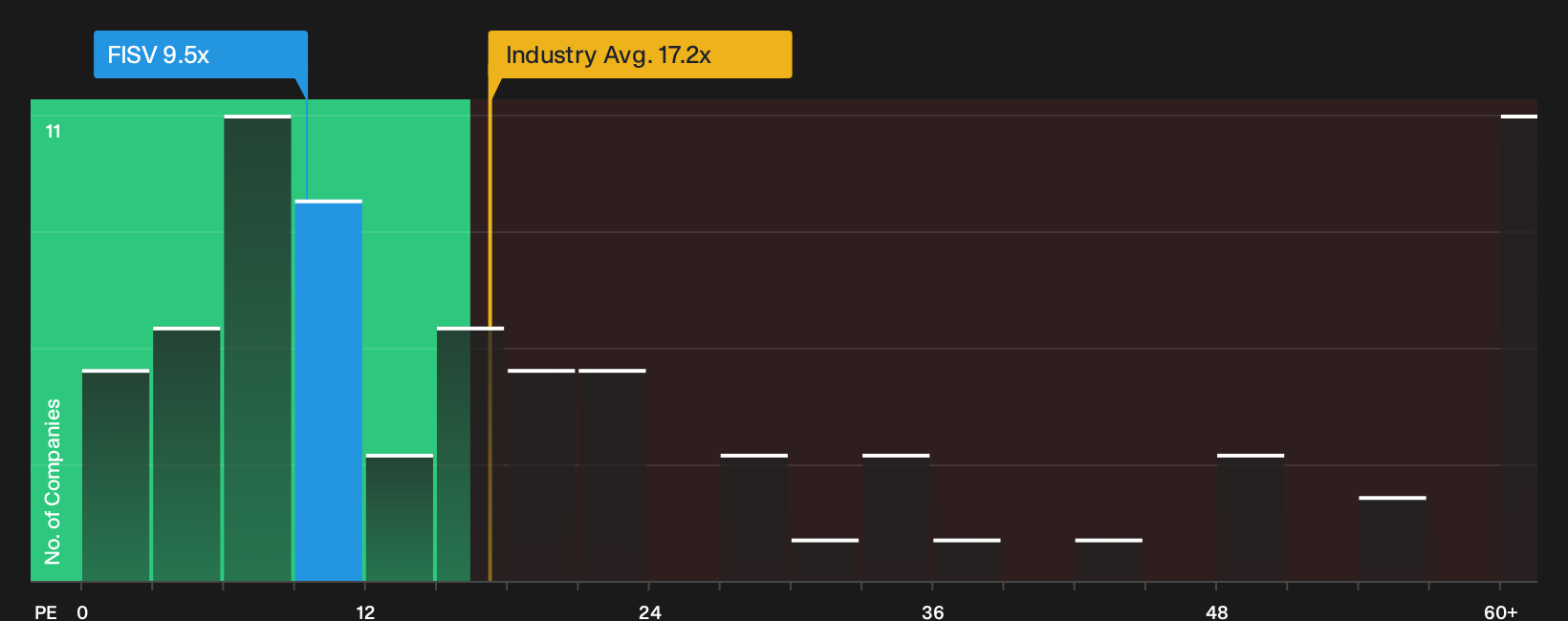
P/E is the cleanest way to look at Fiserv because earnings remain the main anchor for how investors judge payment and fintech platforms. Right now the stock trades on a P/E of 9.5x, against a Diversified Financial industry average of 17.2x and a peer group nearer 50.8x. That gap is wide, and it means the market is attaching a much lower earnings tag to Fiserv than to many comparable businesses.
The Fair Ratio model, which tries to estimate the kind of multiple that fits Fiserv's margins, growth profile, size and risk, also points to the current 9.5x being on the cheaper side rather than stretched. Because the shareholder lawsuit questions how past growth was reported, some investors may be treating that discount as a margin of safety while they reassess the quality of the earnings stream. For anyone weighing whether this gap is justified or overdone, the next step is to look at how much of those risks are already in the price and to consider how resilient future earnings could be relative to today. Explore the numbers behind Fiserv's P/E valuation.
The Fiserv Narrative: What Would Justify Today's Price?
Simply Wall St Narratives for Fiserv pick up where the valuation puzzle leaves off. They spell out which growth, margin and earnings paths would need to play out for the stock to look meaningfully cheaper or richer than it does today. Rather than leaning on a single multiple or model output, each narrative lays out the key assumptions behind its fair value so you can compare those expectations with Fiserv's actual results as they come through.
Community views on Fiserv split between a temporary reset that creates opportunity and a deeper concern that execution risk still dominates.
Bull case: 58% undervalued
"But underneath the surface, we believe the new management team is taking the right steps to transform itself into one of the highest-quality financial technology franchises in the world..."
Discover why this Narrative puts Fiserv at 58% undervalued.
Bear case: 25% overvalued
"The numbers imply the share price already bakes in successful execution on modern cores like Finxact and DNA, Clover’s software and value-added services mix, and AI monetisation, leaving limited room for error if revenue growth and margins stay under pressure..."
Explore why this Narrative puts Fiserv at 25% overvalued.
The price tag on Fiserv is only one question
Before treating Fiserv as just a cheap or expensive ticker, it helps to know that our checks have also flagged specific risk signals that deserve a closer look on their own. Take a closer look at 1 major warning sign before settling on a valuation.
Have feedback on this article? Concerned about the content? Get in touch with us directly. Alternatively, email editorial-team@simplywallst.com