
Retrograde players in the French debt sell-off wave: $370 billion pension fund increases, betting on financial risk is overestimated
The Zhitong Finance App learned that Australia's second-largest pension fund is buying French treasury bonds. The agency believes that the market has overpriced France's financial difficulties and the prospects for ECB interest rate hikes.
According to senior portfolio manager Jimmy Louca (Jimmy Louca), the Australian Retirement Trust (ART) began increasing its holdings when the yield on French 10-year treasury bonds broke 4.5% in September, and accelerated purchases during the sell-off in October — then market concerns about France's fiscal credibility and political instability pushed the yield to 5%, the highest level since 2002.
“We think the market is overpricing on both fronts — the extent of the ECB's interest rate hike and possible fiscal deterioration during this cycle,” Luca said in an interview. The company manages assets of about 370 billion Australian dollars (about 260 billion US dollars).
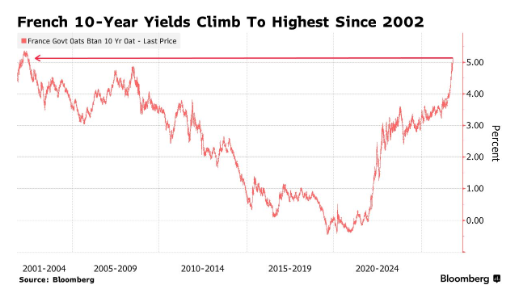
France's debt woes are a reminder of the Eurozone debt crisis. Political turmoil, compounded by street protests, has made it difficult for France to control its ever-expanding debt. In a context where most investors choose to leave the market and bet on further ECB interest rate hikes to continue to suppress demand, ART's buying behavior is particularly remarkable. This unease has spread to the euro, making it the worst performing G10 currency against the US dollar this month.
According to Luca, ART's increase in French treasury bonds is part of its dynamic asset allocation strategy: when the market price is undervalued compared to the fair value calculated by the fund, and the pricing is misplaced, it takes the opportunity to lay out the layout. As a long-term capital, the fund adheres to the idea of buying low and selling high to obtain benefits for holders.
He pointed out that France's yield rose above 5% in October, further deviating from the company's assessment of fair value and driving it to increase its exposure during the recent market misalignment.
Luca believes that this round of sell-off reflects a drastic repricing of financial risk. The difference in yield on 10-year treasury bonds between France and Germany has doubled since the beginning of September and reached about 170 basis points last week, the biggest gap since the 2011 euro debt crisis.
Investors are particularly concerned about the immediate risk that opposition to the government's €54 billion (US$61 billion) fiscal plan could hinder efforts to repair public finances. However, Luca said that in the end, both the government and the National Union will bring the deficit reduction plan into the 2027 general election.
According to information, Moody's did not downgrade France's sovereignty rating last Friday, and France did not repeat large-scale riots, vandalism and robberies over the weekend, bringing France a brief respite. On Monday, French 10-year treasury futures rose 68 points to 108.31.
Macro strategist Brendan Fagan (Brendan Fagan) commented: “This institutional view is surprisingly optimistic about France's prospects for advancing reforms, but given the rating level of similar sovereign countries, it is still unavoidable that Moody's will downgrade France's sovereign rating.”
ART also believes that the market may have overestimated the extent to which the ECB needs to raise interest rates. Higher energy prices are currently driving up inflation, but they are also squeezing revenue and growth, and the fund expects this to eventually cool inflation and lower yields.
Allegedly, France is only one of the targets for increasing holdings in this allocation strategy. Australia and the United Kingdom are also on the list. ART believes that inflation and fiscal risks in these markets are all overpriced. The fund slightly underallocated US and Japanese treasury bonds. The reason is that the strong economic and inflationary pressure of the two countries has not yet been fully reflected in treasury bond yields.
Luca mentioned Europe's journey from the last debt crisis, which shows that France should be viewed from a long-term perspective.
He added, “The road ahead may be more bumpy and take longer than short-term investors expected, but it is almost unimaginable to see that Greece and Italy have now achieved basic fiscal surpluses.”