
Is Fuel Cost Pressure Altering The Investment Case For JetBlue Stock (JBLU)?
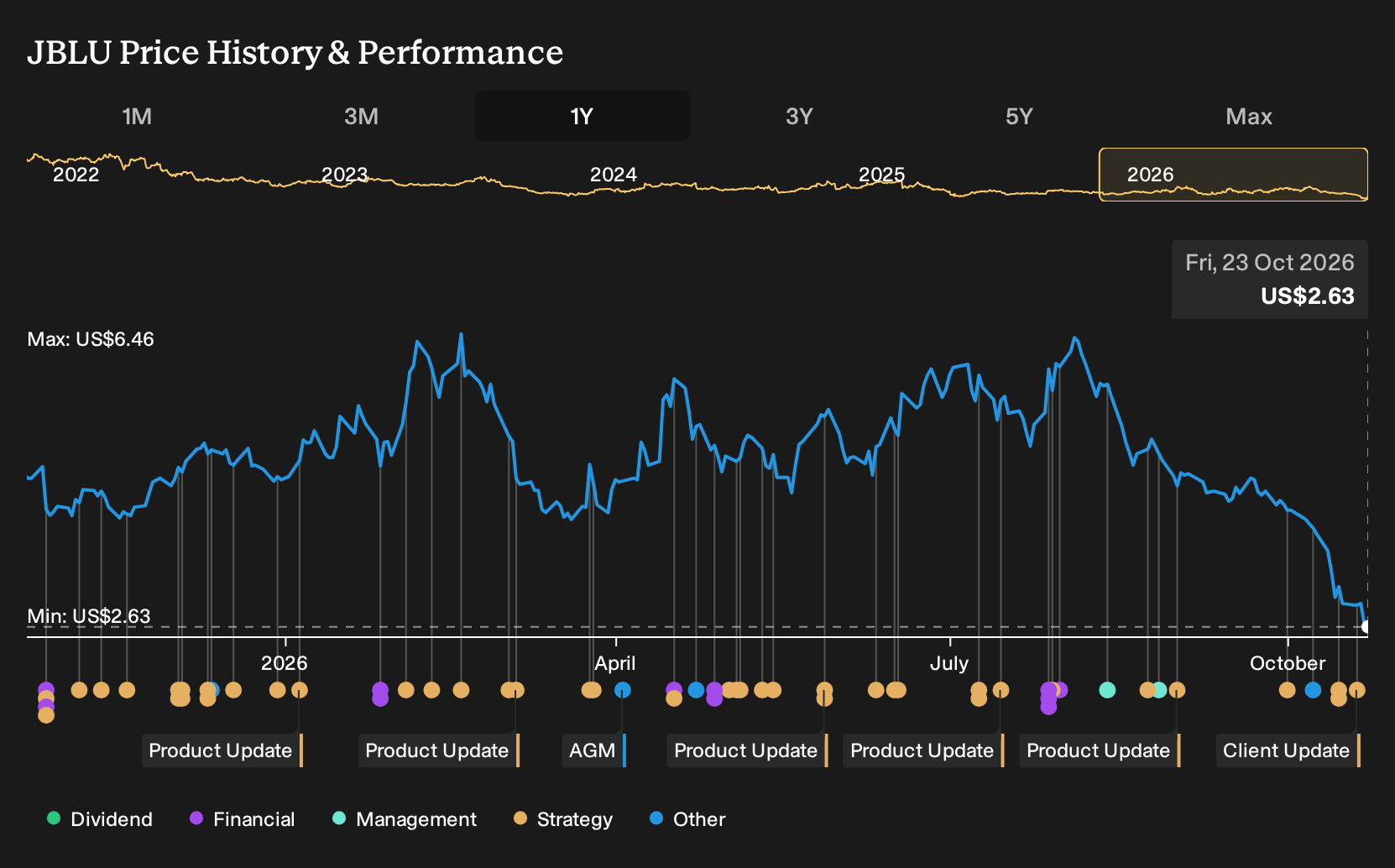
- JetBlue Airways has come under pressure after surging jet fuel prices, tied to higher oil costs and geopolitical issues between the US and Iran, led creditors to bring in advisors to review options that reportedly include a potential bankruptcy process.
- The stress test on JetBlue’s balance sheet highlights how fuel exposure and existing debt obligations can quickly constrain flexibility, even as the airline pursues new partnerships and premium products such as BlueFirst to support revenue.
- We will now look at how JetBlue’s investment narrative is affected when higher jet fuel costs intensify already meaningful balance sheet pressure.
JetBlue Airways Investment Narrative Recap
To own JetBlue Airways stock, you need to be comfortable with a simple premise. A highly stressed balance sheet and unprofitable business model can still be worth the risk if operational fixes, premium products and partnerships steadily improve cash generation. The immediate swing factor is whether higher fuel and financing costs ease before creditors push for more aggressive solutions.
The biggest operational risk right now is that surging jet fuel prices, combined with existing debt, keep squeezing margins faster than JetBlue can pull levers on pricing, capacity and costs. If demand softens or unit revenues stay under pressure, the company could find less room to invest in network, product and reliability just as it needs those levers most.
Against that backdrop, the launch of BlueFirst bookings is the announcement that matters most. JetBlue is trying to lean harder into higher yielding seats on routes where its Mint cabin is not available, while still using the same Airbus A320 family aircraft. That keeps capital needs relatively contained compared with a wholesale fleet refresh.
For you as an investor, the question is whether BlueFirst can meaningfully lift unit revenue and loyalty income fast enough to offset volatile fuel, labor and financing costs. Execution will show up in load factors in the new cabin, uptake of higher tier BlueFirst fares and Mosaic upgrade behavior. If those metrics trend well, BlueFirst could become a key catalyst for JetBlue’s effort to move closer to sustainable profitability despite current balance sheet strain.
What The Current Forecasts Assume For JetBlue Airways
JetBlue Airways' stock story on paper rests on some punchy numbers. Analysts are building in 10.1% yearly revenue growth and a swing in profitability that takes the airline from a loss of US$886.0 million today to forecast earnings of US$708.7 million by 2029. That would be an earnings change of about US$1.59 billion. On those projections, the same models point to 2029 revenue of US$12.7b.
Uncover why JetBlue Airways' fair value indicates a 75% potential upside to its current price that could narrow quickly.
Exploring Other Perspectives
For JetBlue, the alternate, more upbeat story hinges on premium and loyalty growth. Bullish analysts were penciling in 12.0% yearly revenue growth and earnings of about US$350.2 million by 2029 before this fuel shock. You can see how a fresh Bilt and TrueBlue partnership could push that optimistic view even further, or force a rethink.
Explore 2 other JetBlue Airways fair value estimates, including one that suggests potential upside of as much as 2142% from the current price.
Decide For Yourself
Disagree with existing narratives? Extraordinary investment returns rarely come from following the herd, so consider conducting your own research.
- A great starting point for your JetBlue Airways research is our analysis highlighting 2 key rewards and 1 important warning sign that could impact your investment decision.
- See our latest analysis for JetBlue Airways. The report includes a comprehensive fundamental analysis summarized in a single visual, the Snowflake, making it easy to evaluate JetBlue Airways' overall financial health at a glance.
Looking for more investment ideas beyond JetBlue Airways?
If JetBlue Airways is on your radar because of its balance sheet pressure and fuel exposure, it can help to set it against other companies that score better on financial resilience or income potential. The Simply Wall St Screener lets you quickly filter for different types of opportunities and compare risk profiles before you commit fresh capital.
- If capital preservation matters most to you right now, scan through a curated group of resilient stocks with lower overall risk scores by using the 30 resilient stocks with low risk scores.
- If value is your priority, focus on companies that combine solid fundamentals with what may be appealing prices by checking the 29 high quality undervalued stocks.
- If you are building an income-focused portfolio, filter for businesses offering higher yields and robust cash flows through the 5 dividend fortresses.
Have feedback on this article? Concerned about the content? Get in touch with us directly. Alternatively, email editorial-team@simplywallst.com