
Does FDA Drug Testing Partnership Change The Bull Case For Charles River Labs Stock?
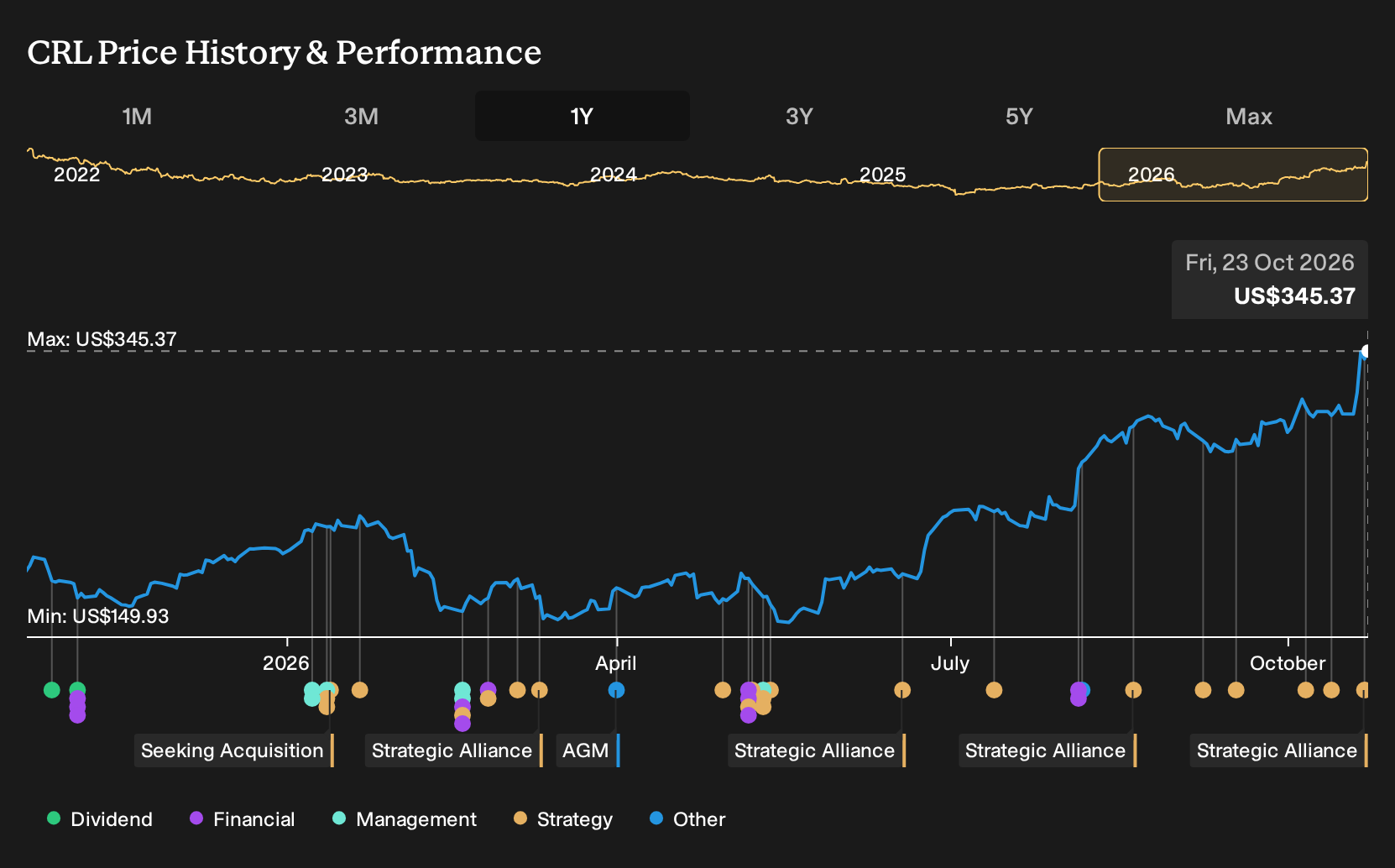
- Labcorp recently announced a collaboration with the FDA and Charles River Laboratories to develop harmonized behavioral economics tools that quantify a medicine's abuse potential, while Magellan Stem Cells disclosed a separate partnership that taps Charles River's biologics quality control and cGMP viral testing for its stem cell therapy pipeline.
- By tying its drug safety analytics to FDA research and embedding its quality systems into Magellan’s regenerative medicine program, Charles River Laboratories increases its role in data heavy, later stage testing that can bring more recurring, service based work onto its existing platform.
- We will now examine how these FDA linked abuse potential tools could influence Charles River Laboratories' broader investment narrative.
Charles River Laboratories International Investment Narrative Recap
To own Charles River Laboratories International, you need to believe its mix shift into higher value, later stage services can matter more than sluggish research model demand and high debt. The recent FDA and Labcorp abuse potential collaboration fits that thesis. It keeps Charles River close to regulators and complex preclinical work, which supports the push toward more data heavy Discovery and Safety Assessment projects.
The key near term swing factor still looks like biopharma and biotech project flow into that Discovery and Safety Assessment segment, not any single partnership. The bigger risk remains structural. If clients accelerate adoption of non animal testing faster than Charles River can scale New Approach Methodologies and digital tools, that could pressure volumes and margins.
The Magellan Stem Cells collaboration is the clearest operational read through for catalysts. It plugs Charles River Laboratories International directly into a cell therapy moving from Phase I/II into a pivotal Phase III program, backed by a GMP certified manufacturing site. That lines up with management’s goal to lean harder into cell and gene therapy support and post IND style testing.
cGMP viral safety testing, NGS based assays and broader quality control on Magellan’s pipeline sit exactly where Charles River wants more recurring, higher margin work. The partnership also leans into the Alternative Methods Advancement Project and New Approach Methodologies, which speaks to one of the bigger long term risks. If the firm can scale these non animal tools across clients beyond Magellan, it could soften the impact of any faster regulatory or customer shift away from traditional animal models.
What The Current Charles River Laboratories International Forecasts Assume
Charles River Laboratories International's narrative projects US$4.4b revenue and US$547.5m earnings by 2029. This builds in 3.1% yearly revenue growth and a move from an earnings loss of US$238.5m today to a profit of US$547.5m, which is an earnings swing of about US$786m.
Explore how Charles River Laboratories International's fair value indicates a 9% potential downside to its current price, suggesting that the existing premium may not be sustainable.
Exploring Other Perspectives
One alternate view focuses less on headline partnerships and more on execution risk. The most bearish analysts expected Charles River Laboratories International to reach only US$4.2b of revenue and US$470.1m of earnings by 2029, compared with consensus at US$4.4b and US$547.5m. That cohort saw limited upside and more scope for disappointment. New FDA linked tools and cell therapy work could shift those narratives. You can treat this spread in views as an invitation to explore several scenarios before deciding how Charles River fits your own portfolio goals.
Explore 3 other Charles River Laboratories International fair value estimates, including one that suggests as much as 14% downside from the current price.
The Verdict Is Yours
Disagree with existing narratives? Extraordinary investment returns rarely come from following the herd, so trust your own analysis and judgment.
- A great starting point for your Charles River Laboratories International research is our analysis highlighting 1 key reward and 2 important warning signs that could impact your investment decision.
- See our latest analysis for Charles River Laboratories International. The report includes a comprehensive fundamental analysis summarized in a single visual, the Snowflake, making it easy to evaluate Charles River Laboratories International's overall financial health at a glance.
Looking For More Ideas Beyond Charles River Laboratories International?
If the Charles River Laboratories International story has sparked a few questions about where else to look in outsourced research and healthcare services, a broader watchlist can help you compare different risk and reward profiles quickly.
- For investors who want potential mispricings with support from fundamentals, scan through 27 high quality undervalued stocks that pass Simply Wall St's quality and value filters.
- If resilience and balance sheet strength matter most to you, focus on companies in the list of solid balance sheet and fundamentals (25 results) and see which ones match your risk tolerance.
- For those who prefer income alongside potential capital gains, review the 5 dividend fortresses and find yield focused opportunities that fit your own return goals.
Have feedback on this article? Concerned about the content? Get in touch with us directly. Alternatively, email editorial-team@simplywallst.com