
What Early Harbour Energy Buyers Saw
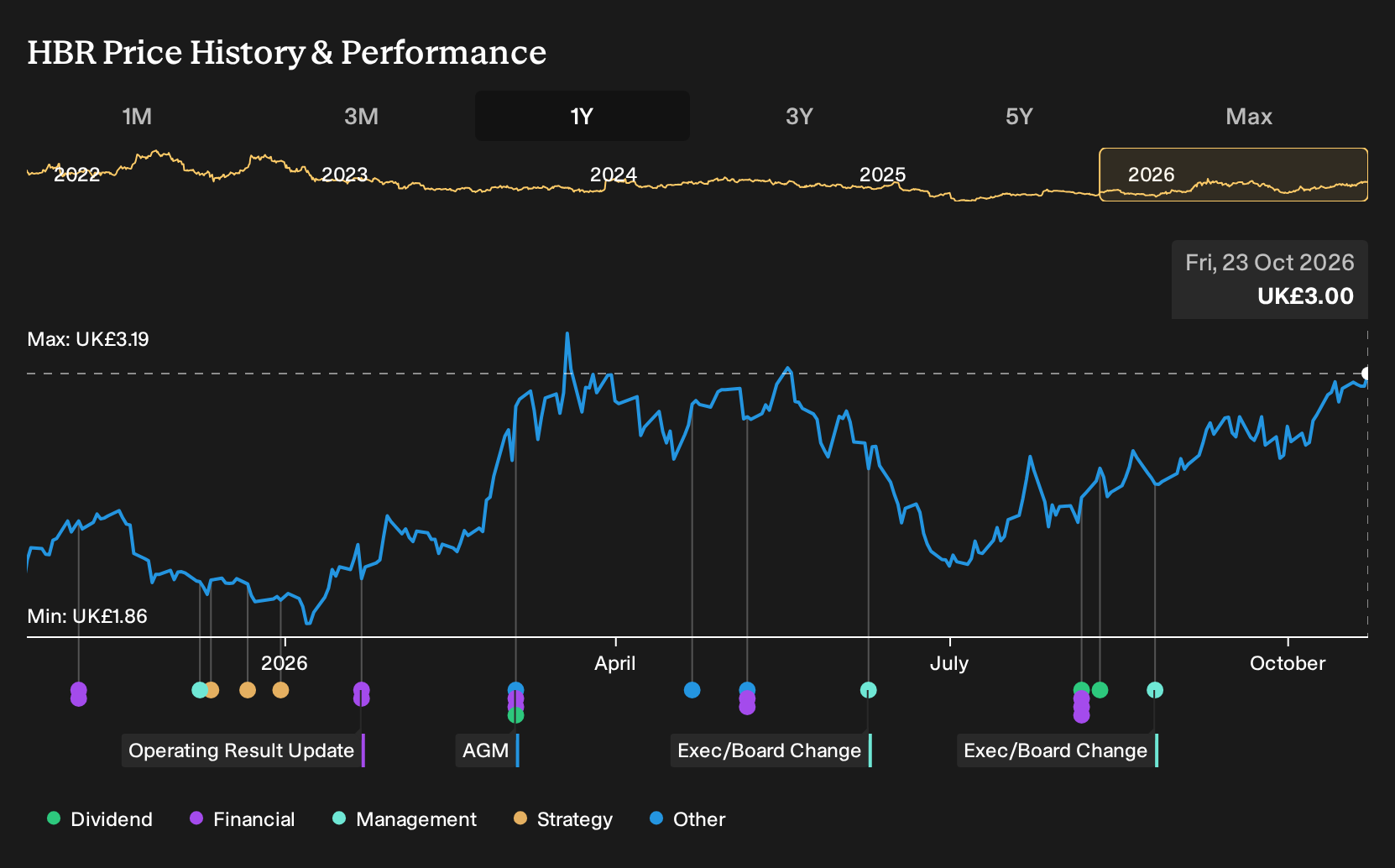
Investors who held Harbour Energy over the past year are up 42.6%, including dividends. If that raise in wealth had been on the table for you last October, what would you have needed to see to press the buy button? Early on, buyers were weighing bullish research that pitched international diversification and efficiency gains as a path to resilience, while bears warned that UK tax pressure and falling oil demand could choke that same future. Which of those worries or hopes should have mattered most at the time you were deciding whether to own Harbour Energy at all?
The easy part of this move is behind Harbour Energy. Zero in on 8 high quality undervalued stocks for companies trading below our estimates.
The Two Harbour Energy Stories Investors Had To Weigh
The shares cost £2.15 at the start of the period, and anyone looking at Harbour Energy then had to decide which future felt more reasonable.
The bullish narrative argued that international diversification and efficiency could make earnings more resilient. On that view, a Fair Value of £2.83, effectively a price implied by those assumptions, relied on revenue falling 7.5% a year, profit margins climbing to 3.6%, and the shares later trading on a 32.8x P/E.
The bearish story focused on falling oil demand and UK tax pressure. It pointed to a Fair Value of £1.99 based on expectations that heavier exposure to mature North Sea assets and shifting regulation would keep long term risks front and centre.
What The Results Changed For Harbour Energy
The biggest new fact was Harbour Energy’s H1 2026 report. Revenue moved from US$5.27b in H1 2025 to US$6.41b, while a net loss of US$207m turned into net income of US$388m and net margin shifted from a 3.9% loss to a 6.1% profit. That earnings swing supported the optimistic case on efficiency and international scale, although only over one period.
The useful takeaway is simple: when a thesis leans on margin resilience, track net margin and absolute profit in each set of results, not just revenue or production headlines.
What Harbour Energy’s Price Already Assumes
Harbour Energy now trades at £3, and the selected Narrative’s Fair Value sits below the current price. That view hinges on the idea that a lot of the recent 43% one year return already prices in a fair, not heroic, outcome.
The Narrative argues that today’s tag only stacks up if Harbour Energy keeps production near current guidance while shifting toward lower tax, lower cost basins, and avoids major project or safety setbacks.
"The current numbers on production, free cash flow guidance, capital returns and leverage imply a share price that already reflects a fair outcome for Harbour Energy with a bearish skew if future projects, commodity prices or the capital returns framework fall short of current expectations."
That disagreement has a full argument behind it. → Uncover the lower Fair Value this Narrative argues for
Harbour Energy And A Different Path
Thinking about Harbour Energy, you might also wonder about a different route. Some investors look one step away rather than doubling down.
One large integrated energy group is leaning into lower cost hydrocarbon projects. It is also working to cut methane and expand electricity generation from cleaner sources.
Those moves aim to keep cash coming in when fuel prices or regional demand swing. They also shift attention toward power earnings, not just oil and gas.
If that effort to blend hydrocarbons with growing power cash flows works, the role of a traditional energy company could start to look very different.
One Narrative has already put a figure on it. → Uncover the company trading 17% below one Narrative's Fair Value
Have feedback on this article? Concerned about the content? Get in touch with us directly. Alternatively, email editorial-team@simplywallst.com