
Are Bank Of America (BAC) AI Curbs Redrawing The Limits Of Digital Banking?
- U.S. banks, including Bank of America (NYSE:BAC), are restricting third party AI agents from accessing customer deposit accounts under tighter scrutiny.
- Bank of America is backing new access limits that apply to autonomous AI tools interacting with its consumer banking systems.
- Regulators and Bank of America CEO Brian Moynihan are aligned on reducing security and liability risks from automated agents in retail banking.
- This clampdown on AI agents’ access to Bank of America customer deposits is an extra factor to weigh beside our other views. Check out 6 other big wins that Bank of America investors should know about.
Consider widening your watchlist to include other companies exposed to AI infrastructure trends through 55 AI infrastructure stocks.
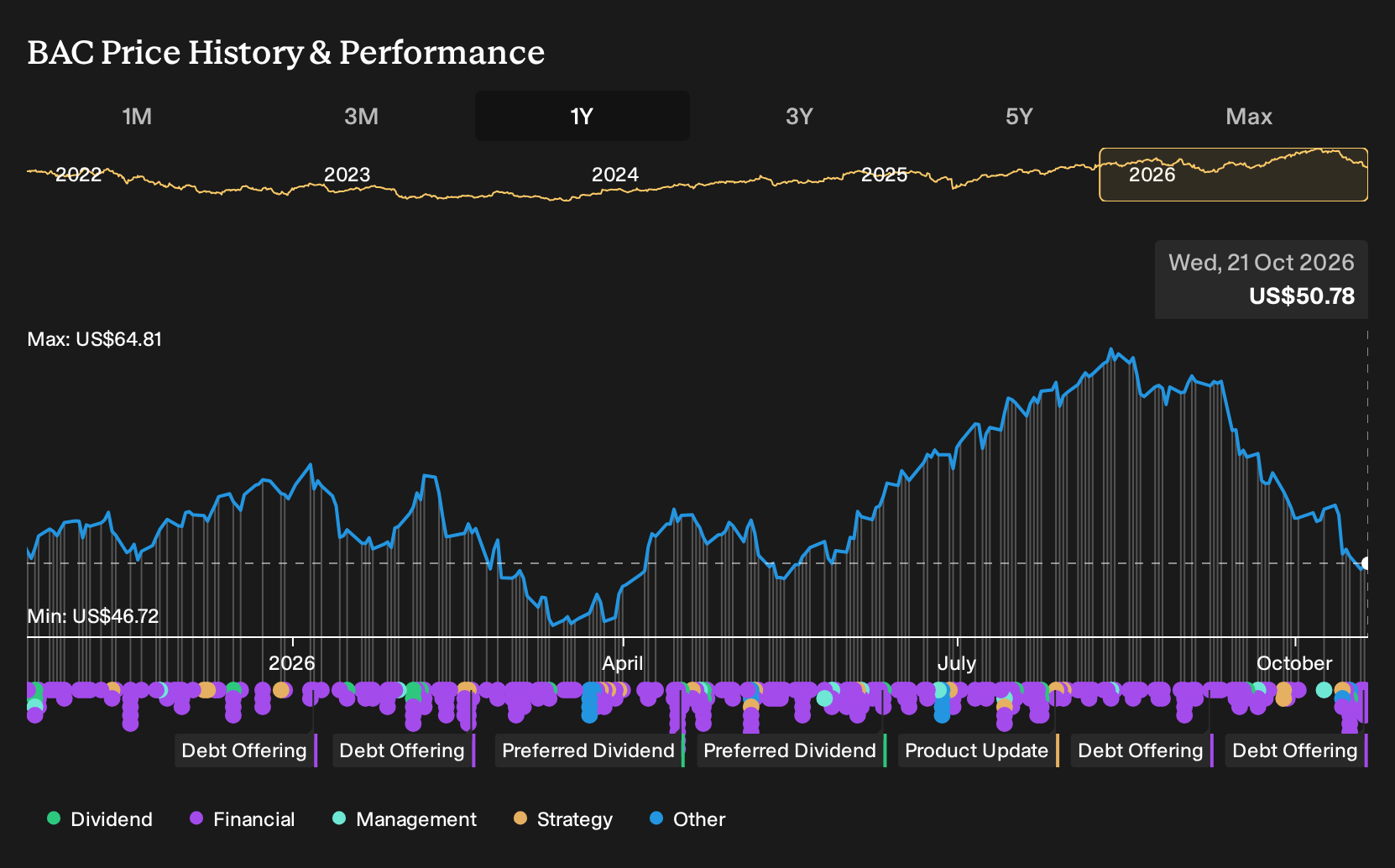
Bank of America is one of the largest U.S. banks, with a broad mix of consumer, business, institutional and government clients that rely on its digital platforms for everyday transactions and financial services. That wide footprint means any change in how external AI tools interact with its systems can affect a broad base of account holders and counterparties.
See how Bank of America's balance sheet measures up.
Why is Bank of America putting tighter controls on AI agents now?
The move follows heavier regulatory focus on how banks handle customer authorization, fraud and data security when third party tools interact with accounts. For Bank of America, clamping down on autonomous agents is a way to limit disputed transactions and legal exposure while it already faces scrutiny over wider compliance practices.
Does this AI decision change the Bank of America Narrative investors have been using?
The Narrative leans on AI driven efficiency, with more than 140 applications and a plan to double the AI budget inside a US$14b tech spend. Tighter access for third party agents shifts that story toward internally controlled tools like Erica and CashPro and highlights the Narrative risk that higher compliance demands could keep quarterly expenses around US$18.6b.
See how these catalysts shape Bank of America's path to a $67.33 fair value.
What should Bank of America watchers focus on next for this AI move to really matter?
The key checkpoint is how management talks about AI related costs and savings in upcoming quarters, especially any update to that roughly US$18.6b expense run rate. Investors can also track new disclosures on fraud losses or disputed transactions, which would indicate whether stricter AI access is reducing risk in practice.
One more Bank of America question that really matters
Who steers Bank of America, what they are encouraged to prioritize, and how their pay lines up with those goals can shape everything shareholders care about over time. See who is actually steering Bank of America, and how they are paid.
Have feedback on this article? Concerned about the content? Get in touch with us directly. Alternatively, email editorial-team@simplywallst.com