
Missed Kingfisher's Run? What Holders Had To Believe
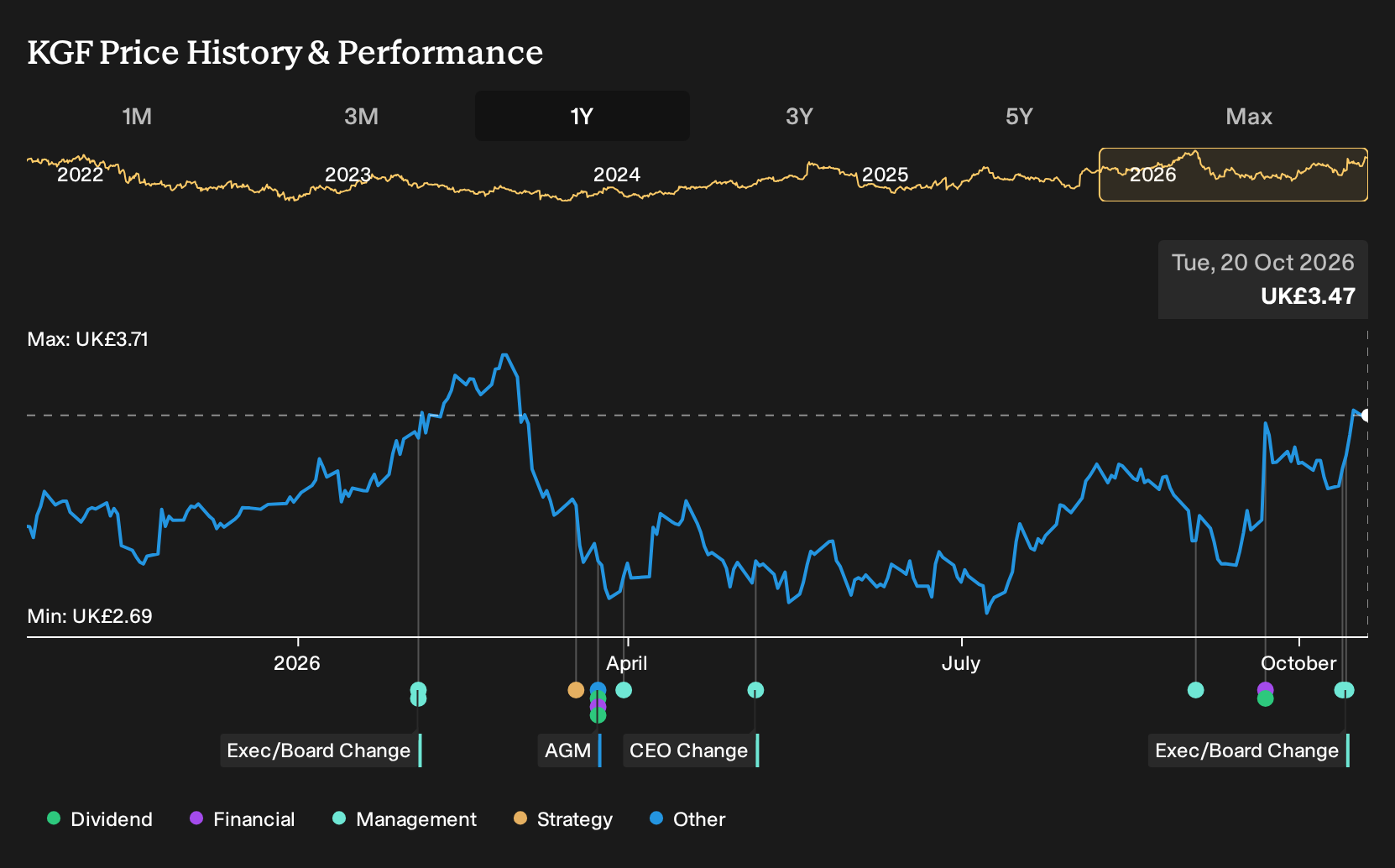
If you only glanced at Kingfisher’s flat-looking revenue profile and the political noise around its French exposure, you might assume the shares went nowhere. For Kingfisher shareholders, the return over the past year was 20.9%, including dividends. That outcome sits against a backdrop where bullish analysts saw e-commerce and eco renovation upside, while bears focused on aging demographics and Amazon pressure. If you had been weighing those two stories in October 2025, what really tipped the balance?
If the move has made Kingfisher harder to judge, start where the gap is still open and scan 7 high quality undervalued stocks.
The Two Kingfisher Stories Investors Had To Judge
The shares cost £3.03 at the start of the period, and anyone looking at Kingfisher then had to decide which of two competing stories felt more realistic.
On the upbeat side, the bullish narrative argued that a Fair Value of £3.87, the price implied if its projections played out, was justified if e-commerce, eco friendly renovation demand and digital supply chain tools pushed margins toward 4.0% in a few years.
The bearish view pointed to a Fair Value of £2.35, again only as a price implied by its own assumptions, anchored in slower 1.0% revenue growth and pressure from aging European demographics and online rivals such as Amazon.
What The Results Put To The Test For Kingfisher
The clearest piece of fresh evidence was Kingfisher’s H1 2027 report. Revenue reached £6,864m against £6,811m in H1 2026, while net income moved from £237m to £290m and net margin shifted from 3.5% to 4.2%. That margin outcome leaned toward the bullish 4.0% argument, although only across one reporting window.
The lesson is simple. When a thesis hinges on future profitability, focus on reported net margin and the direction of that figure, rather than only on headline revenue or share price moves.
What Kingfisher’s Run Now Asks Of Buyers
Kingfisher shares now trade at £3.47, with this Narrative’s Fair Value sitting below that level based on its own cautious assumptions. The core argument is less about demand collapse and more about how mix, channel economics and already captured efficiency gains shape future profitability.
A buyer today would be assuming that trade and digital growth can keep profit and cash generation resilient even if those channels earn thinner margins and the easier cost wins are already behind Kingfisher.
"The main factor that needs to work in Kingfisher’s favor is the ability to translate higher trade penetration, digital growth and margin initiatives into sustained profit and cash generation, despite gross margin headwinds from trade, freight and supplier pricing. The recent structural gross margin gains from sourcing, logistics and inventory efficiencies are already sizable in basis point terms."
That disagreement has a full argument behind it. → Uncover the lower Fair Value this Narrative argues for
Where Kingfisher’s Question Points Next
Kingfisher invites you to picture physical projects in real homes. Another business sits closer to the digital checkout.
This group leans on online retail, media and subscription tools. It helps buyers search products, compare choices and complete purchases efficiently.
Behind the visible shopfront, it rents out computing power and software capacity. Corporate customers lean on that backbone for data storage, AI work and automation.
If DIY demand tilts further online, that digital infrastructure may gain weight. The intrigue lies in how one retailer’s strain becomes another operator’s opening.
That argument has a Narrative and a number behind it. → See the company one Narrative values 71% above its price
Have feedback on this article? Concerned about the content? Get in touch with us directly. Alternatively, email editorial-team@simplywallst.com