
Luxury Stocks To Watch As Ralph Lauren And Arhaus Test Pricing Power
US luxury stocks are caught in a rare crosswind. Slower job gains and real-income pressure are squeezing everyday shoppers, while tax cuts for the top 1% are keeping high-end demand in play. That split in spending power is where opportunity lives. Read on to see how three US Luxury and High-End Consumer Brands from our screener are exposed to this news backdrop and why each might deserve a closer look.
The stocks covered below are only a small sample of what this theme throws up, and the full screen surfaced 12 more US Luxury and High-End Consumer Brands with equally compelling stories that are not featured in this article. To see the wider field and zero in on your own highest conviction angles, head straight into the US Luxury and High-End Consumer Brands screener.
Arhaus (ARHS)
Arhaus sits neatly inside the US Luxury and High-End Consumer Brands theme because it sells premium home furnishings to affluent households whose spending often holds up even when mainstream budgets feel tight.
Arhaus is a premium US home furnishings retailer focused on high-end indoor and outdoor furniture, lighting and décor. It generates about US$1.4b from home furnishing retail and is valued by the market at roughly US$1.4b.
"Continuing growth in higher value renovation and whole home projects among affluent clients, reflected in record upholstery and interior-design-assisted written sales and positive comparable written sales in 2026, positions Arhaus to keep supporting revenue and earnings."
The real swing factor is how one persistent cost pressure interacts with that affluent demand to shape future margins and cash generation.
That margin question is exactly what sits at the heart of the full narrative for Arhaus, where you can see how cost trends, store economics and capital allocation really interact.

Ralph Lauren (RL)
Ralph Lauren brings the US Luxury and High-End Consumer Brands theme into everyday wardrobes, stretching from Polo shirts to fine fragrances, furniture and even restaurants, with higher income shoppers and aspirational buyers worldwide anchoring the premium story.
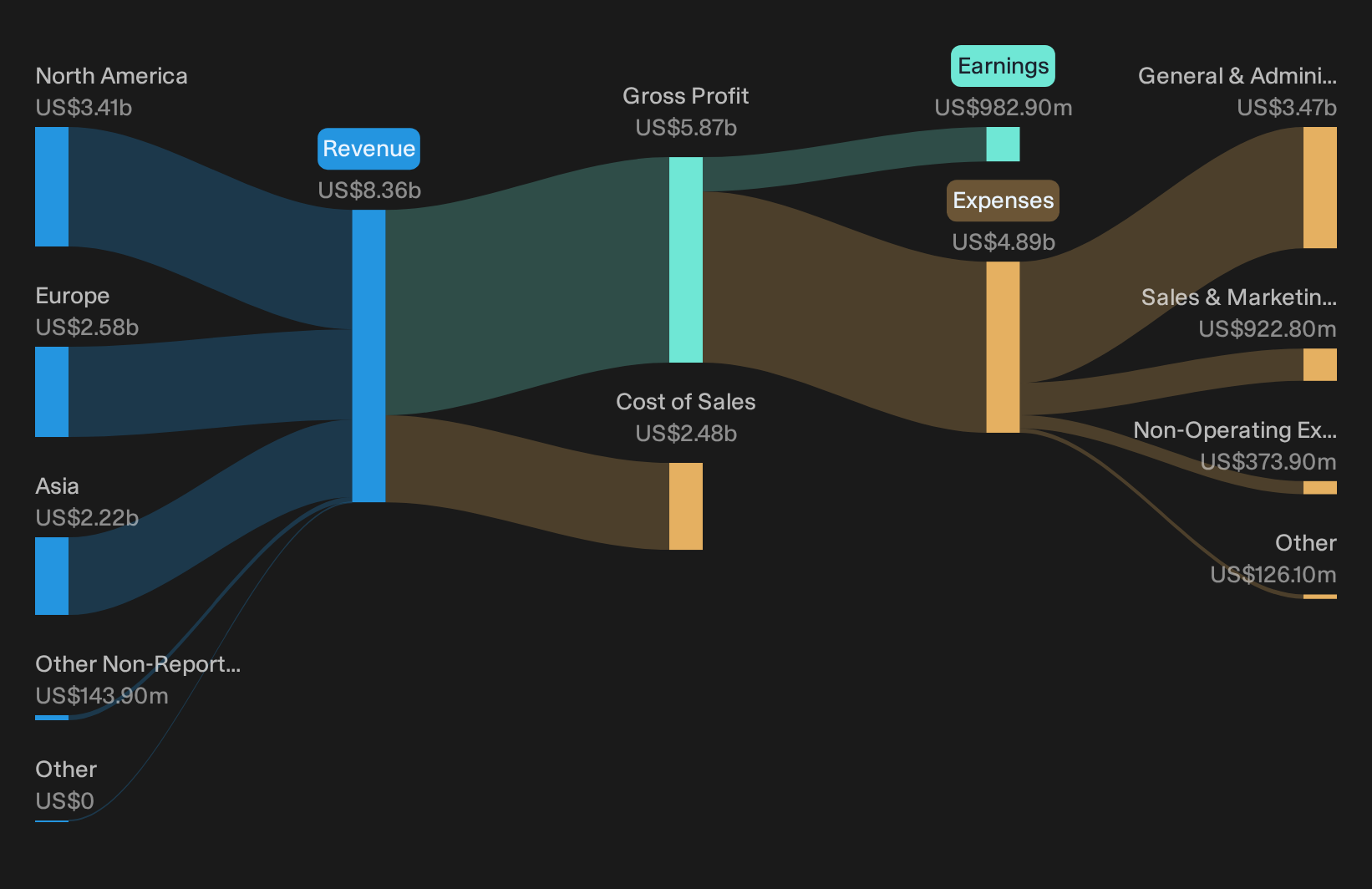
Ralph Lauren is a global premium lifestyle business across clothing, accessories, home goods, fragrances and hospitality, anchored in the US Luxury and High-End Consumer Brands theme. It generates about US$3.4b in North America, US$2.6b in Europe, US$2.2b in Asia and roughly US$100m from other segments, and the stock is valued at around US$23b.
"Accelerating international expansion, especially in Asia and Greater China where Asia revenue recently grew around the mid 20% range and China has risen to about 10% of company sales, positions Ralph Lauren to keep scaling in higher growth regions, which can support future revenue and earnings."
The real tension for Ralph Lauren is how long customers accept higher prices before a subtle shift in behavior starts to pressure margins.
How that pricing power really plays out sits inside the full narrative for Ralph Lauren, which maps where Ralph Lauren could be accelerating or quietly stalling next.
RealReal (REAL)
RealReal brings the US Luxury and High-End Consumer Brands theme into the resale space, giving high-income and aspirational shoppers a dedicated marketplace for authenticated pre-owned luxury labels.
The RealReal runs a luxury resale marketplace across fashion, jewelry and watches, with about US$749.9 million from online retail and a US$1.3b market cap.
For this theme, RealReal matters because it turns luxury closets into inventory, linking affluent consignors and buyers in a way that can flex with both high-end demand and tighter budgets.
"The RealReal is rolling out an automated storage and retrieval system at its Perth Amboy authentication center that is expected to lift capacity by 35% without adding new warehouses. This may support higher GMV and revenue while keeping capital expenditure close to 2% to 3% of revenue and may affect operating margins."
What happens to RealReal’s appeal if one quiet shift in where the highest value items come from changes the trajectory of those margins?
If that shift in supply has your attention, the full narrative for RealReal shows where RealReal’s consignor mix could be accelerating or quietly masking bigger resale upside.

Seeking Alternatives Before They Fly
Fresh ideas often move first, and slower money can get caught chasing momentum after the breakout. Scan curated themes that are still under the radar for now and consider acting earlier in the cycle.
- Spot income workhorses before yield tourists arrive by reviewing 8 dividend fortresses, which is built to highlight businesses aiming to balance cash payouts with sturdier financial profiles.
- Track faster-growing chip and server ecosystems early with 55 AI infrastructure stocks, targeting companies positioned around data centers, networking gear and the plumbing behind AI demand.
- Explore potential future materials demand while it may still feel overlooked by scanning 16 top copper producer stocks, focused on producers tied to electrification, grid upgrades and longer-term supply constraints.
Have feedback on this article? Concerned about the content? Get in touch with us directly. Alternatively, email editorial-team@simplywallst.com