
3 Defense Stocks Tied To Pentagon Munitions Demand】【。
Missiles, automation and a defense supply chain racing to catch up to Pentagon demand have turned a once sleepy corner of manufacturing into a live testbed for 24/7 production. That shift matters for investors because capital is quietly clustering around companies tied to this build out of modern munitions capacity. This article unpacks that story and highlights 3 stocks related to this news, so you can decide how they fit your watchlist.
The stocks covered below are just a sample of the idea, and the full screen surfaced 25 more U.S. defense contractors and supply chain players with equally compelling narratives that are not included here. To identify and analyze your own high-conviction angles in this theme, head straight to the U.S. Defense Contractors & Defense Industrial Base Modernization screener.
Sensata Technologies Holding (ST)
Sensata Technologies Holding sits in the middle of the screener’s theme by supplying the sensors and electrical protection hardware that help keep modern defense and aerospace systems running safely. This is why any pressure on its manufacturing model matters for long term returns.
"Ongoing regionalization of manufacturing and the increasing prominence of local suppliers in key growth markets like China threaten Sensata's globally integrated supply chain and current market share. This exposes the company to potential cost inflation and long-term margin erosion, even as competitors capture greater market share, which could undermine both revenue growth and net profit margins."
The real swing factor for Sensata Technologies Holding is how one quiet shift in its customer and production mix ultimately filters through to margins.
Sensata Technologies Holding supplies sensors, power protection and motor systems used in mission-critical applications, from vehicles to aircraft. This ties into the screener’s defense modernization focus through its Aerospace, Defense, and Commercial Equipment segment. Revenue is concentrated in Automotive at about US$2.1b, with Industrials at roughly US$791 million and Aerospace, Defense, and Commercial Equipment at around US$859 million, while the business carries a market value near US$5.9b.
That margin mix shift is exactly what the full narrative for Sensata Technologies Holding unpacks in detail, tracing how supply chain pressure could still mask an accelerating earnings profile.

Vicor (VICR)
Vicor plugs into this defense modernization story as a specialist in high reliability power systems that feed radar, missile guidance, and other electronics, with its whole model now leaning on how quickly those bricks of power can scale across demanding end markets.
"The accelerated adoption of high power, high density AI computing in data centers is still a live driver, and Vicor’s second generation vertical power delivery reaching 3 amps per mm² for a lead customer with a target of over 5 amps per mm² by late 2026 or early 2027 supports the view that higher performance products can support future revenue and gross margin."
What really makes Vicor interesting for this screener is how one quiet shift in where its highest value demand comes from could reshape margins.
Vicor Corporation develops modular power components and custom power systems used across defense electronics, data centers, vehicles, and industrial equipment. This ties neatly into the screener’s focus on suppliers to advanced defense hardware. The business generates about US$474 million from Advanced or Brick Products and carries a market value near US$8.8b.
That shift in where Vicor earns its richest demand is exactly what the full narrative for Vicor unpacks. It separates durable momentum from hype and highlights where expectations may be mispriced.

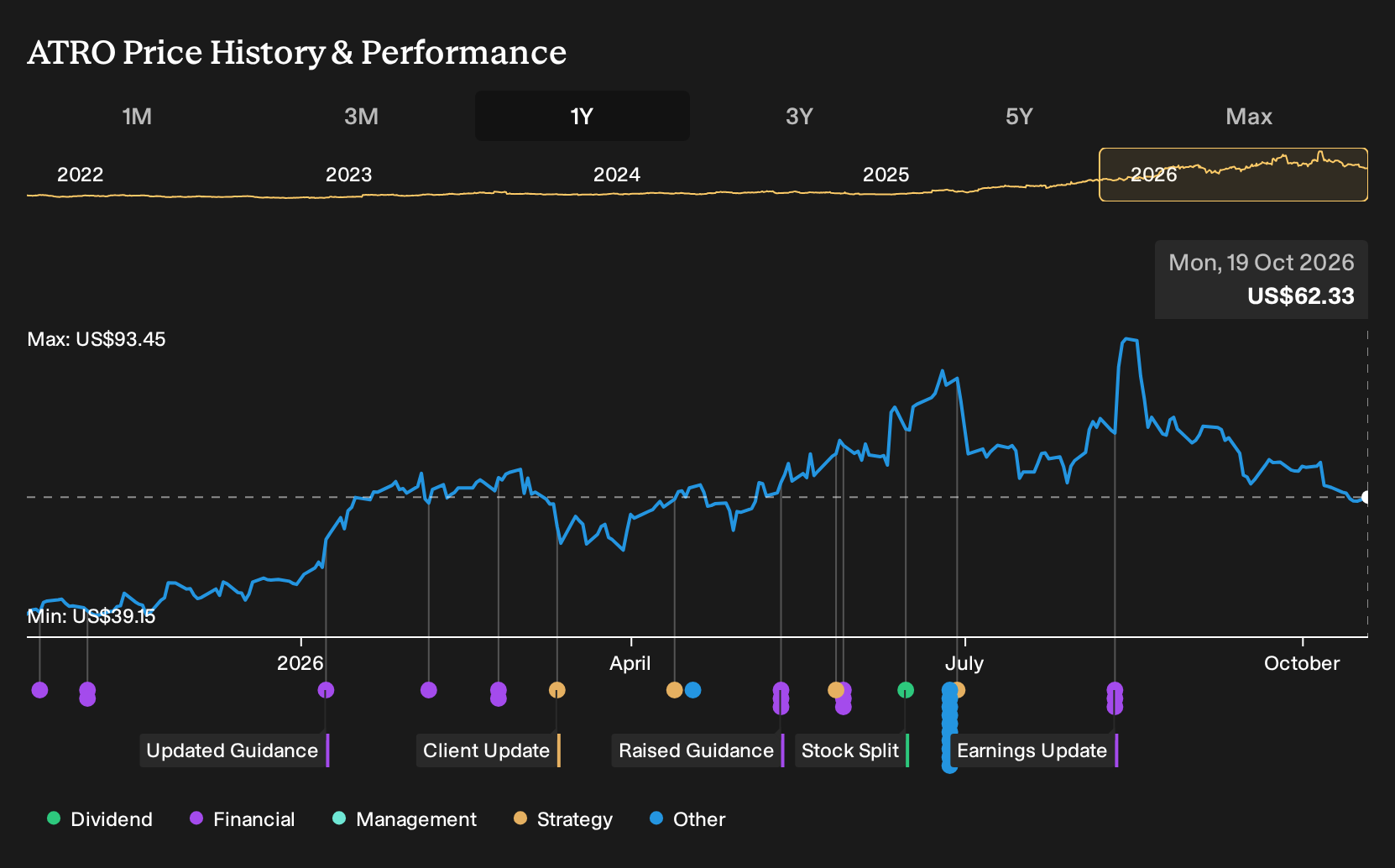
Astronics (ATRO)
Astronics plugs into this defense modernization theme through the electronics, power systems, and test equipment that sit inside mission critical aerospace and military platforms. This makes its mix of commercial exposure and defense-linked backlog especially important for anyone tracking long term demand.
Astronics designs aircraft lighting, power, avionics, and automated test systems for aerospace and defense clients, with around US$863 million coming from Aerospace and roughly US$79 million from Test Systems, and the stock carries a market value near US$2.6b.
"Despite robust sales growth in the Aerospace segment, Astronics remains highly exposed to the cyclical nature of the commercial aerospace industry, which makes future revenues and profit margins vulnerable to sudden downturns or extended slumps in air travel demand."
Much of the long term thesis now hinges on how one pressure point inside its backlog and contract pipeline ultimately flows through profitability.
That pressure point is exactly why the Astronics full narrative for Astronics focuses on where cyclical risk may be masking sturdier demand and the potential for accelerating margin recovery.
Seeking Fresh Alternatives Before They Fly
Momentum often shifts fast, and the next breakout list can move from under the radar to fully priced before the crowd catches on. Scan these fresh ideas now to review them early.
- Spot resilient cash generators before they are widely followed by running your own shortlist through the list of solid balance sheet and fundamentals (25 results).
- Combine potential income with price momentum in a single approach by checking out the curated group of high yield opportunities in the 8 dividend fortresses.
- Track where real AI revenue aligns with cash generation, not just headlines, by scanning the hand picked group inside the 39 profitable AI stocks that aren't just burning cash.
Have feedback on this article? Concerned about the content? Get in touch with us directly. Alternatively, email editorial-team@simplywallst.com