
Screening Guideline Update Could Matter For Quest Diagnostics Stock (DGX)
- Quest Diagnostics reported that research with external partners found current guidelines for diagnosing primary aldosteronism may miss about half of affected patients, and the study proposes revised screening thresholds to improve detection.
- The findings highlight how Quest Diagnostics could use its clinical data and testing capabilities to influence future diagnostic protocols for high blood pressure management.
- This development may affect how investors view Quest Diagnostics, as its aldosteronism study brings attention to existing diagnostic screening thresholds and potential changes to clinical practice.
Quest Diagnostics Investment Narrative Recap
To own Quest Diagnostics, you need to be comfortable with a steady, execution driven story. The big belief is that advanced and preventive testing, consumer wellness, and health system partnerships can keep volumes healthy, while automation and AI protect margins even as reimbursement pressure and wage inflation bite. The aldosteronism work fits that thesis by using Quest’s data and lab footprint to deepen its role in complex, guideline driven testing.
The most important near term swing factor remains whether cost savings and productivity gains keep pace with pressures from PAMA cuts, payer policy changes and a higher cost base from projects like Nova. Those same projects are also a key risk if spending runs ahead of efficiency payoffs, and if reimbursement or volume softness limits the room to absorb extra expense.
The recent leadership update around Catherine T. Doherty matters here because it ties directly into several operational levers investors watch. Starting November 1, 2026, she is scheduled to move into an Executive Vice President role overseeing health systems, the Corewell Health joint venture and Project Nova, the multiyear overhaul of Quest Diagnostics’ Order to Cash processes and related technology.
That remit touches two core catalysts from the existing narrative: deeper health system partnerships and better automation and digitization across the lab and billing stack. Execution on Nova is closely linked to the goal of roughly 3% yearly cost savings and to offsetting reimbursement pressure, while the Corewell joint venture sits inside the broader push to build volume through Co Lab style arrangements rather than relying solely on organic physician office demand.
Quest Diagnostics' current analyst narrative points to revenues of US$13.3b and earnings of US$1.5b by 2029, based on assumptions of 4.8% yearly revenue growth and an earnings increase of about US$0.4b from US$1.1b today.
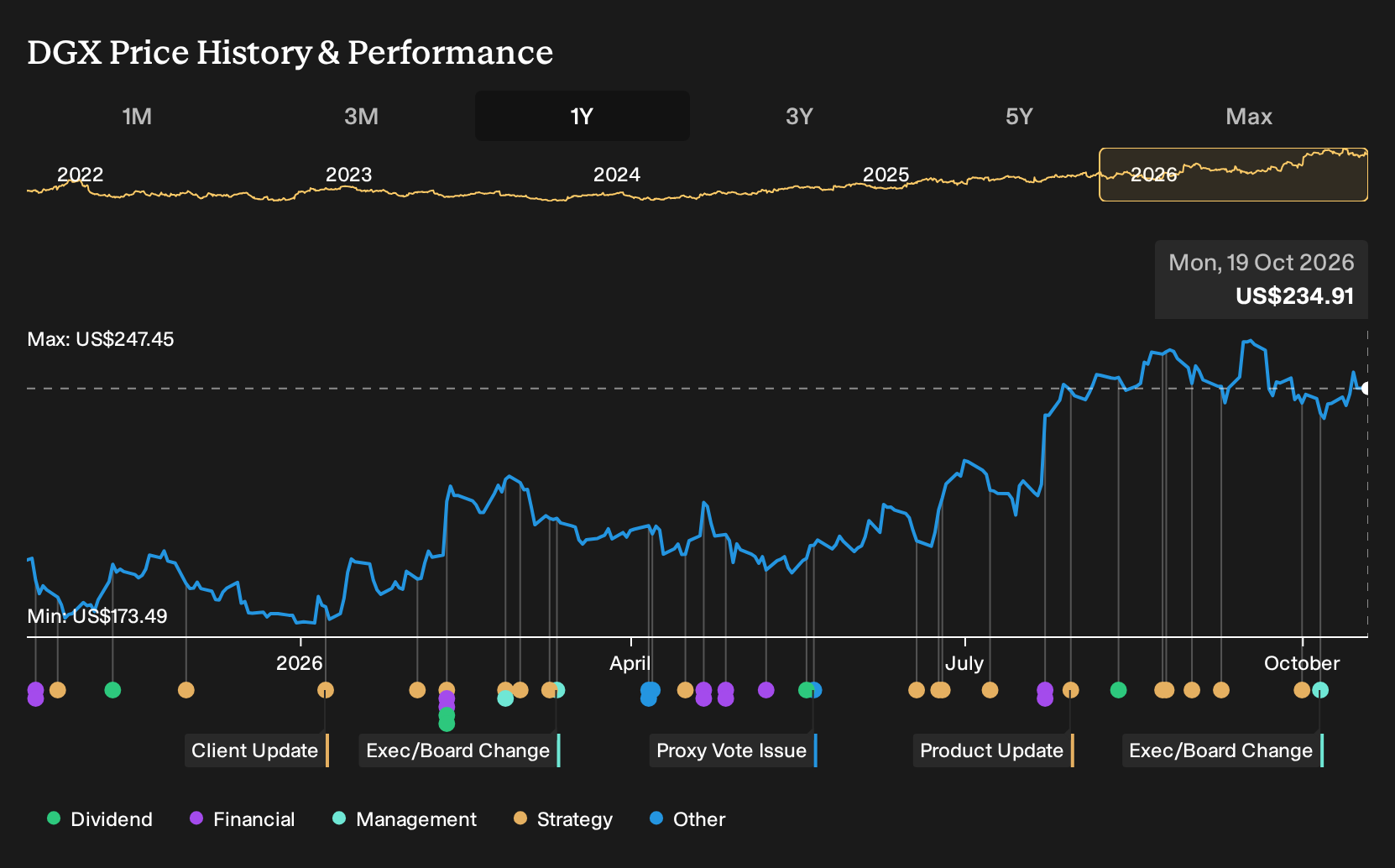
Uncover how Quest Diagnostics' fair value indicates a 5% potential upside to its current price before the market closes the gap.
Exploring Other Perspectives
Two fair value estimates from the Simply Wall St Community span roughly US$247 to US$348 per share for Quest Diagnostics, so private investors already show a wide spread in conviction. These views sit alongside risks like further PAMA reimbursement cuts and potential cost overruns on Nova, which could reshape how you frame the upside.
Explore another Quest Diagnostics fair value estimate, including one that suggests it could be worth just $247.40.
Form Your Own Verdict
Disagree with existing narratives? Extraordinary investment returns rarely come from following the herd, so go with your instincts.
- A great starting point for your Quest Diagnostics research is our analysis highlighting 4 key rewards and 1 important warning sign that could impact your investment decision.
- See our latest analysis for Quest Diagnostics. The report includes a comprehensive fundamental analysis summarized in a single visual, the Snowflake, making it easy to evaluate Quest Diagnostics' overall financial health at a glance.
Looking for more investment ideas beyond Quest Diagnostics?
If the Quest Diagnostics story has sharpened your thinking about quality, risk and execution, you can keep that momentum going by widening your watchlist with other companies that fit clear financial profiles.
- For investors who want durability and lower financial strain, focus on businesses with resilient balance sheets and use this curated list of solid balance sheet and fundamentals (25 results) as a starting point.
- If value is your priority, you can target companies that combine strong fundamentals with pricing that still looks reasonable by using the 35 high quality undervalued stocks to narrow the universe.
- Income focused readers who care about steady cash returns can anchor their research around high yielding payers by scanning the 8 dividend fortresses and then drilling into each payout’s quality and consistency.
Have feedback on this article? Concerned about the content? Get in touch with us directly. Alternatively, email editorial-team@simplywallst.com