
Missed Rigel Pharmaceuticals' Rally? Here's What Early Buyers Saw
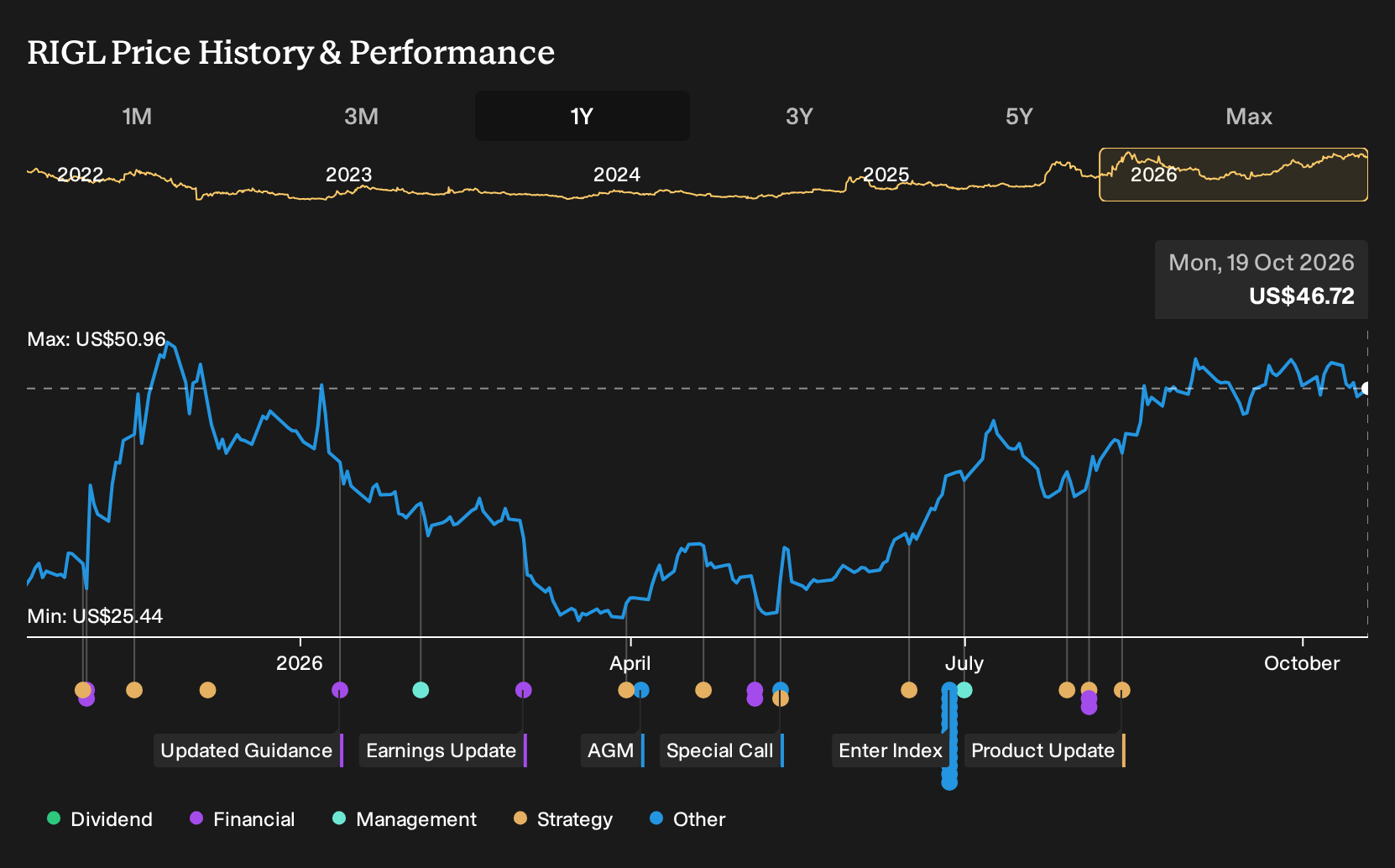
Rigel Pharmaceuticals just agreed to a global license for VEPPANU, an FDA-approved oral PROTAC for advanced ER+/HER2-, ESR1-mutated breast cancer, putting a concrete new product at the center of its oncology ambitions. Over the past year, Rigel Pharmaceuticals delivered a total return of 58.6%, including dividends. If you had been weighing a purchase back on 2025-10-19, what would you have needed to believe about deals like VEPPANU and the rest of the business to justify that exposure?
The useful thing about a Narrative is that the reasoning is checkable: the assumptions sit beside the argument, and together they imply an estimated Fair Value you can disagree with.
This theme extends beyond Rigel Pharmaceuticals. See which of 33 healthcare AI stocks may still merit a closer look.
The Two Rigel Pharmaceuticals Stories Investors Had To Weigh
The shares cost US$27.94 at the start of the period, which meant any Rigel Pharmaceuticals thesis needed to earn its risk with clear, testable assumptions.
The bullish Narrative put Fair Value at US$38.33. That view leaned on 3.5% annual revenue growth, a 14.3% profit margin in three years, and a future P/E of 20.9x supported by pipeline progress and international partnerships.
The bearish story pointed to Fair Value of US$22.02. That camp focused on declining revenue of 0.8% a year and pressure on a narrow commercial portfolio as Medicare tailwinds faded.
What The Evidence Did To The Rigel Pharmaceuticals Argument
The VEPPANU license gave Rigel Pharmaceuticals an FDA-approved oncology drug with global rights, which aligned with the bullish focus on portfolio expansion and partnerships. At the same time, Q2 2026 revenue fell to US$78.703 million from US$101.685 million and net income slid to US$17.29 million, with net margin down to 22.0%. The evidence cut both ways.
The central assumption investors priced in was that added assets like VEPPANU would offset pressure on existing drugs. For many biotech companies, you would test that same claim by tracking whether new product deals arrive before revenue and margin compression shows up in reported numbers.
What Rigel Pharmaceuticals' Price Already Assumes
Rigel Pharmaceuticals now trades at US$46.72, with this Narrative’s Fair Value placed below that level. The Narrative argues that recent gains already reflect confidence in oncology deals like VEPPANU and R289 and in the ability to keep earnings positive while absorbing large in licensing obligations.
A buyer today effectively assumes that new oncology products grow into their cost and keep profits intact. The selected Narrative asks how that assumption holds up if milestone, royalty and development commitments rise faster than VEPPANU and other assets can turn into steady commercial and royalty income.
"The main thing that has to go right is that Rigel Pharmaceuticals converts its late stage oncology portfolio, including VEPPANU and R289, into durable commercial and royalty streams that justify ongoing in licensing costs and clinical spending while maintaining net income profitability."
Not everyone reads the same price the same way. → See the lower figure this Narrative lands on, and how it gets there
How Could You Get There Earlier?
The story behind this run has already been told. The next one could be taking shape somewhere else. Where could you start looking before it becomes the headline?
- Company 1 - 50% below our estimate - uses a digital small business banking platform to deepen primary relationships while controlling credit costs.
- Company 2 - 29% below our estimate - embeds custom silicon and software across data movement, connectivity, and security for digital infrastructure workloads.
- Company 3 - 45% below our estimate - sells a unified digital banking platform that replaces fragmented systems as institutions push mobile first.
Three companies from the same screener. Open the full list of 35 companies trading below our fair value estimates →
Have feedback on this article? Concerned about the content? Get in touch with us directly. Alternatively, email editorial-team@simplywallst.com