
How Investors Are Reacting To Stewart Information Services Stock Valuation Concerns
- Stewart Information Services is under scrutiny after fresh analysis suggested its recent multi year share price gains sit uncomfortably alongside relatively low returns on equity and an estimated cost of equity that points to value erosion on new shareholder capital.
- The gap between Stewart Information Services' current valuation and intrinsic value estimates puts the focus squarely on how efficiently management turns incremental equity into sustainable returns, rather than on short term market moves.
- We will look at how Stewart Information Services' investment narrative is pressured by questions over valuation sustainability and subdued returns on capital.
Stewart Information Services Investment Narrative Recap
To own Stewart Information Services you need to be comfortable that a relatively mature, lower return on equity business can still compound value through steady real estate transaction activity, disciplined costs and targeted fee based growth in commercial title and Real Estate Solutions. The recent finding that returns on equity lag the estimated cost of equity points to pressure on capital efficiency, but does not alter the immediate operational levers.
In the short term, the most important swing factor is how quickly commercial title, agency operations and Real Estate Solutions offset a sluggish US housing market and higher operating expenses tied to outside services and contractors. The main risk is that a still weak existing home sales backdrop and elevated expense ratio keep margins contained, which would make the current valuation harder to support if sentiment stays fragile.
The recent analysis highlighting a 45.3% three year share return alongside an estimated intrinsic value below the current price brings Stewart Information Services' prior expansion efforts back into focus. Commercial revenue roughly doubling to about US$450 million over the last four quarters and commercial share moving toward 13.5% to 14% show where management has been leaning for mix and earnings support.
That same work in Real Estate Solutions matters for the next phase. Revenue growth of 56% in Q1 2026 and 75% in Q2 2026, with adjusted pretax margins around 12.5% to 14%, gives this lender focused arm meaningful weight in any case for sustaining earnings power if residential volumes stay subdued and operating expenses remain elevated.
Stewart Information Services Consensus Assumptions Under The Microscope
Analysts sketch a path for Stewart Information Services that leans heavily on stronger contribution from commercial title and Real Estate Solutions, but the numbers behind that story are demanding. To line up with the current consensus framework, investors need to weigh not just the quality of those segments but also the growth, margin lift and valuation multiples embedded in the forecasts.
Stewart Information Services' narrative projects US$4.3b revenue and US$220.9m earnings by 2029. This is built on 9.5% yearly revenue growth and an earnings increase of about US$86m from US$134.7m today.
On the top line, the research set implies that Stewart Information Services can sustain revenue expansion of 9.5% a year over the next three years. That pace runs ahead of what many mature financial services groups tend to post, so it puts more weight on commercial and Real Estate Solutions continuing to carry more of the mix as US existing home sales grind along near multi decade lows.
Earnings today sit at US$134.7m, with analysts aiming at US$220.9m by 2029. That roughly US$86m step up in profit, alongside an assumed move in profit margins from 4.1% to 5.1%, suggests the investment case leans on both higher volumes and cleaner economics per dollar of revenue. For readers, the key question is whether the higher expense base around data, contractors and integration work can realistically leave enough room for that planned margin lift.
The consensus framework also bakes in a rising share count, with outstanding shares expected to expand by 7% a year over the next three years. That matters for anyone focused on per share outcomes rather than just aggregate earnings. A higher share base can dilute the impact of profit growth on earnings per share, which becomes especially relevant when the story already hinges on closing a gap between return on equity and the estimated cost of equity.
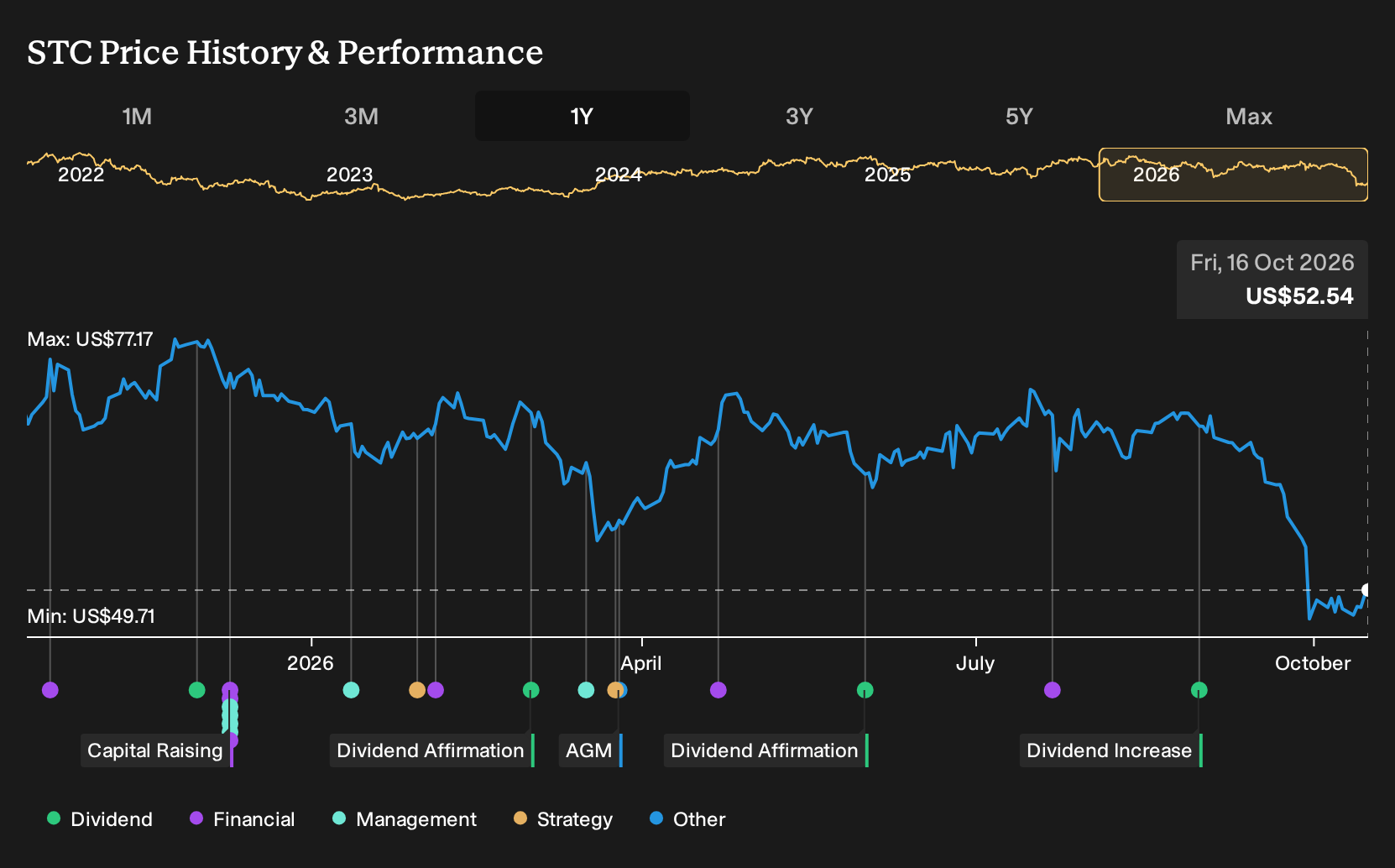
Valuation assumptions stretch further. To reach the US$82.25 average price target from a current share price of US$50.83, the market would need to pay a P/E of 17.2x on those 2029 earnings, up from 11.5x today and above the cited US Insurance industry P/E of 10.8x. That is a double lift, both in absolute multiple and relative to peers, so readers should think carefully about how much confidence they have in the forecast growth and profitability profile that underpins it.
Uncover why Stewart Information Services' fair value indicates a 57% potential upside to its current price, which could narrow quickly.
Exploring Other Perspectives
One alternate angle focuses less on housing volumes and more on Stewart Information Services’ cost base. The lowest analysts assume revenue nearer to US$4.1b and earnings around US$174.7m by 2029. That view leans on slimmer margin gains and treats 2026’s fresh news as a possible trigger for more cautious revisions.
Explore another Stewart Information Services fair value estimate, including one that suggests as much as 32% downside from the current price!
The Verdict Is Yours
Disagree with existing narratives? Extraordinary investment returns rarely come from following the herd, so go with your instincts.
- A great starting point for your Stewart Information Services research is our analysis highlighting 5 key rewards that could impact your investment decision.
- See our latest analysis for Stewart Information Services. The report includes a comprehensive fundamental analysis summarized in a single visual, the Snowflake, making it easy to evaluate Stewart Information Services' overall financial health at a glance.
Looking For More Investment Ideas Beyond Stewart Information Services?
If Stewart Information Services raises more questions than answers for your portfolio, widen the lens and compare it with other businesses screened on quality, valuation and balance sheet strength using the Simply Wall St Screener.
- For investors who want more potential upside relative to current prices, start with companies flagged as having strong fundamentals and appealing valuations through the 20 high quality undiscovered gems.
- If capital preservation and smoother returns matter most to you, focus on businesses assessed to have steadier earnings profiles and healthier risk scores using the 32 resilient stocks with low risk scores.
- Income seekers can zero in on payouts and balance sheet cover by scanning a curated 8 dividend fortresses that filters for higher yields supported by robust cash flows.
This article by Simply Wall St is general in nature. We provide commentary based on historical data and analyst forecasts only using an unbiased methodology and our articles are not intended to be financial advice. It does not constitute a recommendation to buy or sell any stock, and does not take account of your objectives, or your financial situation. We aim to bring you long-term focused analysis driven by fundamental data. Note that our analysis may not factor in the latest price-sensitive company announcements or qualitative material. Simply Wall St has no position in any stocks mentioned.
Have feedback on this article? Concerned about the content? Get in touch with us directly. Alternatively, email editorial-team@simplywallst.com