
Is Open Hardware Security Push Altering The Investment Case For Oracle (ORCL)?
- In early October 2026, Marvell, Microsoft and Oracle formed a new Open Compute Project working group to design an open, NIST FIPS 140-3 Level 3 hardware security module standard for cloud and hyperscale data centers. In the same period, UiPath announced that its AI-driven Test Cloud is now listed on Oracle Marketplace for automated testing across Oracle applications.
- The push to standardize server level hardware security and bring AI powered testing tools directly into Oracle’s ecosystem highlights how core infrastructure security, automation and cloud workload quality are becoming operational priorities for Oracle as it expands AI capacity and manages heavy data center spending.
- We will now look at how Oracle's investment narrative could be influenced by this new OCP security effort and AI focus.
Oracle Investment Narrative Recap
For an Oracle shareholder, the core belief is that heavy AI infrastructure spending and large remaining performance obligations eventually translate into durable, high margin cloud and database usage. The short term swing factor is whether AI capacity already deployed, including more than 300,000 GPUs at high utilization levels, keeps converting into billable workloads and renewals at acceptable pricing.
The biggest risk is simple: cash goes out faster than it comes in. Net cash CapEx of roughly US$70b planned for FY27, a funding plan that leans on about US$40b of new capital, and rising interest costs can pressure free cash flow if customers slow deployments or renegotiate large AI infrastructure contracts.
The most relevant recent move for this story is UiPath Test Cloud arriving on Oracle Marketplace. That launch puts an AI driven automation vendor directly in front of Oracle customers who care about testing across Fusion, E Business Suite and other Oracle applications. This ties cleanly to the company’s pitch around AI centric enterprise workloads.
For you, the interesting angle is execution risk and adoption speed. Stronger automated testing can help customers roll out Oracle updates and AI features faster, which supports cloud usage and potentially reduces deployment delays that might otherwise push out revenue from large performance obligations. If uptake is slow, the impact on Oracle’s near term catalysts could be modest.
Analysts expect Oracle to generate US$193.6b in revenue and US$47.2b in earnings by 2029, based on an assumed 39.2% yearly revenue growth rate and an earnings increase of about US$28.5b from current earnings of US$18.7b.
Uncover how Oracle's fair value indicates an 86% potential upside to its current price that could narrow quickly if Oracle continues to execute on its AI plans.
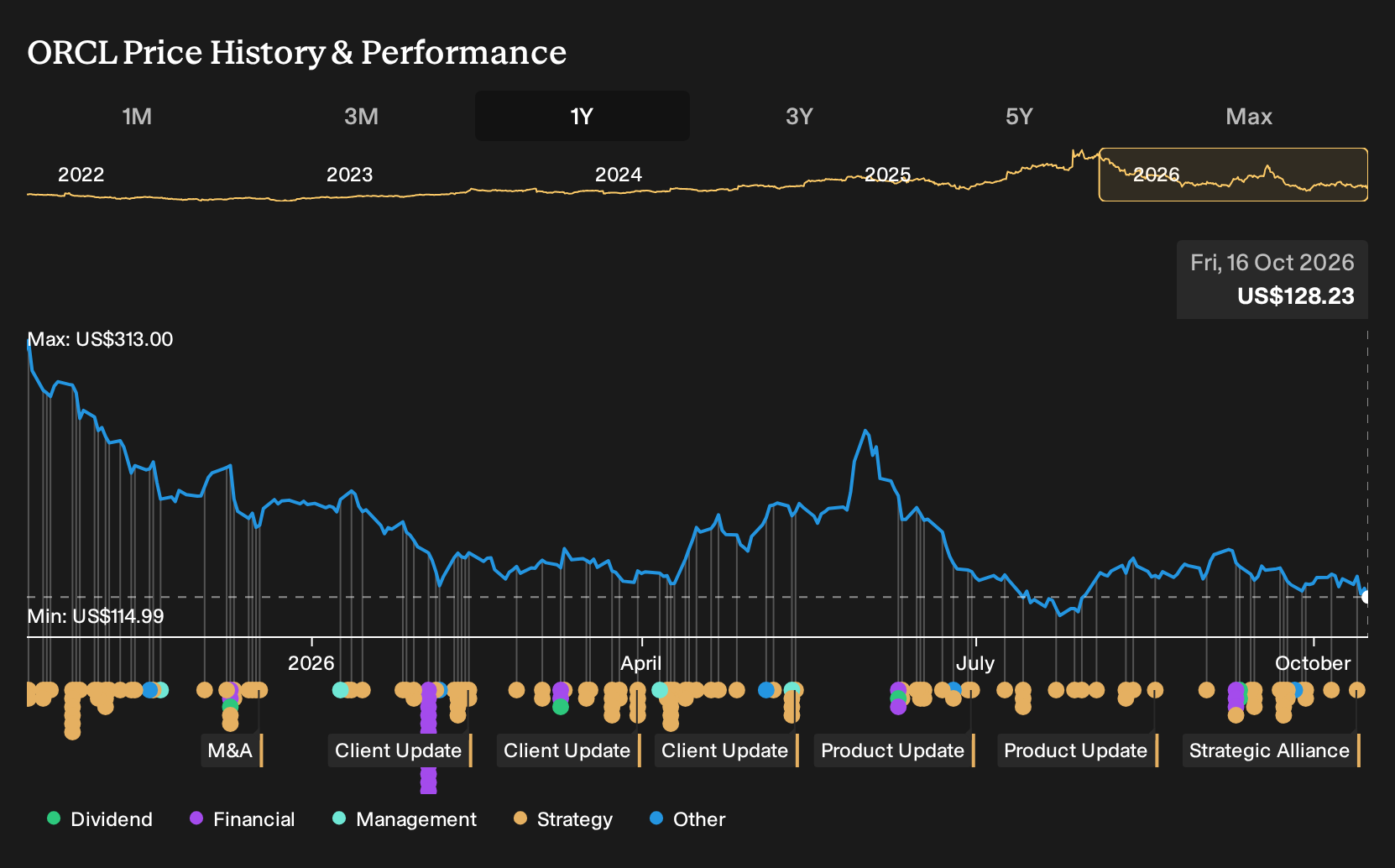
Exploring Other Perspectives
One alternate view puts more weight on Oracle’s ability to turn the new OCP security effort into higher value AI contracts. The most optimistic analysts were already penciling in about US$216.9b of 2029 revenue and US$52.5b of earnings. Those estimates came before this hardware security and testing news, so opinions could swing further.
Explore 18 other Oracle fair value estimates, including one that suggests as much as 204% upside from the current price!
Reach Your Own Conclusion
Disagree with existing narratives? Extraordinary investment returns rarely come from following the herd, so go with your instincts.
- A great starting point for your Oracle research is our analysis highlighting 4 key rewards and 3 important warning signs that could impact your investment decision.
- See our latest analysis for Oracle. The report includes a comprehensive fundamental analysis summarized in a single visual, the Snowflake, making it easy to evaluate Oracle's overall financial health at a glance.
Looking For More Oracle Investment Ideas?
If you want to pressure test your view on Oracle against what else is out there, it helps to scan a wider field of companies with similar qualities. The Simply Wall St Screener lets you quickly line up different profiles side by side so you can see where Oracle fits in your portfolio and where other opportunities might look more compelling.
- If capital preservation sits near the top of your priority list, start with a set of businesses that our models flag as comparatively resilient by checking out 32 resilient stocks with low risk scores.
- Income focused investors who want cash returns on top of potential price moves can narrow the field to companies offering stronger yields and more robust payouts through 8 dividend fortresses.
- For those hunting for underappreciated opportunities backed by solid fundamentals rather than hype, put together a watchlist starting with 20 high quality undiscovered gems.
This article by Simply Wall St is general in nature. We provide commentary based on historical data and analyst forecasts only using an unbiased methodology and our articles are not intended to be financial advice. It does not constitute a recommendation to buy or sell any stock, and does not take account of your objectives, or your financial situation. We aim to bring you long-term focused analysis driven by fundamental data. Note that our analysis may not factor in the latest price-sensitive company announcements or qualitative material. Simply Wall St has no position in any stocks mentioned.
Have feedback on this article? Concerned about the content? Get in touch with us directly. Alternatively, email editorial-team@simplywallst.com