
Did Blue Star's Fall Catch You Out? What Investors Missed
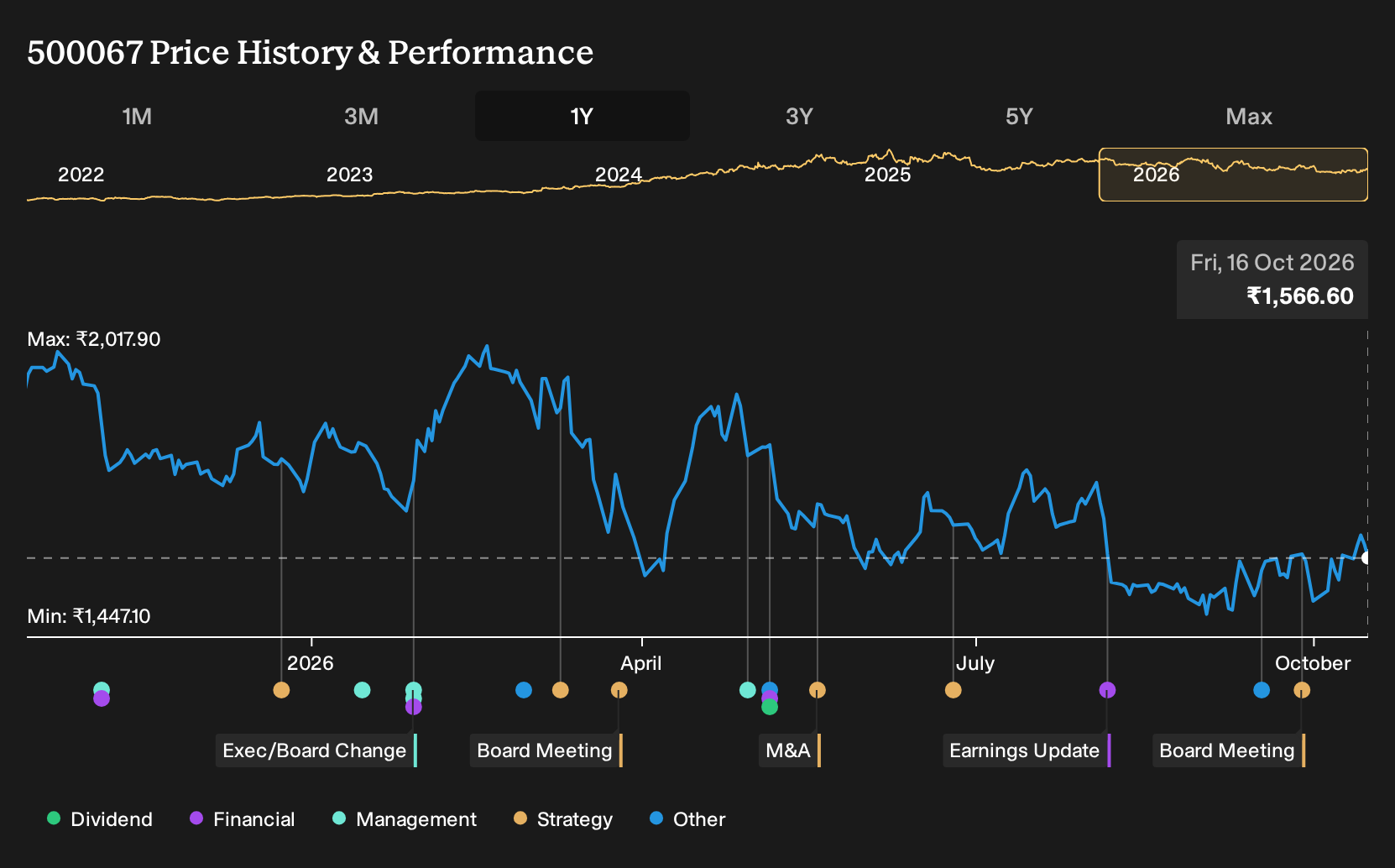
If you backed the bullish view on Blue Star, the past twelve months have been uncomfortable. For Blue Star shareholders, the loss over the past year was 20.2%, including dividends. If you had decided on 16 October 2025 to buy in on the idea that urbanization, rising incomes, and B2B refrigeration growth would justify a premium P/E and higher margins, what did that original thesis miss about regulatory pressure, technology shifts, or execution risk that later showed up in the results?
The useful thing about a Narrative is that the reasoning is checkable: the assumptions sit beside the argument, and together they imply an estimated Fair Value you can disagree with.
If the move has made Blue Star harder to judge, start where the gap is still open and scan 192 high quality undervalued stocks.
The Two Stories Investors Had To Choose Between On Blue Star
The shares cost ₹1,957 at the start of the period, and anyone buying Blue Star then had to decide which of two competing stories felt more realistic.
The bullish narrative put fair value at ₹2,239. That view rested on rapid revenue expansion, rising profit margins and a belief that urbanization, B2B refrigeration and integrated HVAC projects would support market leadership and durable earnings.
The bearish narrative pointed to fair value of ₹1,181 and focused on tighter climate regulation, rising input costs and reliance on traditional cooling technologies as threats to demand, pricing power and long-term financial stability for Blue Star.
What The Results Changed For The Blue Star Debate
The clearest fresh data point for Blue Star is the Q1 2027 filing. Revenue was ₹33,779.2m against ₹29,822.5m in Q1 2026 while net income slipped from ₹1,209.6m to ₹1,025m and net margin moved from 4.1% to 3.0%. That mix challenged the bullish focus on margin expansion and lent more weight to the cautious case on cost and regulation risk.
The hinge assumption was margin resilience. When you test another company, check whether higher sales translate into a stable or improving net margin in filings rather than assuming top line strength carries through to earnings.
What You Are Really Paying For In Blue Star Today
Blue Star now trades at ₹1,567, and this Narrative’s Fair Value sits above that quote based on its own set of assumptions rather than an agreed truth.
The focus has shifted toward data center MEP work, export heat pumps and a net cash balance sheet. A buyer today would need to believe those newer revenue streams grow into consistent, well executed profit that matters more than pressure in room air conditioners and commercial refrigeration.
"Bullish analysts expect Blue Star to compound its data center MEP order book and export heat pump business into a larger share of group revenue, while room air conditioners stabilise at structurally lower margins. The main thing that has to go right is that data center MEP projects and U.S./Europe heat pump exports translate from current order inflows and approvals into sustained, profitable execution that offsets margin pressure in room air conditioners and commercial refrigeration."
That disagreement has a full argument behind it. → Uncover the higher Fair Value this Narrative argues for
Blue Star And The Heat Problem
Blue Star points you toward one part of the cooling story. Data centers highlight another, where the bottleneck is no longer floor space.
High power chips throw off more heat than air systems can practically remove. At that point, cooling shifts from moving air to moving liquid around the hardware.
One specialist builds the power and thermal infrastructure that keeps these facilities running. Its hardware and services help customers keep critical racks within tight temperature limits.
As AI-heavy centers spread, that kind of plumbing quietly shapes usable capacity. If you track where cooling demand could shift next, this step beyond Blue Star is worth understanding.
The case is on the record, with the assumptions it rests on. → See the Narrative that values this company 98% above its price
This article by Simply Wall St is general in nature. We provide commentary based on historical data and analyst forecasts only using an unbiased methodology and our articles are not intended to be financial advice. It does not constitute a recommendation to buy or sell any stock, and does not take account of your objectives, or your financial situation. We aim to bring you long-term focused analysis driven by fundamental data. Note that our analysis may not factor in the latest price-sensitive company announcements or qualitative material. Simply Wall St has no position in any stocks mentioned.
Have feedback on this article? Concerned about the content? Get in touch with us directly. Alternatively, email editorial-team@simplywallst.com