
90% CET1 is the trigger! UBS (UBS.US) may be evicted due to new capital regulations, and the Swiss Parliament is facing the dilemma of “the rules are too strict and too loose is being voted on by referendum”
The Zhitong Finance App learned that after Credit Suisse went out of business in 2023, Swiss legislators are formulating new capital supervision rules for UBS (UBS.US), but this has also left it in a difficult situation: the standards are too strict, or will force Switzerland's largest bank to move out of the mainland; if the standards are too loose, it may trigger a referendum and further ferment of uncertainty.
The Swiss Federal Assembly (upper house) passed a banking-related bill last month, and UBS management bluntly stated that its provisions were difficult to accept. A committee of the National Assembly (lower house) will begin reviewing this set of bank supervision laws on October 26. At present, the possibility of drastic deregulation is minimal.
According to sources, major investors have urged UBS to leave Switzerland to seek a more friendly regulatory environment, and UBS is also drafting potential contingency plans, including moving its headquarters or merging with another bank. But on the other hand, this wealth management giant, headquartered in Zurich, is probably unwilling to bear the high cost of moving away from the mainland, nor is it willing to lose its local Swiss identity.
The centrist MP on the committee, Leo Mueller, said Parliament was in a difficult situation. He pointed out, “If we relax our standards too much, it will trigger a referendum. The public may think that supervision is not strong enough; they will veto the bill, and in the end, it will come to nothing. And if the standards are too strict, banks will take a stand: the Swiss business environment has deteriorated, and we will look elsewhere”
Various parties have begun to discuss a compromise plan, and some members of parliament are trying to ease the bill's requirements, but the consensus across various political factions is that it is not too difficult to drastically loosen the proposal.
The shadow of the referendum
According to information, the Federal Council's plan requires UBS to allocate 90% of its overseas subsidiaries with core Tier 1 capital (CET1) as support. The current buffer standard is 60%, and some of this can be met using lower cost capital instruments. The Swiss government's initial proposed requirement was up to 100% of core Tier 1 capital.
UBS has stated many times that it wants to take root in Switzerland, saying that staying in the mainland is beneficial to both the bank and the country. However, the bank believes that the requirement for 90% of core Tier 1 capital is too high, which will seriously damage its competitiveness.
According to people familiar with the matter, Finance Minister Karin Keller-Zotel has hinted that the bill is at risk of being challenged by a referendum (meeting the required number of co-signers can challenge the referendum bill), and she hopes the parliament will finalize the target of 90% core tier 1 capital. The Ministry of Finance declined to comment.
The Social Democratic Party supports the 100% core tier 1 capital requirement. The party said that it will wait until the parliament comes up with a final resolution before deciding whether to launch a referendum; the parliament will vote as early as December.
However, some shareholders believe that the new regulations will suppress UBS's operating space. Artisan Partners has publicly called for UBS to withdraw from Switzerland due to this set of regulatory rules.
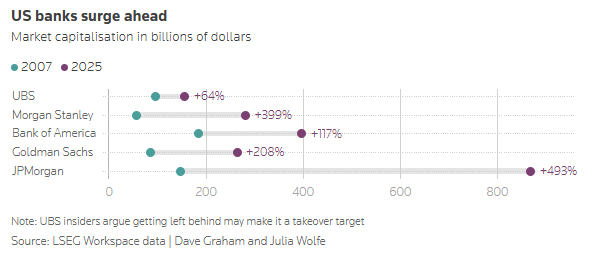
Centre-right Liberal Democratic Party (FDP) MP Hans-Peter Portman proposed a compromise plan: UBS overseas subsidiaries apply the 75% core Tier 1 capital requirement and also include a mechanism to automatically increase the bank's ability to absorb losses once the capital ratio falls below a specific threshold. He said, “In the end, we will find a workable solution that not only allows UBS to reasonably pay risk returns to shareholders and reserve future investment funds, but also minimizes the risk of bank default faced by the Swiss public.”
Analysts expect other proposals to emerge before the full debate in the National Assembly in December.
Regulatory positions are getting tougher
The Bundestag's support for 90% of the core Tier 1 capital program has exceeded market expectations. Parliament insiders said that left-wing political parties occupy a higher share of seats in the National Assembly; opinions within the centrist and center-right camps are divided, and the overall trend is to adopt a tougher regulatory stance.
Liberal Democratic MP Olivier Ferrer said, “I personally judge that the National Assembly will probably finalize the 90% standard in the end.” He himself supports UBS overseas subsidiaries implementing the 100% core Tier 1 capital requirement, but said that the party's position is still being discussed. “We are a small country, but we have huge banks.”
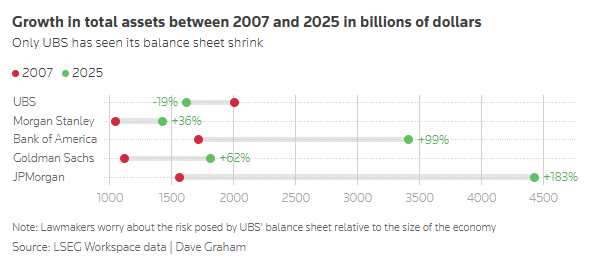
Urs Sachser, a law professor at the University of Zurich, believes that the final outcome of any compromise solution is likely to be close to the 90% standard. “UBS will not make irrational decisions,” he said. “Banks need very persuasive reasons to move out of the mainland; the stable environment and legal certainty that Switzerland can provide is not easy to find right now.”