
Is Balfour Beatty (LSE:BBY) Undervalued Following Its £2.1b Grid Order Book Update?
Balfour Beatty (LSE:BBY) is in focus after its UK power transmission order book reached £2.1b, with first half revenue from this activity at £366m, tied to a large grid investment cycle.
Despite the power grid opportunity, Balfour Beatty’s share price has softened in the near term, with a 7 day share price return of 4.71% and a 30 day share price return of 8.50%, while year to date the share price return is 17.58% and the 5 year total shareholder return is 273.14%. This suggests that long term holders have seen much stronger gains than recent traders.
Compare Balfour Beatty’s grid build out to other infrastructure contractors competing for similar capital by scanning our hand picked 42 power grid technology and infrastructure stocks in one place.
Balfour Beatty looks built on solid infrastructure demand, yet the recent share price wobble raises a sharper question. Are investors paying a fair price for that strength today or getting a genuine discount?
Most Popular Narrative: 8% Undervalued
Balfour Beatty last closed at £8.40, while the most followed valuation narrative puts fair value closer to £9.13. This frames the recent pullback as a potential pricing gap rather than a change in fundamentals.
Venerable Balfour Beatty plc is a household name in the UK, and for a good reason. The construction and infrastructure behemoth is present on construction sites across the UK. From roadworks over public buildings to the facility management of defence installations, BB got stakes everywhere in the country (and at many sites in the US, too, for that matter).
See why 9 investors see Balfour Beatty as 8% undervalued.
According to PittTheYounger, that broad footprint underpins the view that the shares trade at an 8.1% discount to fair value, using a 10% discount rate and a 3.5% profit margin assumption to reach a fair value of about £9.13 per share. The narrative leans heavily on long duration infrastructure work and regulated spending as support for cash flows rather than short cycle construction swings.
That lens also intersects with Simply Wall St's own cash flow work. BBY at £8.40 is described as trading 47.5% below an internal estimate of future cash flow value of £15.99, which implies the current quote bakes in far more caution than the long term modelling suggests. For investors comparing narratives, the gap between £9.13 and £15.99 highlights how sensitive fair value can be to assumptions on growth rates, margins and risk.
Result: Fair Value of £9.13 (UNDERVALUED)
Still, the bullish Balfour Beatty story can be knocked off course if government infrastructure plans stall or if higher project costs squeeze already thin profit margins.
Find out about the key risks to this Balfour Beatty narrative.
Another View: What Balfour Beatty’s P/E Is Really Saying
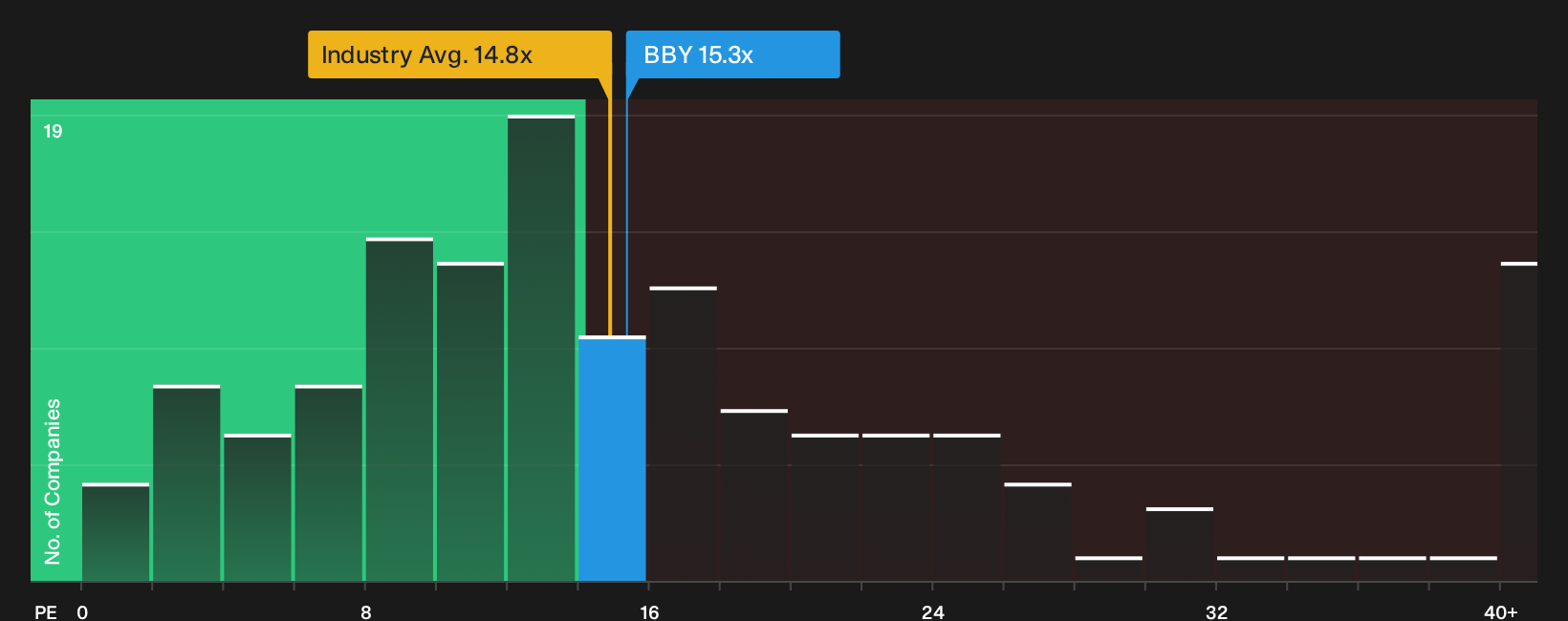
There is a catch. On simple P/E maths, Balfour Beatty looks less generous. The shares trade on 15.3x earnings, slightly above the European Construction group on 14.8x, yet below a fair ratio of 20.2x that our work suggests the market could eventually lean toward.
That means holders are not getting a rock bottom entry price today, but the current multiple does not fully reflect the earnings profile either. It points to a middle ground that leaves room for upside if sentiment shifts, and risk if expectations cool. Which side of that trade off feels more compelling to you?
See what the numbers say about this price — find out in our valuation breakdown.
Next Steps
If that mix of optimism and concern feels familiar, use it as a prompt to move quickly, pull up the facts yourself, and pressure test the story behind Balfour Beatty before sentiment shifts again. To get a balanced view of both the upside and the red flags, start with our breakdown of 4 key rewards and 1 important warning sign
Looking for more investment ideas beyond Balfour Beatty?
If Balfour Beatty has sharpened your focus on quality, do not stop here. The next strong addition to your portfolio might already be on the screener waiting for you.
- Target value by scanning companies that combine quality fundamentals with attractive pricing through our 7 high quality undervalued stocks.
- Strengthen portfolio resilience by focusing on firms with healthy finances and robust metrics using the list of solid balance sheet and fundamentals (9 results).
- Get ahead of the crowd by reviewing 5 high quality undiscovered gems before they attract wider attention.
This article by Simply Wall St is general in nature. We provide commentary based on historical data and analyst forecasts only using an unbiased methodology and our articles are not intended to be financial advice. It does not constitute a recommendation to buy or sell any stock, and does not take account of your objectives, or your financial situation. We aim to bring you long-term focused analysis driven by fundamental data. Note that our analysis may not factor in the latest price-sensitive company announcements or qualitative material. Simply Wall St has no position in any stocks mentioned.
Have feedback on this article? Concerned about the content? Get in touch with us directly. Alternatively, email editorial-team@simplywallst.com