
What RenaissanceRe Bulls Got Right
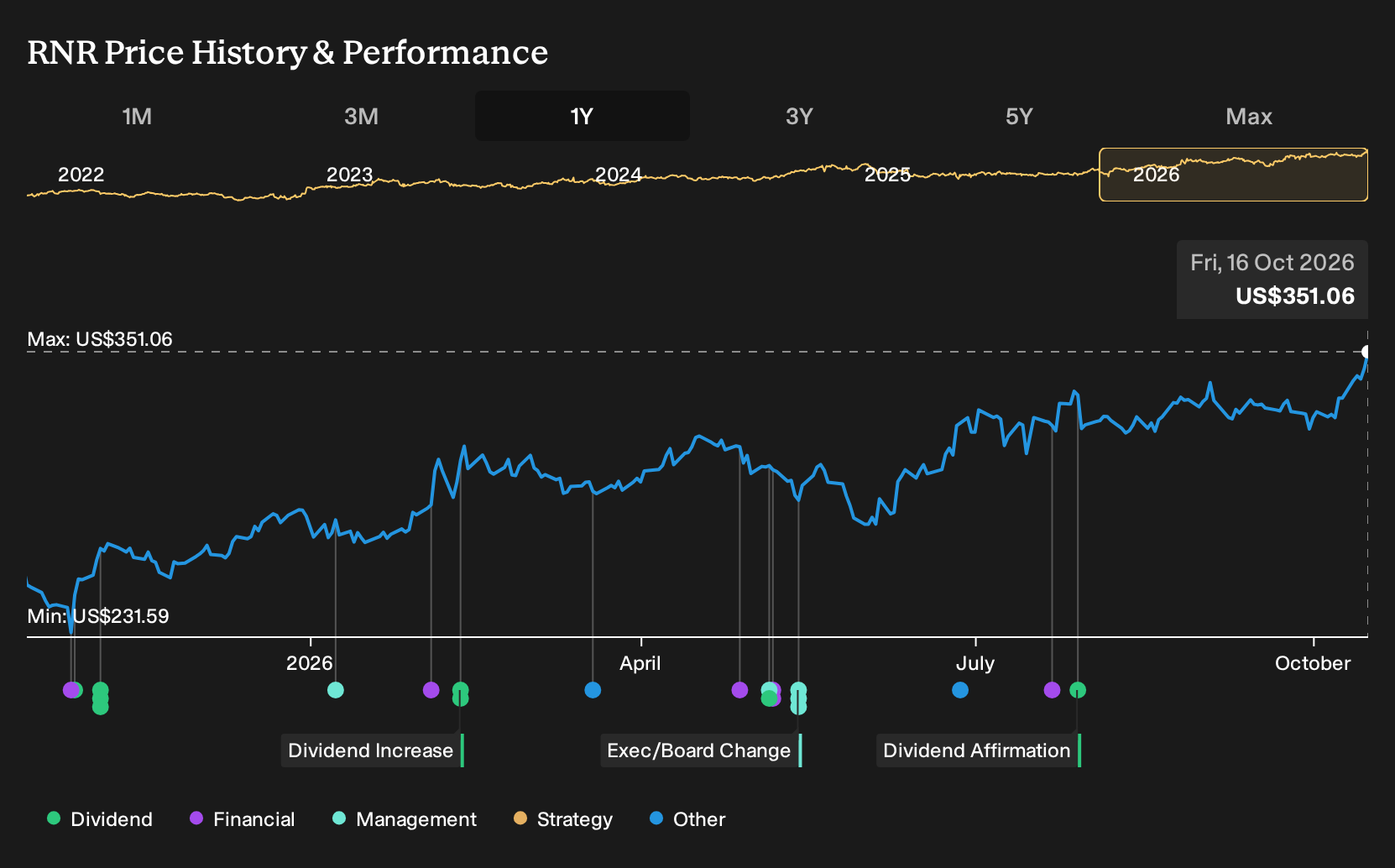
If you had bought RenaissanceRe on 16 October 2025 and simply held on, the outcome over the next twelve months might look very different from what you expected on that quiet decision day. For RenaissanceRe shareholders, the return over the past year was 40.7%, including dividends. Yet early buyers were weighing falling revenue forecasts, pressure on profit margins, and disagreement between bullish and bearish analyst targets. Were those concerns a reason to stay cautious, or a calculated risk worth taking?
The useful thing about a Narrative is that the reasoning is checkable: the assumptions sit beside the argument, and together they imply an estimated Fair Value you can disagree with.
RenaissanceRe has already moved. See which of 33 high quality undervalued stocks still trade below our estimates.
What RenaissanceRe Investors Were Really Arguing About
The shares cost US$252 at the start of the period, and anyone looking at RenaissanceRe had to choose between two very different but reasonable stories about what came next.
On the bullish side, the narrative pointed to a fair value of US$281, built on demand for catastrophe cover and RenaissanceRe's risk analytics. Supporters accepted an annual revenue decline of 7.2% but expected a 14.4% profit margin and a future P/E of 8.5x.
The bearish view anchored on a fair value of US$237 and focused on heavier catastrophe exposure and fiercer competition. This scenario still used catastrophe underwriting and fee income, but worried that rising losses and integration risks could pull on capital and earnings power.
What The Results Changed In The RenaissanceRe Argument
RenaissanceRe then reported Q2 2026 numbers with revenue at US$2.78b against US$3.20b a year earlier, and net income at US$643m versus US$813m. Net margin moved from 25.4% to 23.2%. That combination challenged the bullish story that underwriting profitability and earnings power would hold up while revenue weakened. It supported the cautious case more than the optimistic one.
The key assumption was earnings resilience despite pressure on the top line. When you assess another insurer, track whether revenue shifts line up with net income and margin trends across several quarters, not just headline premium growth.
What Today's RenaissanceRe Price Already Assumes
RenaissanceRe now trades at US$351 after a 40.7% gain over the past year, and the selected Narrative’s Fair Value sits below that level. The Narrative frames this gap less as a verdict on the business and more as a question about how resilient its multi-source earnings engine really is.
At today’s quote, you are effectively assuming that underwriting, fee income and net investment returns can keep capital returns attractive even if catastrophe losses, softer pricing and higher expenses start to bite. The Narrative asks how that assumption holds up if casualty volatility and property rate pressure persist together.
"The main thing that has to go right is that RenaissanceRe Holdings needs its multi-driver earnings model, including underwriting, fee income and record retained net investment income, to offset higher expense ratios and the impact of casualty and specialty volatility so that returns on equity remain attractive."
One Narrative has put a figure on that disagreement. → See the Narrative with its lower Fair Value, assumptions and all
RenaissanceRe And A Different Kind Of Cushion
RenaissanceRe asks you to think hard about risk and capital. One step away, another insurer tackles a quieter problem.
Retirees and pension schemes still want predictable income over long periods. That creates a need for insurers who can manage guarantees and long dated promises.
Here, a different business leans on annuities, workplace pensions and investment management. It aims to turn long term savings into fees and insurance earnings.
Its future depends on something simple. Can recurring contributions, asset optimisation and workplace profit targets support surplus for policyholders and shareholders?
It is written up in full, assumptions and all. → Explore the Narrative that puts this company 26% above its price
This article by Simply Wall St is general in nature. We provide commentary based on historical data and analyst forecasts only using an unbiased methodology and our articles are not intended to be financial advice. It does not constitute a recommendation to buy or sell any stock, and does not take account of your objectives, or your financial situation. We aim to bring you long-term focused analysis driven by fundamental data. Note that our analysis may not factor in the latest price-sensitive company announcements or qualitative material. Simply Wall St has no position in any stocks mentioned.
Have feedback on this article? Concerned about the content? Get in touch with us directly. Alternatively, email editorial-team@simplywallst.com