
What Has Actually Changed At Illumina After A 175% Jump
If you only skimmed Illumina headlines about rising competition from Roche and a patent setback in Germany, a near-tripling in the share price might sound unlikely. Holding Illumina over the past year would have returned 175.0%, including dividends. That gain landed alongside Q2 2026 results where revenue rose while net margin slipped, and yet the stock still surged. If you were weighing an investment decision back in October 2025, what evidence really justified taking that risk?
Illumina has already moved. Pinpoint other ways to investigate the theme among 33 healthcare AI stocks.
The Argument Illumina Investors Actually Faced
The shares cost US$95.91 at the start of the period, and Illumina investors were really choosing between two stories about clinical sequencing and regulation rather than one neat forecast.
On the optimistic side, the bull Narrative said expanding clinical genomics and next-generation sequencing could support recurring sales and a future profit margin of 18.4%. Its implied Fair Value was US$112, a price those assumptions pointed to rather than a number anyone could verify in advance.
The bear case sketched a tougher road. Rising regulatory scrutiny and intensifying competition were expected to pressure Illumina, with a Fair Value of US$75 and an assumed future profit margin of 15.1%.
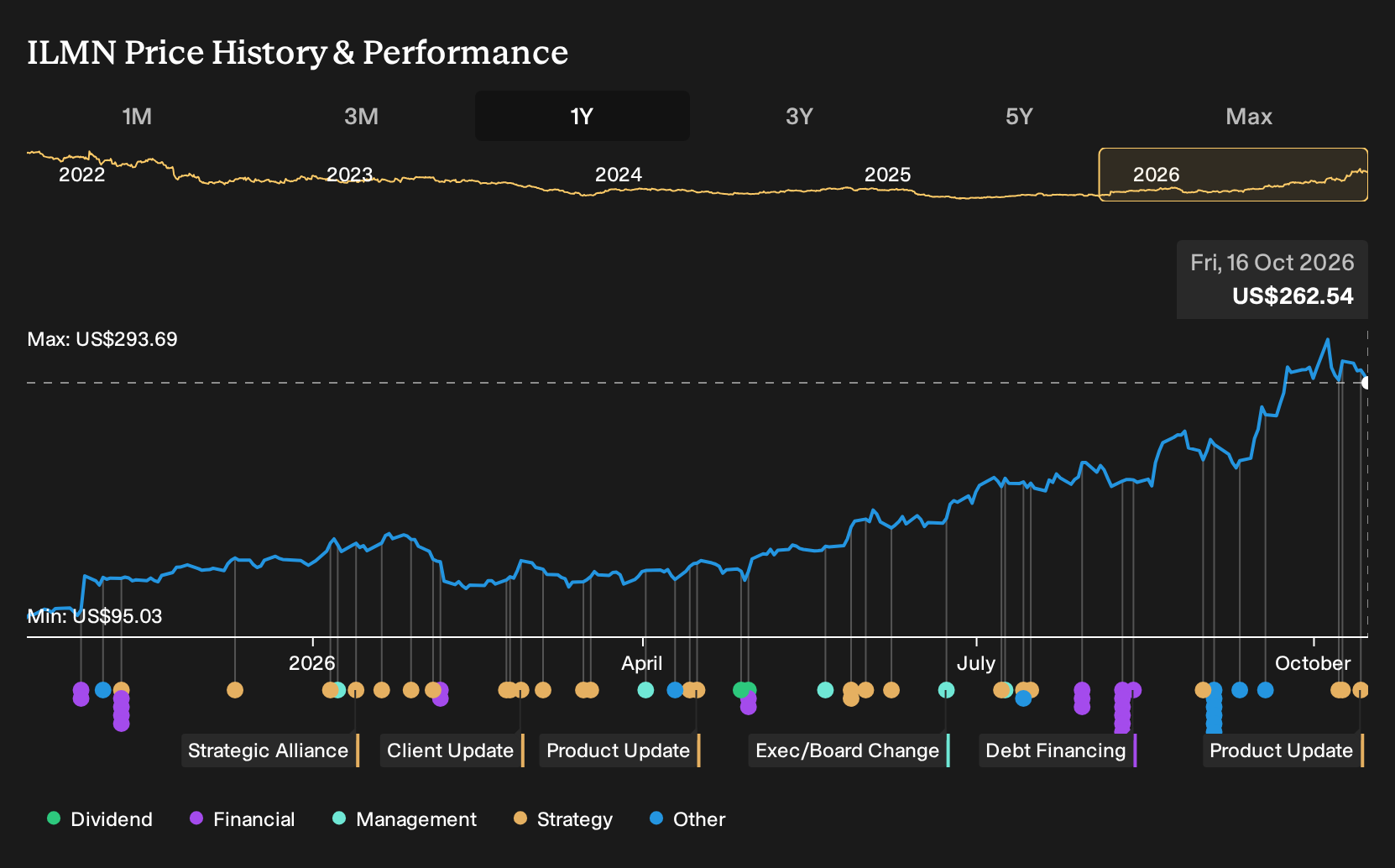
What The Results Changed For Illumina
Illumina’s raised 2026 guidance on the back of strong Q1 and Q2 demand for NovaSeq X and clinical consumables supported the optimistic story about expanding clinical sequencing. The same period also brought a German patent loss, rising competition from Roche’s Axelios system, and a net margin that moved from 22.2% to 17.9%. The evidence cut both ways.
The whole episode turned on one assumption. Investors in October 2025 were really betting on whether clinical sequencing growth would outweigh regulatory and competitive pressure. When you look at another diagnostics stock, track that split directly through segment revenue disclosures and reported profitability rather than headline growth alone.
What Illumina’s Run Leaves You Paying For Now
Illumina now trades at US$263, far above where the past year started. The selected Narrative’s Fair Value sits below the current price, so its valuation view assumes today’s level already builds in generous expectations.
That Narrative leans on legal, cost, and competition pressure as the counterweight to clinical and AI momentum. Anyone buying today is effectively assuming Illumina can turn strong clinical consumables and multiomics demand into durable earnings while those specific risks stay manageable. The key question is how that assumption stacks up against the German patent ruling and higher logistics costs.
"The numbers imply that Illumina's share price already reflects optimistic assumptions on revenue growth, consumables pull through, and margin expansion that leave limited room for disappointment. While Illumina is benefiting from strong clinical sequencing consumables growth, the German court ruling that it infringed Element Biosciences’ patent and the associated injunction and recall risk disrupting sales of affected systems and consumables in that market, which could pressure regional revenue and require higher legal and remediation costs that weigh on earnings."
One Narrative disagrees with today's price. → See where this Narrative says Illumina should trade
Where Illumina’s Theme Connects Next
Illumina points you to clinical data, but the story does not end there.
Similar questions show up in chronic disease treatments. One specialist is pushing obesity and diabetes therapies while also working on blood and hormone conditions.
The focus there is different. Management is trying to broaden beyond one blockbuster category through new product launches and cost cuts.
AI tools are being used to move more drug candidates into human trials. That is meant to keep the later stage pipeline crowded enough to refresh earnings power.
If that shift works, you would be looking at a very different way of playing long term health demand.
It is written up in full, assumptions and all. → Explore the Narrative that puts this company 18% above its price
This article by Simply Wall St is general in nature. We provide commentary based on historical data and analyst forecasts only using an unbiased methodology and our articles are not intended to be financial advice. It does not constitute a recommendation to buy or sell any stock, and does not take account of your objectives, or your financial situation. We aim to bring you long-term focused analysis driven by fundamental data. Note that our analysis may not factor in the latest price-sensitive company announcements or qualitative material. Simply Wall St has no position in any stocks mentioned.
Have feedback on this article? Concerned about the content? Get in touch with us directly. Alternatively, email editorial-team@simplywallst.com