
Missed Vodacom Group's Run? Here's What Holders Backed
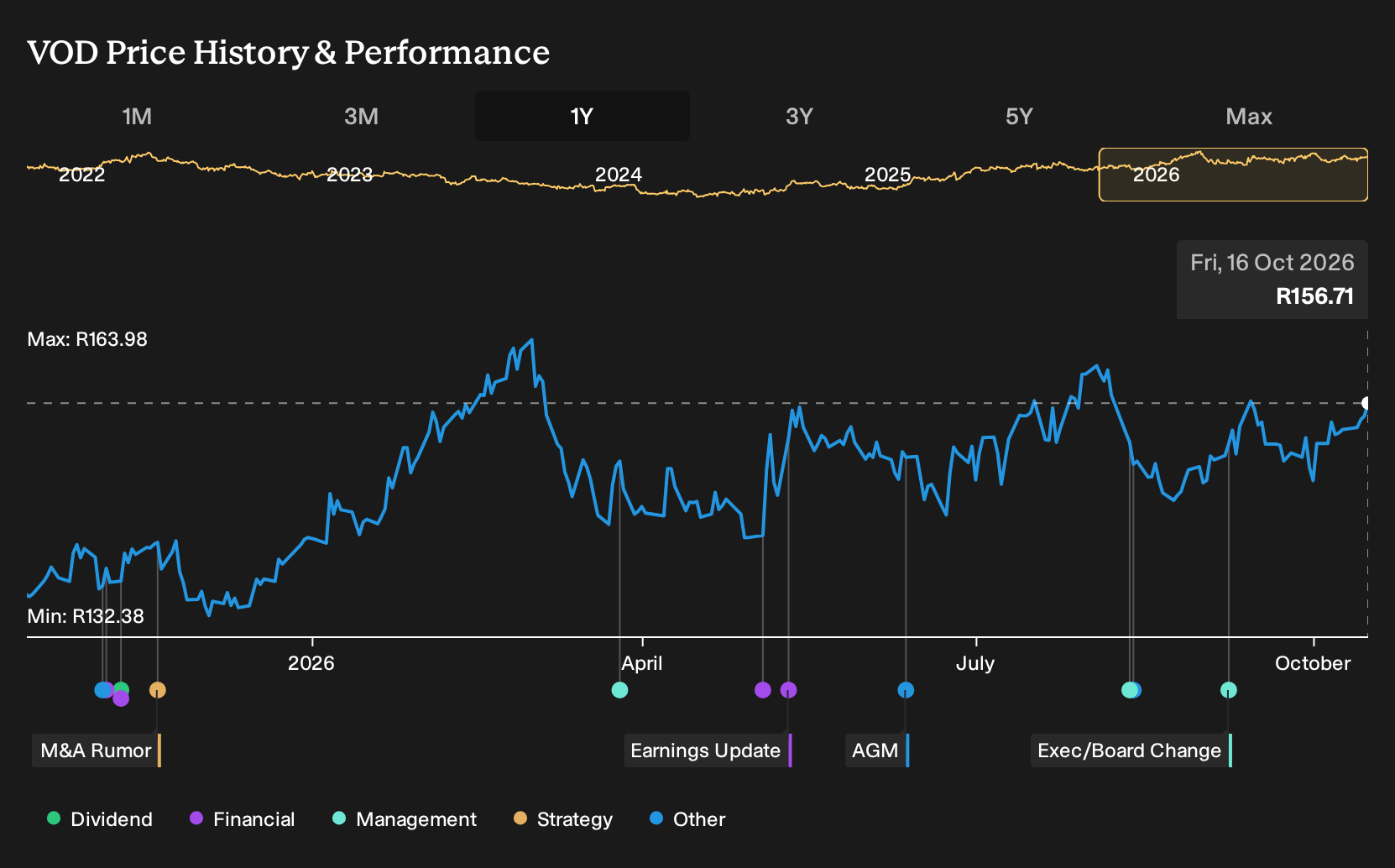
If you had looked at Vodacom Group in October 2025, the debate was sharp. Fintech momentum, Egypt's contribution and heavy network investment all pulled the story in different directions. For Vodacom Group shareholders, the return over the past year was 22.3%, including dividends. If you were weighing those bullish fintech narratives against concerns over regulation, capital intensity and competition, which side of that argument would have carried more weight for you?
The useful thing about a Narrative is that the reasoning is checkable: the assumptions sit beside the argument, and together they imply an estimated Fair Value you can disagree with.
The easy part of this move is behind Vodacom Group. Zero in on 191 high quality undervalued stocks for companies trading below our estimates.
The Two Vodacom Group Stories Investors Had To Weigh
The shares cost ZAR135 at the start of the period, and Vodacom Group sat between two very different narratives about what might come next.
On the bullish side, one narrative put fair value at ZAR185, 38% above the start price. This was based on fintech growth assumptions and an expectation that profit margins could move from 10.9% to 16.8% by 2028.
The bearish view anchored fair value at ZAR115, 15% below the start price. It focused on risks such as tighter African data rules pushing compliance costs higher, while capital spending needs stayed heavy.
What The Results Changed For Vodacom Group
The clearest new fact was hard numbers. Vodacom Group reported total revenue of ZAR78,689m in H2 2025 and ZAR86,067m in H2 2026, with net income moving from ZAR9,755m to ZAR11,539m and net margin edging from 12.4% to 13.4%. That margin lift leaned toward the optimistic profitability story, although one period of improvement did not settle the longer term debate.
The useful takeaway is simple. When a bullish or cautious case hinges on margins, you check exactly that. Track net margin alongside revenue and earnings in each set of results, then judge whether the trend actually matches the story you are being asked to believe.
What Vodacom Group’s Price Already Assumes
Vodacom Group now trades at ZAR157, with this Narrative’s Fair Value sitting below that level rather than above it. The gap turns attention to what the market is already baking in about earnings resilience.
The Narrative leans on a tougher read of energy costs, South Africa prepaid pressure and heavier reliance on financial services and Egypt. A buyer today is effectively assuming financial services and international operations can shoulder more of the profit load, so the key question is how energy and regulatory risks affect that bet on durability.
"Key Takeaways Bearish analysts expect Vodacom Group to see its margins and earnings power pressured as energy costs remain a sizeable share of operating expenses and prepaid mobile revenue in South Africa continues to decline. The main factor that needs to go right is that Vodacom Group successfully converts its growing financial services and beyond mobile revenue base into a durable profit engine that offsets pressure on traditional voice and prepaid mobile services."
That disagreement has a full argument behind it. → Uncover the lower Fair Value this Narrative argues for
Where Vodacom Pressure Leads Next
Thinking about Vodacom, you might also look one step sideways. Connectivity only solves part of the problem when data volumes rise.
On the other side sits a specialist in memory and storage. Its chips help AI servers keep working on the data they receive.
This business focuses on high speed working memory and dense flash storage. Both matter when clouds and AI workloads demand more capacity.
Vodacom shareholders considering long term data demand might find that angle interesting. If bandwidth keeps drawing data upward, memory needs could shift in important ways.
The case is written up, with the assumptions it depends on. → Discover the AI infrastructure company one Narrative values 42% above its price
This article by Simply Wall St is general in nature. We provide commentary based on historical data and analyst forecasts only using an unbiased methodology and our articles are not intended to be financial advice. It does not constitute a recommendation to buy or sell any stock, and does not take account of your objectives, or your financial situation. We aim to bring you long-term focused analysis driven by fundamental data. Note that our analysis may not factor in the latest price-sensitive company announcements or qualitative material. Simply Wall St has no position in any stocks mentioned.
Have feedback on this article? Concerned about the content? Get in touch with us directly. Alternatively, email editorial-team@simplywallst.com