
Learn Why The Bull Case For Rockwell Automation Stock Could Change Following Grid Process Partnership
- Hitachi Energy and Rockwell Automation announced a collaboration on an integrated grid-to-process architecture that links industrial power infrastructure with production control systems, initially targeting mining and metals customers that face rising electricity needs, decarbonization pressure and capital constraints.
- The partnership puts Rockwell Automation closer to the electrification decisions that shape plant design and reliability, which can influence how its automation, software and services are specified into long‑lived mining and metals projects.
- We will look at how Rockwell Automation's investment narrative aligns with this grid-to-process integration push with Hitachi Energy.
Scan a curated group of electrification and automation plays by checking the 41 power grid technology and infrastructure stocks, which could benefit as grid-to-process projects like Rockwell Automation's hit the planning table.
Rockwell Automation Investment Narrative Recap
To own Rockwell Automation, you need to believe that industrial automation, software and electrification projects keep moving from pipeline talk to funded orders, and that the richer mix in Software & Control and Lifecycle Services steadily improves earnings quality. The Hitachi Energy partnership fits that story by tying Rockwell Automation closer to high value power centric projects rather than stand alone factory controls.
In the near term, the key swing factor is whether large capital projects and recurring services recover from recent softness, especially where lifecycle services organic sales declined and annual recurring revenue growth lagged internal goals. The grid to process push does not immediately change that risk but gives Rockwell Automation additional exposure to large, long duration mining and metals power projects that could support order intake over time.
Among the recent announcements, the expansion of SecureOT with Firewall Managed Services and Infrastructure Managed Services is closest in spirit to the Hitachi Energy news. Both speak to Rockwell Automation trying to sit deeper in customers' operational technology stack, from electrical infrastructure through to cybersecurity and managed services for critical controls and networks.
For you as an investor, that matters because it leans into two stated catalysts, a higher margin software and services mix and stronger recurring revenue. Execution risk is clear since recurring Lifecycle Services have grown slower than management hoped and inflation in components has pressured price cost. If SecureOT managed offerings scale well alongside the grid to process collaboration, Rockwell Automation could have a broader toolkit to support more resilient, service heavy projects, particularly in energy intensive sectors.
Rockwell Automation's narrative projects US$10.5b revenue and US$1.9b earnings by 2029. This assumes 5.3% yearly revenue growth and an earnings increase of about US$0.7b from current earnings of roughly US$1.2b.
Uncover why Rockwell Automation's fair value indicates a 12% potential upside to its current price that could narrow quickly.
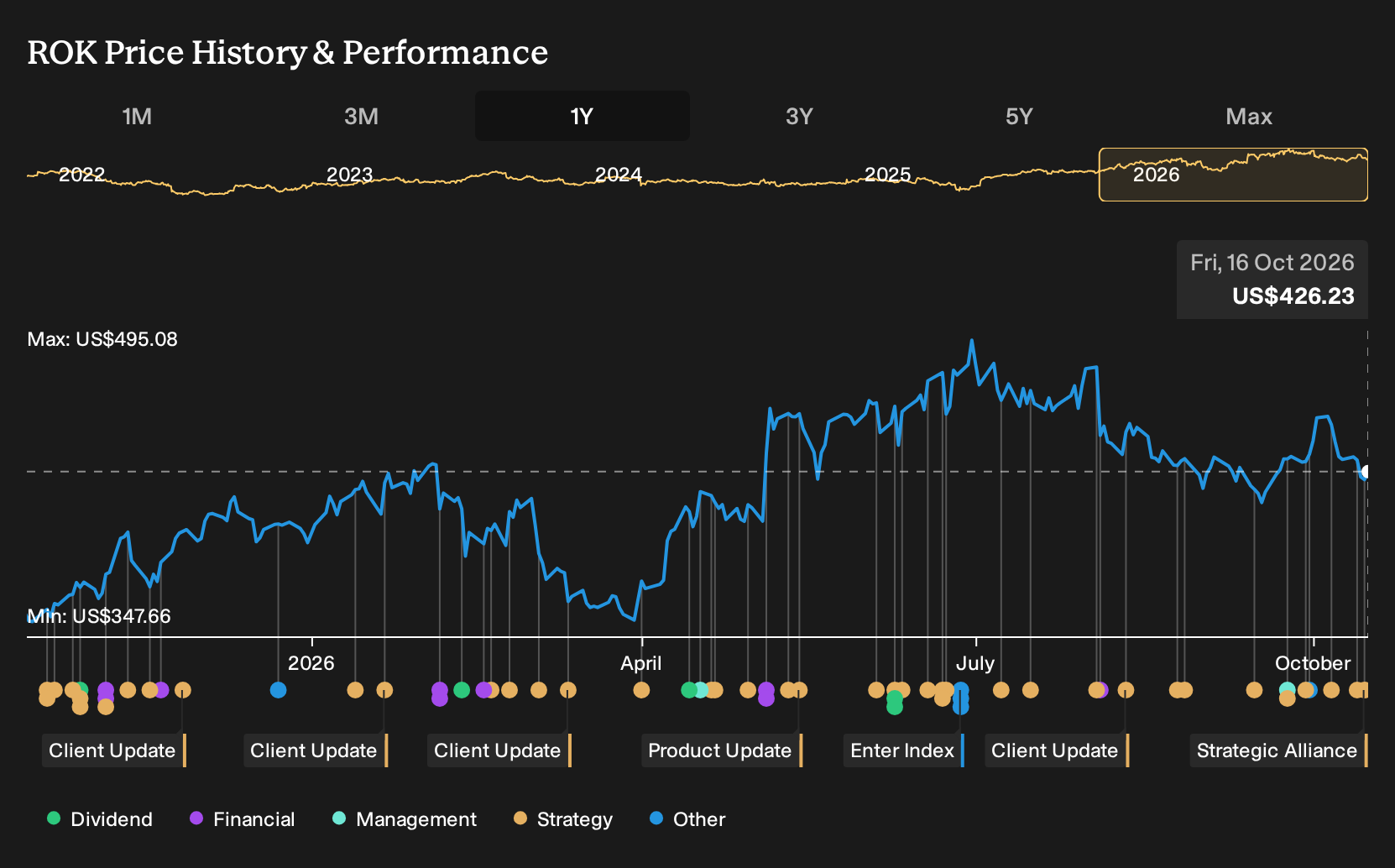
Exploring Other Perspectives
One alternate, more optimistic angle focuses on Rockwell Automation’s earnings potential if high margin software and services scale faster than consensus expects. The most bullish analysts were already modeling revenue of about US$10.9b and earnings of roughly US$2.0b by 2029. This grid to process deal may prompt you to reconsider which scenario feels closer to your own view.
Explore 2 other Rockwell Automation fair value estimates, including one that indicates potential upside of up to 12% from the current price.
The Verdict Is Yours
Disagree with existing narratives? Extraordinary investment returns rarely come from following the herd, so consider following your own instincts.
- A great starting point for your Rockwell Automation research is our analysis highlighting 1 key reward and 1 important warning sign that could impact your investment decision.
- See our latest analysis for Rockwell Automation. The report includes a comprehensive fundamental analysis summarized in a single visual, the Snowflake, making it easy to evaluate Rockwell Automation's overall financial health at a glance.
Looking For More Investment Ideas Beyond Rockwell Automation?
After forming a view on Rockwell Automation, it can help to widen the lens and compare it with other companies that share similar qualities, whether you care most about value, income, or resilience.
- If value and quality are top of mind, scan a focused group of potentially mispriced opportunities through the 33 high quality undervalued stocks.
- If dependable income matters more to you, filter for companies with stronger yield profiles and resilience using the 8 dividend fortresses.
- If capital protection sits higher on your checklist, narrow your watchlist to businesses with sturdier fundamentals via the 32 resilient stocks with low risk scores.
This article by Simply Wall St is general in nature. We provide commentary based on historical data and analyst forecasts only using an unbiased methodology and our articles are not intended to be financial advice. It does not constitute a recommendation to buy or sell any stock, and does not take account of your objectives, or your financial situation. We aim to bring you long-term focused analysis driven by fundamental data. Note that our analysis may not factor in the latest price-sensitive company announcements or qualitative material. Simply Wall St has no position in any stocks mentioned.
Have feedback on this article? Concerned about the content? Get in touch with us directly. Alternatively, email editorial-team@simplywallst.com