
How Investors Are Reacting To Mondi (LSE:MNDI) Q3 EBITDA Growth
- Mondi’s Q3 2026 trading update, released after the October sales and trading statement call, reported underlying EBITDA growth supported by higher selling prices and solid order books, despite maintenance shutdowns and faster input cost inflation, including sharply higher energy costs.
- The group is pushing through price increases on selected paper grades while focusing on efficiency gains and portfolio reshaping. Together, these actions provide a clear view of how Mondi is trying to manage persistent energy and broader cost pressures.
- We will now assess how Mondi’s investment narrative may shift in light of Q3 EBITDA growth driven by higher selling prices.
Scan how Mondi’s pricing power and cost pressures compare with peers by zeroing in on list of solid balance sheet and fundamentals (9 results), which may be positioned to handle energy and input inflation more resiliently.
Mondi Investment Narrative Recap
To own Mondi, you need to be comfortable with a packaging group that leans on pricing power, efficiency initiatives and portfolio reshaping to deal with volatile energy and broader input costs. The Q3 update, with EBITDA supported by higher selling prices and solid order books, aligns with that story rather than changing it.
The key short term swing factor is whether recent price increases truly keep pace with energy and raw material inflation. The biggest risk is that ongoing oversupply and muted demand in core grades limit further pricing headroom, which would leave Mondi absorbing a larger share of structurally higher costs in its margins.
The latest trading statement matters because it links directly to that pricing and cost equation. Management reports sharply higher energy costs but indicates that recent price increases on selected paper grades are expected to offset inflation in Q4. That keeps the near term catalyst squarely on execution of those price moves.
At the same time, Mondi is working through operational efficiency measures and divesting non core assets. Large capacity projects and the Schumacher acquisition sit in the background. For you, the operational question is whether these actions, together with Q3 pricing progress, are enough to manage debt, protect cash flow and ease pressure on margins if demand stays subdued.
Mondi Forecasts, Earnings Path and Valuation Expectations
Mondi's current loss of €260.0 million is set against analyst expectations for earnings of €404.7 million by 2029. That implies an earnings swing of about €665 million, which would need to come through a mix of higher margins and top line expansion rather than just cost cutting.
On the revenue side, analysts are working off a projected annual growth rate of 3.7% over the next three years, moving toward an €8.6 billion sales figure by 2029. Profitability assumptions track that shift, with margins expected to move from a reported loss position of 3.4% today to a positive 4.7% in three years, which frames how much of the Q3 pricing progress would need to persist or deepen.
Bringing these elements together, the analyst framework assumes Mondi can generate €8.6 billion of revenue and €404.7 million of earnings in 2029 and trade on a P/E of 14.7x, compared with a current P/E of 16.7x based on loss making earnings today. That would leave the stock on a lower multiple than the GB Forestry industry at 25.0x, which matters if you are comparing packaging exposure against broader sector options that may respond differently to energy and input cost shifts.
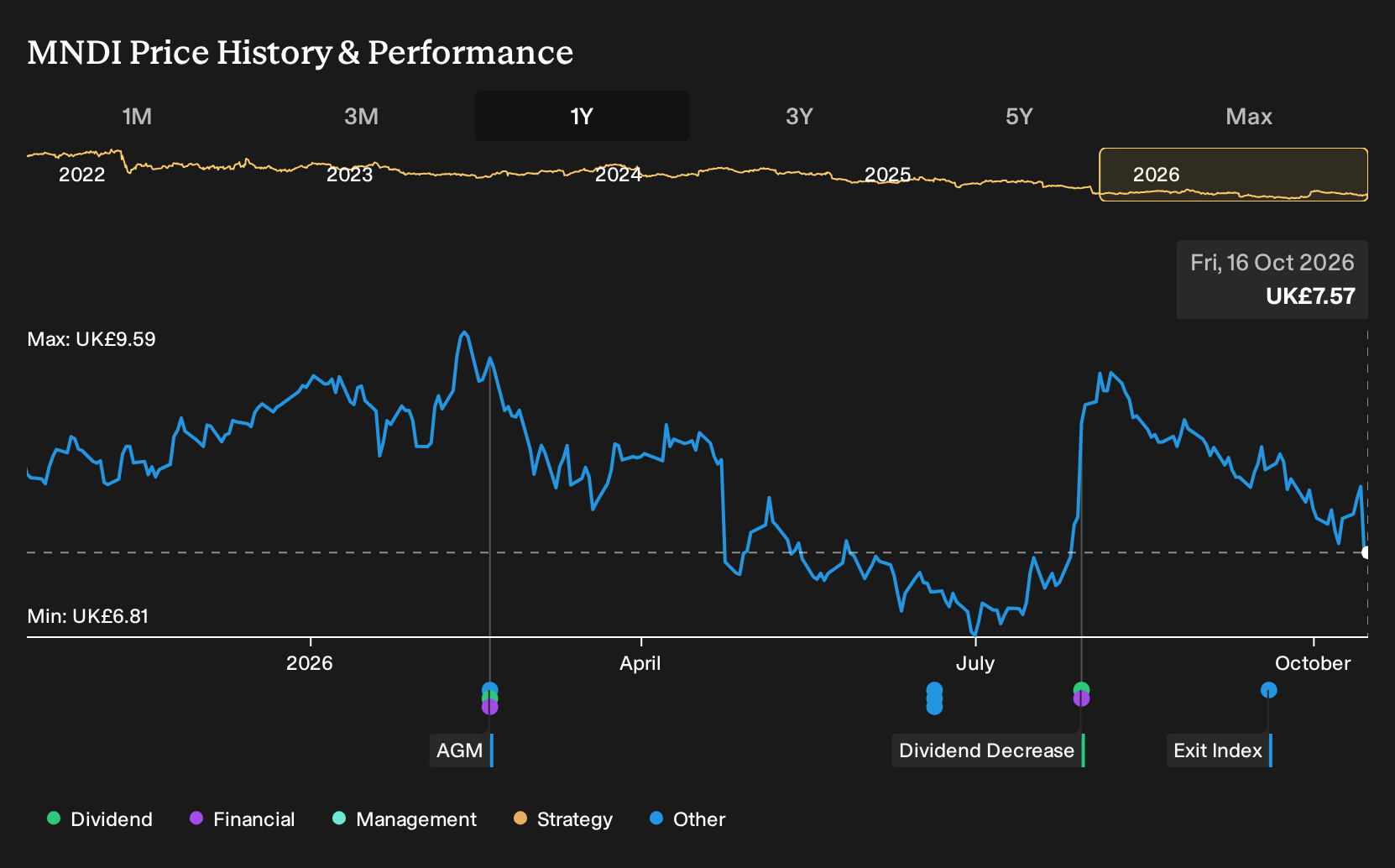
Against the current share price of £8.47, the consensus target of £8.86 sits 4.4% higher, while the spread between the most optimistic and most cautious analyst views runs from £11.04 down to £6.90. The gap between those endpoints effectively maps the debate about Q3 as a turning point for Mondi's earnings path or just a brief period where higher selling prices happen to keep energy inflation in check.
Mondi's narrative projects €8.6 billion revenue and €404.7 million earnings by 2029. This assumes 3.7% yearly revenue growth and an earnings increase of about €665 million from current earnings of a €260.0 million loss.
Uncover why Mondi's fair value indicates a 17% potential upside to its current price that may not last much longer.
Exploring Other Perspectives
You now have two very different stories about Mondi. The upbeat camp treats Q3 as another clue that tighter capex and working capital control could unlock the higher €9.9b revenue and €649.5m earnings they were already pencilling in for 2029. More cautious analysts, closer to €361.9m to €404.7m earnings, may rethink those pre call views once the latest trading detail is fully absorbed.
Explore 4 other Mondi fair value estimates, including one that suggests as much as 45% upside from the current price.
Decide For Yourself
Don't just follow the ticker; dig into the data and build a conviction that's truly your own.
- A great starting point for your Mondi research is our analysis highlighting 2 key rewards and 1 important warning sign that could impact your investment decision.
- See our latest analysis for Mondi. The report includes a comprehensive fundamental analysis summarized in a single visual, the Snowflake, making it easy to evaluate Mondi's overall financial health at a glance.
Looking For More Investment Ideas Beyond Mondi?
If Mondi has sharpened your focus on pricing power and balance sheet resilience, it can be useful to line that story up against other businesses with different strengths and risk profiles using the Simply Wall St Screener.
- For investors who want potential mispricings backed by robust fundamentals, scan a curated set of 5 high quality undiscovered gems that might not yet be crowded with attention.
- If capital preservation and steadier profiles matter most to you right now, filter for 4 resilient stocks with low risk scores that score well on financial resilience and business risk metrics.
- When income is the priority, sort through 2 dividend fortresses that combine higher yields with balance sheets that can support those payouts.
This article by Simply Wall St is general in nature. We provide commentary based on historical data and analyst forecasts only using an unbiased methodology and our articles are not intended to be financial advice. It does not constitute a recommendation to buy or sell any stock, and does not take account of your objectives, or your financial situation. We aim to bring you long-term focused analysis driven by fundamental data. Note that our analysis may not factor in the latest price-sensitive company announcements or qualitative material. Simply Wall St has no position in any stocks mentioned.
Have feedback on this article? Concerned about the content? Get in touch with us directly. Alternatively, email editorial-team@simplywallst.com