
Learn Why The Bull Case For Persimmon Stock Could Change Following First Buyer Support
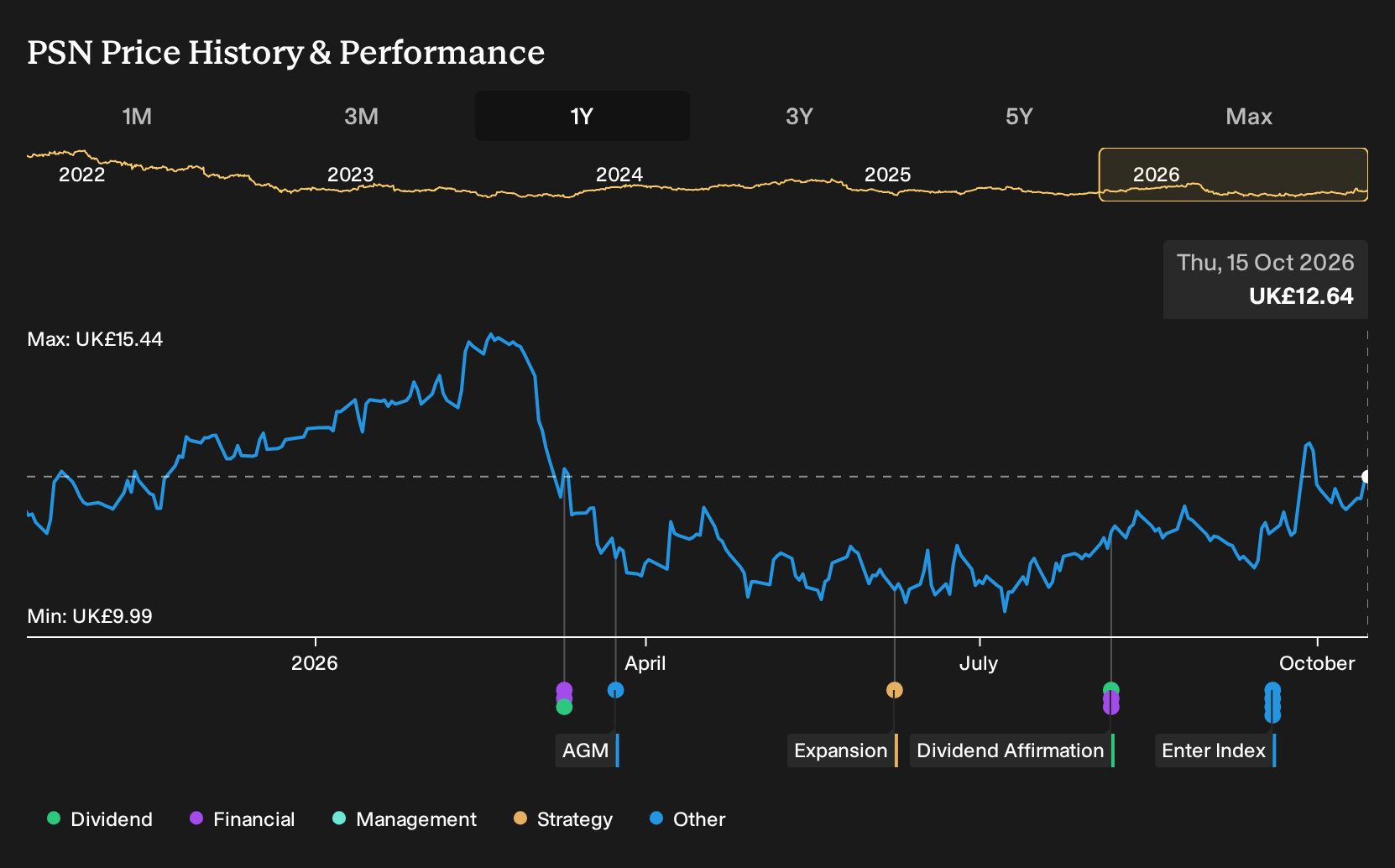
- Persimmon has benefited from improved sentiment toward UK housebuilders after recent falls in gilt yields and new government support for first time buyers through the Your First Home buyer scheme, which together affect financing conditions and demand for new build homes.
- The Your First Home buyer scheme is particularly relevant for Persimmon because the group focuses on more affordable new builds and uses a vertically integrated model that can influence build costs and cash generation.
- We will look at how Persimmon's investment narrative is being reshaped by more supportive government policy for first time buyers.
Scan how Persimmon compares with other UK builders gearing up for changing demand by reviewing the hand picked list of solid balance sheet and fundamentals (9 results).
What Is Persimmon's Investment Narrative?
To own Persimmon, you first need to be comfortable with a fairly simple belief. The UK new build market for affordable family homes remains large enough for a vertically integrated builder to keep sites turning, manage build costs and convert that activity into cash over time. Persimmon’s own brands, control over materials like bricks and tiles, and focus on first time buyers all support that view. The recent share price strength and the Your First Home buyer scheme mainly reinforce the demand side rather than change how the business actually pours concrete, sells plots or funds its land bank.
The short term swing factors are still operational. Can Persimmon match build volumes to genuine buyer demand without cutting prices too hard? Can it move from recent cash outflows into the positive free cash flows analysts expect while still funding land and keeping sites stocked? Supportive policy and lower gilt yields may ease mortgage pressures, yet they do not remove constraints such as capital intensity, a relatively low forecast Return on Equity at 10.3% and a dividend of 4.75% that is not well covered by free cash flows. That tension between cash needs and shareholder payouts is where the story starts to get more complicated.
Even so, there is a less obvious pressure point in Persimmon’s set up that only really shows up when you look closely at ...
There's only one way to know the right time to buy, sell or hold Persimmon. Head to Simply Wall St's company report for the latest analysis of Persimmon's Fair Value.
Exploring Other Perspectives
Across five fair value estimates from the Simply Wall St Community, Persimmon’s range runs from £8.97 to £16.70 per share, which is wide for a single builder. Those views were formed before the share price reaction to lower gilt yields and the Your First Home buyer scheme, so you are seeing opinion rather than consensus. Use that spread as a prompt to test your own assumptions and explore how other private investors are thinking about Persimmon’s future cash generation and sensitivity to policy shifts.
Explore 4 other Persimmon fair value estimates, including one that suggests as much as 32% upside from the current price.
Reach Your Own Conclusion
Don't just follow the ticker; dig into the data and build a conviction that's truly your own.
- A great starting point for your Persimmon research is our analysis highlighting 2 key rewards and 1 important warning sign that could impact your investment decision.
- See our latest analysis for Persimmon. The report includes a comprehensive fundamental analysis summarized in a single visual, the Snowflake, making it easy to evaluate Persimmon's overall financial health at a glance.
Looking For More Investment Ideas Beyond Persimmon?
If you want to put Persimmon in context, it helps to line it up against other companies with different balance sheet strength, income profiles and valuation setups. The Simply Wall St Screener can help you quickly surface a mix of ideas that match your own risk and return preferences.
- For investors who care about quality at a reasonable price, review a curated set of 9 high quality undervalued stocks that pair fundamental strength with potentially appealing valuations.
- If portfolio resilience matters most to you, filter for businesses with sturdier finances using a focused 4 resilient stocks with low risk scores that screens on balance sheet and risk scores.
- Those hunting for less crowded ideas can scan a 5 high quality undiscovered gems that highlights companies with strong fundamentals yet limited current attention.
This article by Simply Wall St is general in nature. We provide commentary based on historical data and analyst forecasts only using an unbiased methodology and our articles are not intended to be financial advice. It does not constitute a recommendation to buy or sell any stock, and does not take account of your objectives, or your financial situation. We aim to bring you long-term focused analysis driven by fundamental data. Note that our analysis may not factor in the latest price-sensitive company announcements or qualitative material. Simply Wall St has no position in any stocks mentioned.
Have feedback on this article? Concerned about the content? Get in touch with us directly. Alternatively, email editorial-team@simplywallst.com