
Should Rate Hike Reset Require Action From Taylor Wimpey Shares Investors?
- Bank of England chief economist Huw Pill recently signalled that markets may be overestimating the number of future rate hikes. This supported sentiment toward rate-sensitive UK housebuilders such as Taylor Wimpey and coincided with heightened trading activity in the shares.
- The fact that Taylor Wimpey featured among the most traded stocks on a major retail platform, with 43% of trades on the buy side, points to investors actively reassessing its exposure to interest rate risk and housing demand rather than passively reacting to sector headlines.
- Attention now turns to how Taylor Wimpey's long term investment narrative interacts with improving rate expectations, and what that means for housing demand.
Scan how traders are repositioning around Taylor Wimpey after the Bank of England comments, then size up other rate sensitive opportunities in our hand picked 9 high quality undervalued stocks.
Taylor Wimpey Investment Narrative Recap
To own Taylor Wimpey, you need to believe that UK housing undersupply and its large land bank can still translate into steady future completions even if demand recovers only gradually. The most important short term swing factor is affordability. Any easing in rate expectations, as hinted by the recent Bank of England commentary, can support mortgage availability and buyer confidence.
The biggest near term risk still sits on the cost and liability side rather than sentiment. Cladding and wider building safety remediation, along with build cost inflation and heavy incentives in a competitive market, keep pressure on margins and cash generation. The recent comments on interest rates help sentiment but do not change those structural pressures.
With no fresh company announcements tied directly to these Bank of England comments, the most relevant disclosures remain the ongoing picture on earnings quality and balance sheet strength. Recent data points flag high quality earnings, improved net margins at 6.4% compared with 2.4% the prior year, and a P/E around 10.7x that screens below both the UK market and Consumer Durables peers.
For you as a shareholder, that backdrop matters because the current debate is about how much of Taylor Wimpey’s operational progress is already in the price when the macro tone shifts. The firm is still working through sizeable safety provisions and a dividend that is flagged as not well covered by free cash flow, so any rate related uplift in demand needs to be weighed against those cash priorities and execution risks.
What The Taylor Wimpey Forecasts Are Really Pricing In
Taylor Wimpey’s current analyst story is quite specific. It rests on moderate top line expansion, tighter profit margins and a small step down in earnings over the next few years rather than a sharp reset.
Consensus assumes revenue grows at 3.5% a year over the coming 3 year stretch, which is a steady, unspectacular clip for a large UK housebuilder. That pace matters for you because it frames how much of any improvement in mortgage costs or buyer confidence might actually filter into reported sales rather than just offsetting ongoing cost pressure.
Earnings today sit at £248.9 million and analysts on average see that moving to £235.2 million by 2029, with the more cautious views dropping as low as £174.9 million. That is a decrease of about £13.7 million on the consensus line, so the forecast still bakes in some drag from lower margins and higher costs even as revenue edges higher.
The same group of forecasters is effectively asking you to treat Taylor Wimpey as a higher rated business in future than it is today. To reach their price target, the shares would need to trade on a P/E of 16.3x those 2029 earnings, compared with 10.3x at the moment and above the quoted 13.4x level for the wider UK Consumer Durables group.
These valuation assumptions are tied to a specific size and profitability profile in 2029. The projections point to £4.3b of revenue and £235.2 million of earnings in that year, using a discount rate in the 8.7% to 8.75% range to pull those future cash flows back into today’s terms.
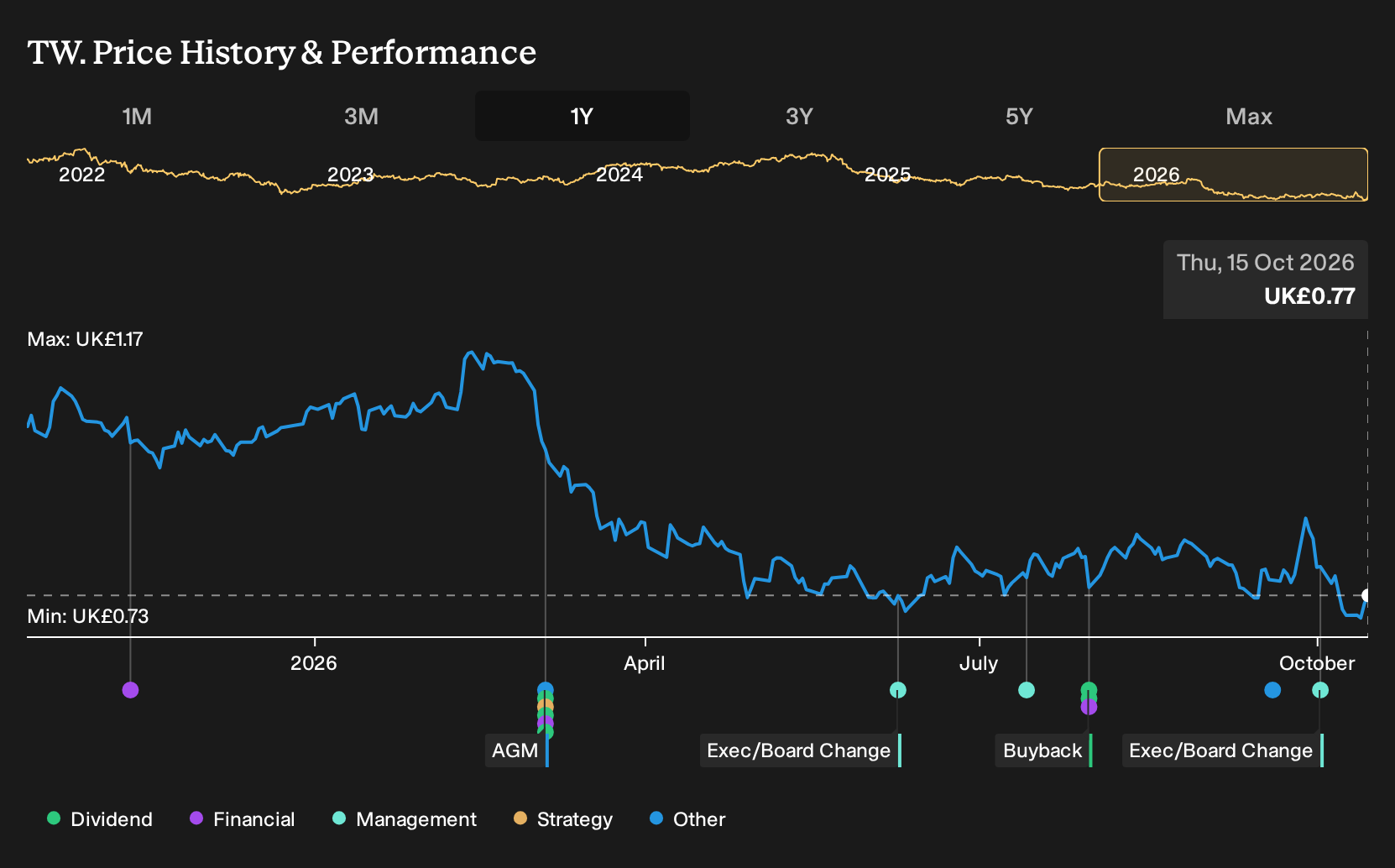
Analysts as a whole are currently aligned on a price target of £0.86 for Taylor Wimpey, set against a share price of £0.73 at the time of the report, and individual targets range from £0.68 up to £1.10. That spread indicates there is genuine disagreement about how the housing cycle, build costs and safety remediation will intersect with this capital return story, rather than a simple one way bet on lower interest rates.
Taylor Wimpey’s narrative projects £4.3b revenue and £235.2 million earnings by 2029. This lines up with analysts assuming 3.5% yearly revenue growth and an earnings decrease of about £13.7 million from £248.9 million today.
Uncover why Taylor Wimpey's fair value indicates a 12% potential upside to its current price, which could narrow quickly.
Exploring Other Perspectives
One alternate view on Taylor Wimpey puts far more weight on margin pressure than on interest rate relief. The most cautious analysts were working off revenue of about £4.0b and earnings of £174.8 million by 2029 before these Bank of England comments. That tells you opinions can differ widely, so it makes sense to explore a range of narratives before you decide what feels realistic.
Explore 5 other Taylor Wimpey fair value estimates, including one that suggests as much as 22% downside from the current price!
Reach Your Own Conclusion
Disagree with existing narratives? Extraordinary investment returns rarely come from following the herd, so go with your instincts.
- A great starting point for your Taylor Wimpey research is our analysis highlighting 4 key rewards and 1 important warning sign that could impact your investment decision.
- See our latest analysis for Taylor Wimpey. The report includes a comprehensive fundamental analysis summarized in a single visual, the Snowflake, making it easy to evaluate Taylor Wimpey's overall financial health at a glance.
Looking for more Taylor Wimpey style investment ideas?
If the Taylor Wimpey story has you thinking more broadly about interest rate sensitivity, balance sheets and income, it can help to line it up against a wider watchlist of potential opportunities.
- For readers who want potential mispricing combined with quality fundamentals, scan a curated set of companies in the 5 high quality undiscovered gems.
- If resilience matters most to you, focus on businesses that pair steady operations with measured risk in the 4 resilient stocks with low risk scores.
- Income focused investors who care about durability as much as yield can zero in on potential payout candidates in the 4 dividend fortresses.
This article by Simply Wall St is general in nature. We provide commentary based on historical data and analyst forecasts only using an unbiased methodology and our articles are not intended to be financial advice. It does not constitute a recommendation to buy or sell any stock, and does not take account of your objectives, or your financial situation. We aim to bring you long-term focused analysis driven by fundamental data. Note that our analysis may not factor in the latest price-sensitive company announcements or qualitative material. Simply Wall St has no position in any stocks mentioned.
Have feedback on this article? Concerned about the content? Get in touch with us directly. Alternatively, email editorial-team@simplywallst.com