
Caught Out By DoorDash's Fall? What Bears Saw
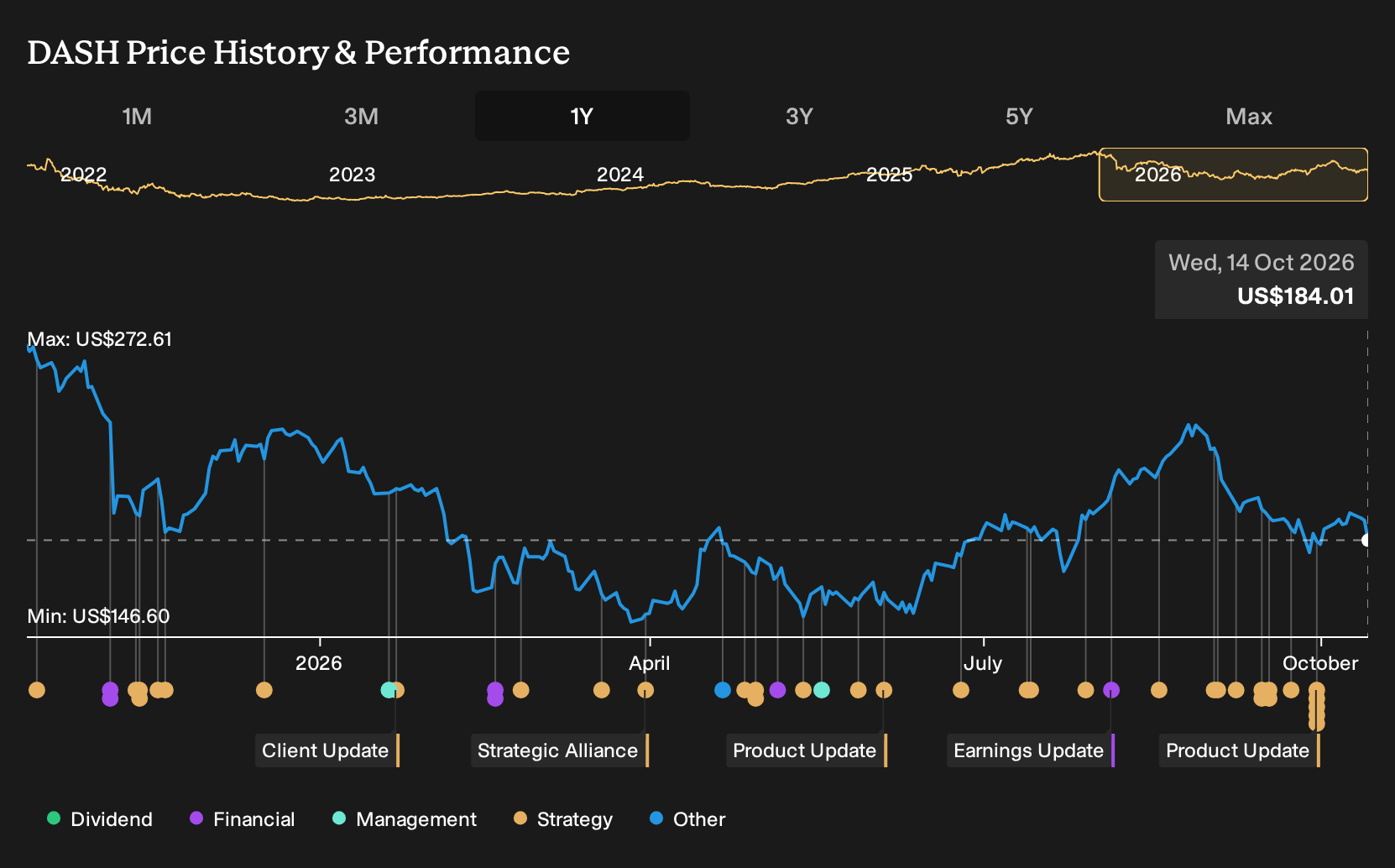
If you had backed DoorDash a year ago expecting expanding grocery, retail and international delivery to reward patient capital, the outcome so far has been painful. For DoorDash shareholders, the loss over the past year was 32.5%, including dividends. Earnings reports now show strong revenue alongside a weaker net margin, and regulators have raised gig worker pay in key markets. If that original decision rested on 19.6% revenue growth, 15.5% margins and a 55.2x future P/E, which of those moving parts was most at risk of being misread?
DoorDash is not the only name tied to this theme. Zero in on 91 robotics and automation stocks and compare how each one is priced.
The DoorDash Stories Investors Were Weighing Up
The shares cost US$271 at the start of the period, and buying DoorDash meant choosing between two very different stories about where the business might head next.
The bullish narrative pointed to a fair value of US$294. This was a rough guide to what that upbeat script implied, built on assumptions of 19.6% annual revenue growth and profit margins reaching 15.5% within about three years.
The bearish view anchored on a fair value of US$183 and focused on the risk that rising labor expenses and tighter gig worker rules could keep margins closer to 10.7% instead.
What The Results Changed For The DoorDash Story
DoorDash delivered Q2 2026 revenue of US$4.5b, up from US$3.3b a year earlier. This broadly supported the bullish focus on strong top line expansion. Profit told a different story. Net income excluding extra items slipped from US$285m to US$200m and net margin moved from 8.7% to 4.5%. This aligned more with the cautious case on pressure from higher costs and regulation. Overall, the evidence cut both ways.
The hinge assumption was not growth; it was profitability. If you apply this elsewhere, track whether rising sales translate into a firmer net margin by comparing revenue, absolute earnings and the reported margin each year rather than relying on headline growth alone.
What DoorDash’s Drop Now Asks You To Believe
DoorDash trades at US$184 today after a 32.5% loss over the past year. The selected Narrative’s Fair Value sits above the current price, built on the idea that grocery, retail and higher margin services eventually reshape how the business earns each dollar.
Before treating the fall as opportunity rather than warning, a buyer now has to believe DoorDash can scale automation, AI tools and autonomous delivery without regulatory or competitive pressure eating away the expected margin gains.
"Bullish analysts expect DoorDash to expand beyond restaurant delivery into grocery, retail, and higher margin services such as subscriptions, advertising, and fulfillment in a way that supports structurally higher earnings power over time. The main factor that has to go right is that DoorDash successfully scales its global tech stack, AI tools, and autonomous delivery while keeping regulatory, affordability, and competitive pressures from eroding the benefits."
One Narrative disagrees with today's price. → See where this Narrative says DoorDash should trade
Looking One Step Beyond DoorDash
DoorDash asks you to think about how people get meals. One step away is where those same customers sleep, work and meet.
Short term stays and experiences need a digital host that can match empty rooms with people and events worldwide. This other platform focuses on that problem full time.
It uses AI tools to speed product testing, cut development grunt work and roll out new features quickly. That creates room to try more services without adding as many costs.
Longer trip lead times, larger group bookings and extra services all flow through that model. The open question is how far a capital light travel platform can stretch that formula before new risks reshape the trade off.
The case is on the record, with the assumptions it rests on. → See the Narrative that values this company 32% above its price
This article by Simply Wall St is general in nature. We provide commentary based on historical data and analyst forecasts only using an unbiased methodology and our articles are not intended to be financial advice. It does not constitute a recommendation to buy or sell any stock, and does not take account of your objectives, or your financial situation. We aim to bring you long-term focused analysis driven by fundamental data. Note that our analysis may not factor in the latest price-sensitive company announcements or qualitative material. Simply Wall St has no position in any stocks mentioned.
Have feedback on this article? Concerned about the content? Get in touch with us directly. Alternatively, email editorial-team@simplywallst.com