
What Amgen (AMGN)'s Tezspire Trial Win Means For Shareholders
- Amgen and AstraZeneca reported positive Phase 3 results for Tezspire in eosinophilic esophagitis earlier in 2026, with the trial showing nearly 70% of patients in remission at week 24.
- These Tezspire data arrive as Amgen is increasingly focused on therapies for age related conditions, deepening its respiratory and immunology portfolio while trying to manage biosimilar pressure on older drugs.
- We will look at how Amgen's investment narrative is affected by Tezspire's Phase 3 success as age related demand builds.
Scan beyond Amgen and this trial win by lining up other large drugmakers focused on complex conditions and aging demographics through our curated 32 high quality undervalued stocks.
Amgen Investment Narrative Recap
To own Amgen, you need to believe the newer cardiometabolic, oncology, respiratory and rare disease therapies can keep carrying more of the load as older drugs face biosimilars and pricing pressure. Management has lifted 2026 revenue guidance midpoint to US$38.8b with about 5% growth, though it has also flagged higher operating expenses that could squeeze margins.
The key near term swing factor is execution across the six core growth drivers that grew 26% year over year and offset weakness in Prolia and XGEVA. Positive Tezspire data helps that effort, but the biggest risk remains erosion from loss of exclusivity and pricing headwinds if newer launches and biosimilars underperform.
The Tezspire Phase 3 readout in eosinophilic esophagitis ties directly into Amgen's push to broaden its respiratory and immunology portfolio as age related demand rises. Nearly 70% remission at week 24 is clinically meaningful for patients and, operationally, supports the idea that Tezspire can contribute beyond severe asthma and help diversify revenue away from legacy products.
This matters alongside Amgen's broader catalyst mix, which includes a growing biosimilar franchise, cardiometabolic assets such as Repatha and MariTide, and multiple oncology biologics. Execution risk remains, especially with obesity and pricing scrutiny, but each successful readout like Tezspire incrementally supports the case that the growth drivers that already represent most product sales can better offset ongoing pricing and biosimilar pressure.
Amgen's current analyst narrative points to revenues of US$42.4b and earnings of US$10.7b by 2029, based on an assumed 3.6% annual revenue growth rate and an earnings increase of about US$2.0b from US$8.7b today.
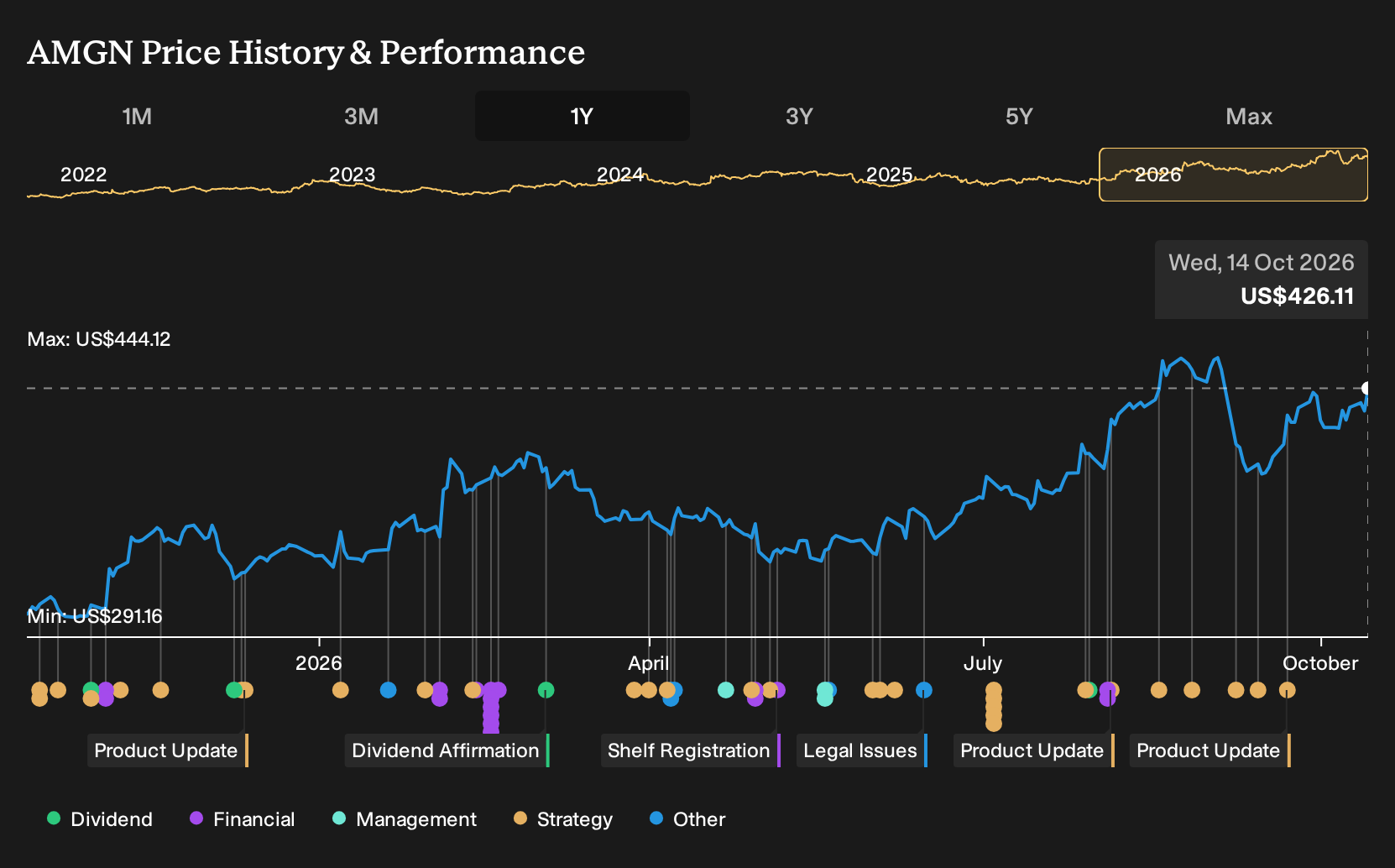
Uncover why Amgen's fair value indicates an 8% potential downside to its current price that leaves little room for error.
Exploring Other Perspectives
One alternate angle worth weighing is the bullish catalyst around Amgen's late stage pipeline. The most optimistic analysts were already modeling revenue of about US$48.0b and earnings of US$12.0b by 2029, compared with the consensus US$42.4b and US$10.7b. Those targets did not include this Tezspire result, so opinions and forecasts may shift.
Explore 4 other Amgen fair value estimates, including one that suggests a potential 62% upside from the current price.
Decide For Yourself
Don't just follow the ticker; dig into the data and build a conviction that's truly your own.
- A great starting point for your Amgen research is our analysis highlighting 4 key rewards and 1 important warning sign that could impact your investment decision.
- See our latest analysis for Amgen. The report includes a comprehensive fundamental analysis summarized in a single visual, the Snowflake, making it easy to evaluate Amgen's overall financial health at a glance.
Looking For More Ideas Beyond Amgen?
Once you have a view on Amgen, it can help to widen the lens and compare it with other opportunities that suit your risk profile and income needs. The Simply Wall St Screener lets you move from one stock story to a full watchlist of candidates that share the traits you care about most.
- If you want potential growth with strict downside filters, start with a set of companies screened for resilience and stability through the 32 resilient stocks with low risk scores.
- Income focused investors who care about consistency as much as yield can review a curated group of high payout opportunities via the 7 dividend fortresses.
- If balance sheet strength is your main safeguard, compare Amgen with other fundamentally sound businesses sourced from the list of solid balance sheet and fundamentals (25 results).
This article by Simply Wall St is general in nature. We provide commentary based on historical data and analyst forecasts only using an unbiased methodology and our articles are not intended to be financial advice. It does not constitute a recommendation to buy or sell any stock, and does not take account of your objectives, or your financial situation. We aim to bring you long-term focused analysis driven by fundamental data. Note that our analysis may not factor in the latest price-sensitive company announcements or qualitative material. Simply Wall St has no position in any stocks mentioned.
Have feedback on this article? Concerned about the content? Get in touch with us directly. Alternatively, email editorial-team@simplywallst.com