Omdia: Global smartphone shipments fell 20% year on year in 26Q3 The memory crisis reshaped the competitive landscape
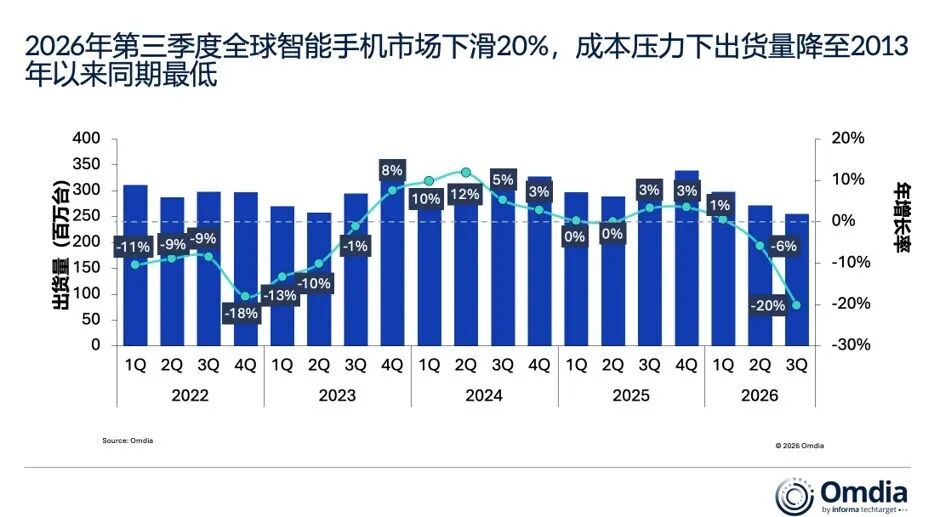
The Zhitong Finance App learned that according to Omdia's preliminary estimates, global smartphone shipments in the third quarter of 2026 fell 20% year on year, a significant increase from 6% in the previous quarter. Despite new flagship products being released one after another, and the channel is also preparing goods for the peak sales season at the end of the year, the number of shipments declined sequentially. Continued pressure on memory and storage costs limited vendor pricing flexibility, prompting manufacturers to cut back on shipments of low-margin models.
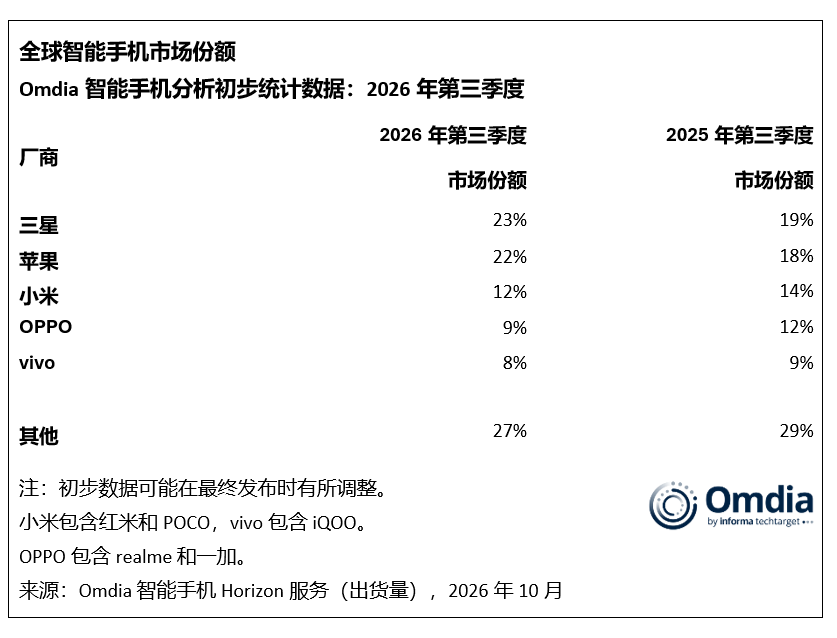
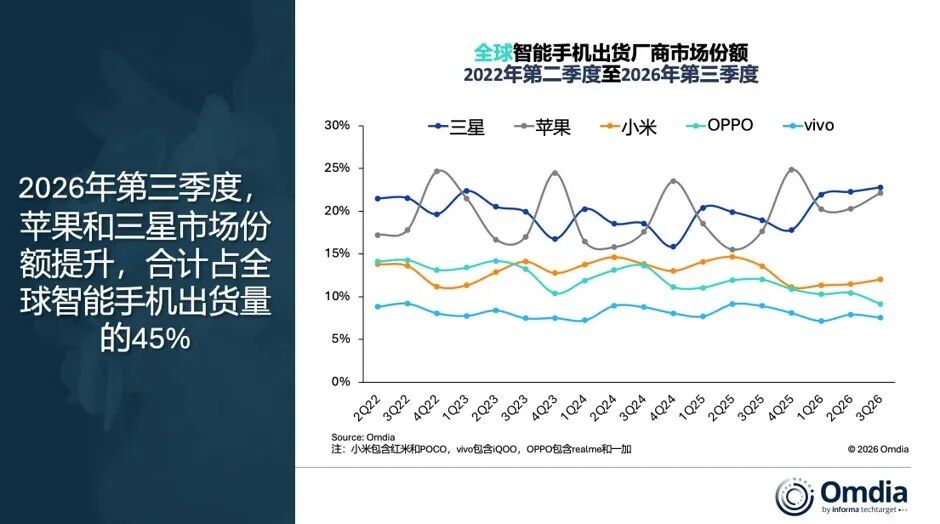
The market downturn has further exacerbated the polarization of the competitive landscape. Together, Samsung and Apple account for 45% of global shipments, an increase of about 8 percentage points over the same period last year. Compared with rivals that mainly target the mass market and where shipments have dropped even more, the two manufacturers have shown strong resilience, indicating that the current market downturn is reshaping the competitive pattern.
Samsung is in the top position with 23% market share, and despite a year-on-year decline in shipments, the market share has increased. A broad product portfolio and mature global channel layout helped Samsung mitigate the downturn in the market, and the Galaxy Z Fold8 and Flip8 series launched in August also strengthened its high-end positioning. Looking forward to the future, balancing the scale of shipments, the profitability of the product portfolio and the high-end process will become increasingly important in maintaining Samsung's competitive position.
Apple ranked second, with a market share of 22%, showing strong resilience in the overall market downturn. Demand for the iPhone 17 series continues, and the iPhone 18 Pro and Pro Max released in September also helped Apple maintain its market momentum. The iPhone Duo marks Apple's entry into the folding screen smartphone market, breaking the traditional form of its product lineup, bringing new opportunities to meet changing consumer needs and gain incremental demand. Although AI has not yet become the main driver for consumer purchases, Apple Intelligence is expected to play an increasingly important role in creating a differentiated user experience and maintaining Apple's long-term ecological advantage.
Xiaomi is in third place with 12% market share, while OPPO (including Realme and OnePlus) ranks fourth with 9% market share. vivo is in the top five with 8% market share.
Rising memory costs are squeezing profit margins in all price segments, and the impact on more price-sensitive products is particularly evident. This has also forced manufacturers to re-evaluate the profitability of entry-level products and make more careful choices in product positioning, pricing, and market coverage. Manufacturers are prioritizing average price growth and product structure optimization to maintain shipment value and protect profitability.
Hayden Hou (Hayden Hou), chief analyst at Omdia, said, “Rising component costs and differences in manufacturers' coping strategies are reshaping the competitive landscape, but market share alone does not reflect the full picture. As manufacturers make different trade-offs between shipment size, revenue, and profitability, their performance cannot be assessed only by the volume of shipments themselves. More importantly, the long-term impact of strategic decisions made by manufacturers in this round of market downturn may exceed the current cost cycle. Expanding new channel partners, improving procurement financing capabilities, and strengthening the high-end product portfolio will determine which manufacturers can establish more competitive and sustainable business models after cost pressure is relieved.”
Lucas Zhong (Lucas Zhong), senior analyst at Omdia, said, “For manufacturers that mainly rely on price advantages to compete, maintaining the scale of shipments while protecting profitability has become an increasingly difficult balance. This pressure is particularly prominent in emerging markets, where local consumers are more sensitive to prices, and manufacturers are also highly dependent on entry-level models with already limited profit margins. However, protecting profit margins by reducing shipments is a long-term risk, particularly for emerging vendors. A shrinking market layout may reduce brand exposure and influence in channels, and it may take years to rebuild these advantages. “Manufacturers need to be more careful in choosing competitive markets and concentrating resources on markets and products that balance profitability and market position.”
Zhong Xiaolei further stated, “Looking ahead to the fourth quarter, flagship product launches, promotions, and festivals will still be difficult to offset continued supply-side pressure. While strictly managing inventory, manufacturers need to use more effective machine purchase financing, trade-in, and operator cooperation methods to support switching needs and avoid relying on large-scale price reduction promotions. Although shipments are still under pressure, rising prices are gradually reshaping consumers' price expectations and may create more opportunities for high-value models in future switching cycles. Vendors that can improve the ease of purchase of such products and bring tangible user experience improvements will be in a better position in the next rotation cycle.”