
Does Manager Pressure Change The Bull Case For Manchester United Stock?
- Former Manchester United players Paul Scholes and Nicky Butt have criticised the current squad and raised doubts over Michael Carrick’s position, while media reports link Fabian Hurzeler and Antonio Conte with possible future managerial roles after a run of underwhelming results and pressure ahead of key fixtures.
- Growing scrutiny of Manchester United’s dugout highlights how coaching uncertainty can intersect with an ongoing, high-cost squad rebuild. It can also influence expectations for how efficiently the club converts its heavy wage bill and transfer spending into consistent performances that support future commercial and matchday income.
- We will now look at how Manchester United's investment narrative could be affected by rising speculation over Michael Carrick's future.
Pressure test your thesis on Manchester United by lining it up against our hand picked list of solid balance sheet and fundamentals (25 results), which may be better placed to turn heavy wage and transfer spending into resilient results.
Manchester United Investment Narrative Recap
To own Manchester United, you need to believe the club can turn heavy spending on players and wages into more stable on pitch results that support media, matchday and commercial revenue. The current scrutiny of Michael Carrick, plus open talk of alternatives like Fabian Hurzeler and Antonio Conte, keeps coaching turnover as the key short term swing factor.
Managerial noise does not automatically change the long term rebuild, yet it can affect how effectively a costly squad is used, which matters for cash generation when the business is still loss making. The biggest near term risk remains high fixed wages combined with inconsistent performances that could strain margins and make transfer discipline harder to maintain.
The most relevant development is the pressure around Carrick before key fixtures such as Atletico Madrid away in the Champions League. That schedule focus matters operationally because Champions League progress influences broadcasting distributions, sponsorship appeal and matchday cash, especially while the club reports a loss of £42.954 million on £677.649 million of revenue.
Media coverage of potential successors like Hurzeler and Conte intersects with this, since any managerial reset would arrive on top of a midfield overhaul and an already expensive squad. For investors, the question is whether Manchester United can execute that rebuild cleanly, keep a grip on wages and still perform well enough in Europe and the league to support those revenue streams.
Manchester United is framed around analyst expectations that revenues could reach £858.3 million and earnings £95.3 million by 2029, off current earnings that represent a loss of £18.1 million. This reflects a projected 7.8% yearly increase in revenue and implies an earnings swing of about £113.4 million from today to the consensus forecast period.
Uncover why Manchester United's fair value indicates a 12% potential upside to its current price, before enthusiasm for the discount fades.
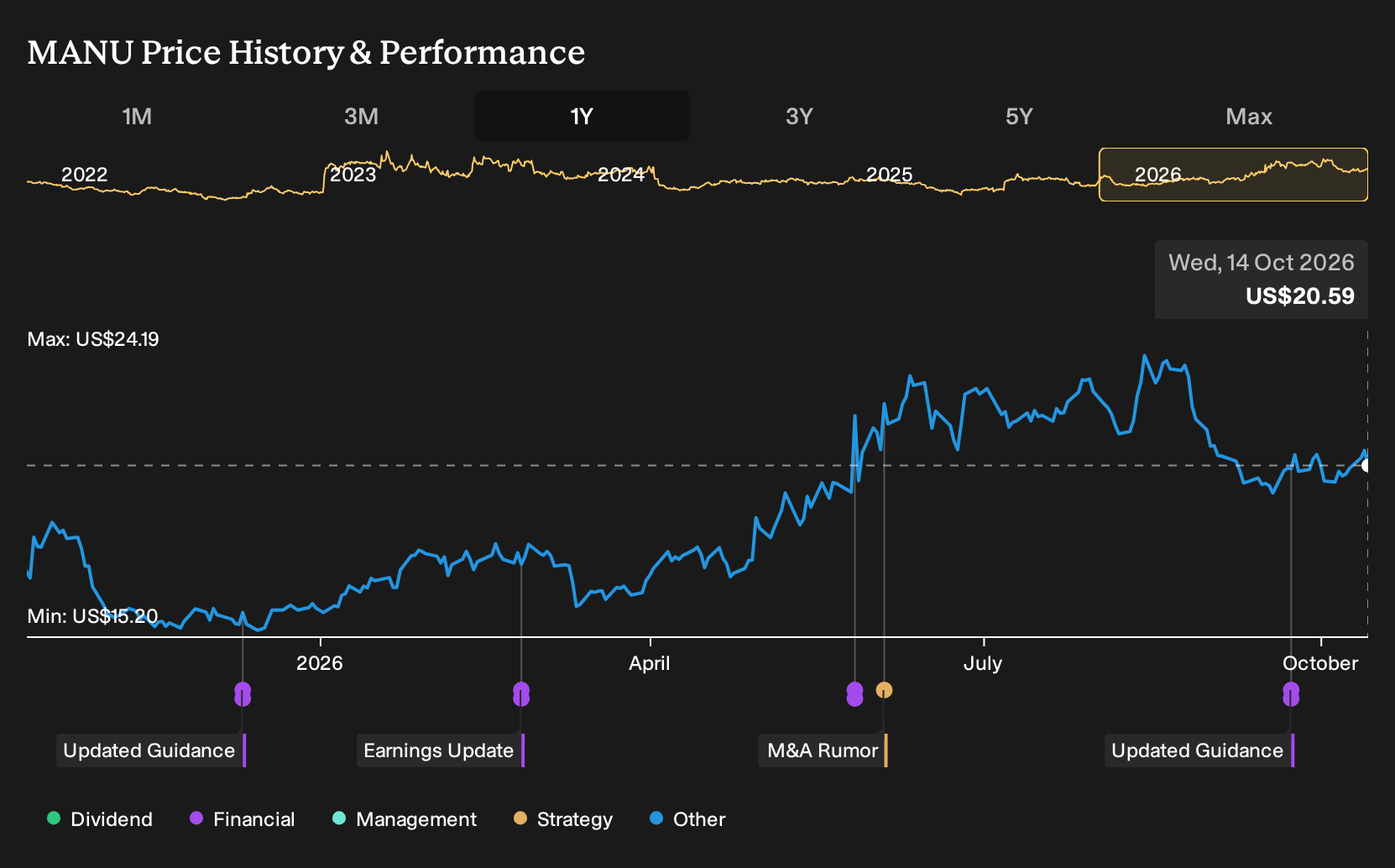
Exploring Other Perspectives
One alternate view focuses on Manchester United’s £1.1b debt load, plus the extra £90 million borrowed in summer 2026. The most cautious analysts already expected only 6.6% annual revenue growth to about £820.5 million and earnings of £96.0 million by 2029. After this fresh criticism of Michael Carrick, those assumptions may eventually shift. Readers like you can compare these conflicting stories and decide which feels more realistic.
Explore 2 other Manchester United fair value estimates, including one that suggests as much as 11% downside from the current price.
The Verdict Is Yours
Disagree with existing narratives? Extraordinary investment returns rarely come from following the herd, so go with your instincts.
- A great starting point for your Manchester United research is our analysis highlighting 1 important warning sign that could impact your investment decision.
- See our latest analysis for Manchester United. The report includes a comprehensive fundamental analysis summarized in a single visual, the Snowflake, making it easy to evaluate Manchester United's overall financial health at a glance.
Looking for more investment ideas beyond Manchester United?
Once you have a view on Manchester United, it can help to compare that thesis with other opportunities that have different balance sheet strength, income profiles, or risk levels.
- If you want potential upside combined with financial resilience, start by scanning a 32 high quality undervalued stocks that already clear basic quality and balance sheet checks.
- For investors who care more about steady income than headlines, focus on companies in the 8 dividend fortresses that currently offer higher yields backed by established cash flows.
- If capital preservation is front of mind, narrow your universe to a 32 resilient stocks with low risk scores that score well on debt levels, earnings stability, and other risk factors.
This article by Simply Wall St is general in nature. We provide commentary based on historical data and analyst forecasts only using an unbiased methodology and our articles are not intended to be financial advice. It does not constitute a recommendation to buy or sell any stock, and does not take account of your objectives, or your financial situation. We aim to bring you long-term focused analysis driven by fundamental data. Note that our analysis may not factor in the latest price-sensitive company announcements or qualitative material. Simply Wall St has no position in any stocks mentioned.
Have feedback on this article? Concerned about the content? Get in touch with us directly. Alternatively, email editorial-team@simplywallst.com