
3 UK Stocks Tied To New VAT Rules And The Payments Shift
UK plans to make online marketplaces collect VAT above the £90,000 turnover threshold, with up to £1b of extra tax on the table, and that tilts the playing field for payments infrastructure and tax tech providers. This shift creates fresh revenue pipes for some businesses and new risks for others. The article walks through three stocks exposed to this policy shake up and explains why each one might matter for your portfolio watchlist.
The three stocks covered below are only a first pass on this theme, and the full screen surfaced 9 more UK VAT-compliance and payments infrastructure providers with equally compelling narratives that are not discussed in the article. To see the rest of the field and quickly identify which UK VAT players best fit your thesis, head straight to the UK VAT-compliance and payments infrastructure providers screener.
Sage Group (LSE:SGE)
Sage Group is effectively the plumbing behind a large number of UK small and mid-sized firms. This puts it in a natural position to help merchants and marketplaces cope with tougher VAT and payments rules, as compliance is pulled deeper into everyday accounting workflows.
Sage Group sells cloud and on-premise software that helps small and mid-sized businesses manage accounting, payroll, HR and broader back-office tasks, naturally overlapping with VAT and tax compliance needs for merchants and marketplaces. The group reports £682 million from Europe and £1.19b from North America, with a further £766 million segment adjustment, and the stock is valued at about £9.78b.
"The rapid build out of Sage Group’s agentic AI capabilities across finance, HR and payroll workflows, with over 600,000 customers already AI enabled and accounts payable agents now processing more than £3.3b of invoices per month and saving over 5m hours of work, creates room for future usage based or tiered pricing that could support higher average contract values and a stronger gross margin mix."
What happens to those economics if a single unseen pressure on how customers accept new compliance tools starts to bite?
If that pressure reshapes how firms adopt Sage Group’s tools, the full narrative for Sage Group shows where compliance demand, AI usage and pricing power could be quietly decoupling.

Boku (AIM:BOKU)
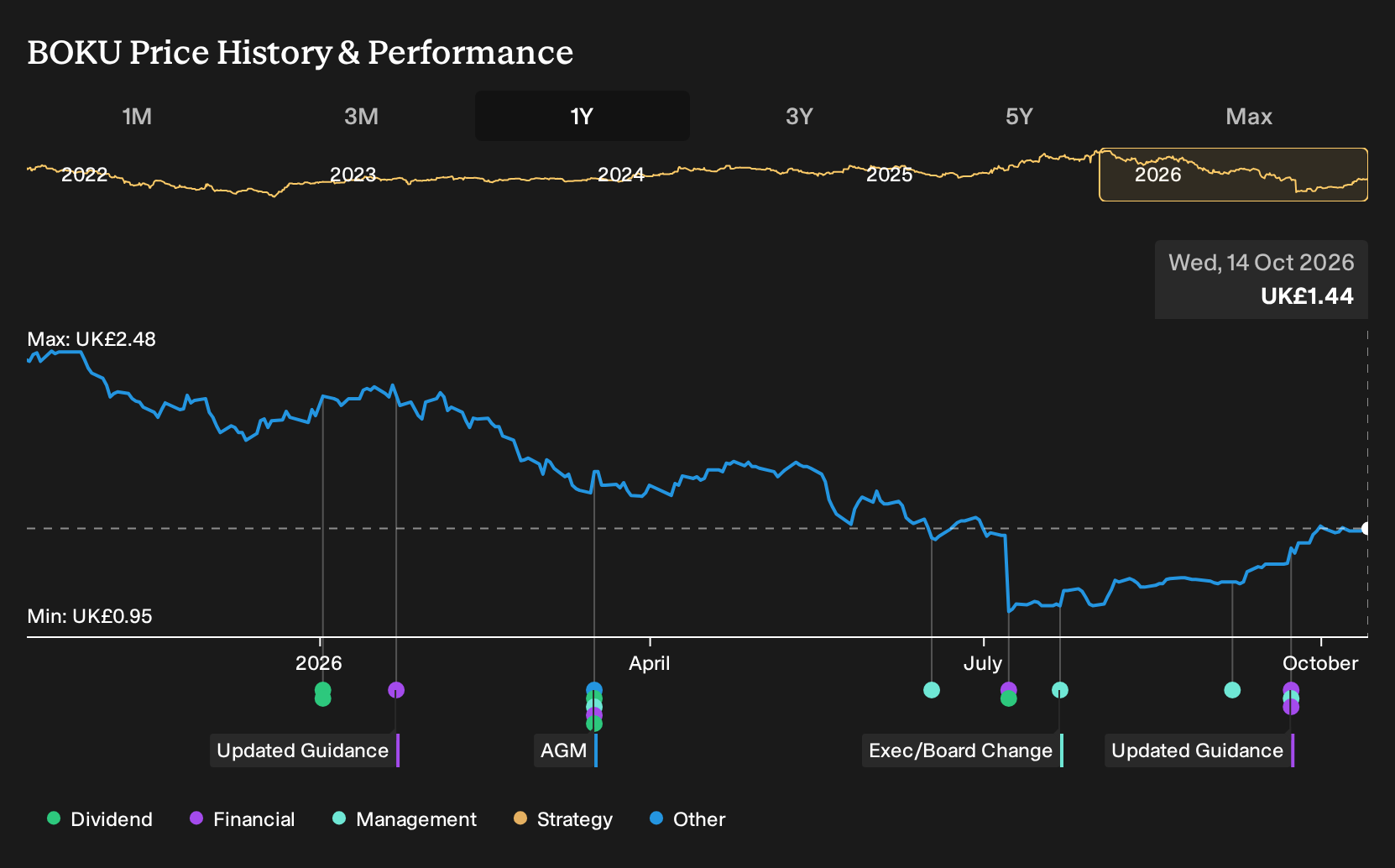
Boku plugs directly into the payment pipes that merchants and marketplaces rely on, which makes it a natural fit for a screener focused on UK VAT-compliance and payments infrastructure. The group now leans on $132 million from its Payments segment with a market value of about £411 million.
Boku helps global merchants accept local payment methods, from carrier billing to digital wallets and account to account options, sitting at the same transaction layer where VAT and tax rules increasingly bite for online sellers and marketplaces.
"The suspension of two carrier billing connections by local authorities in one country in H1 2026 has permanently removed that revenue and exposes how quickly rule changes can strip transaction volume and weaken revenue resilience in regulated markets."
What happens to Boku’s margin story if one quiet shift in how regulators treat alternative payments ripples through its higher value products?
That quiet shift is the real hinge for Boku’s story, and the full narrative for Boku maps where regulation risk could be masking a stronger payments engine.
PayPoint (LSE:PAY)
PayPoint plugs directly into UK payments and e-commerce checkout flows, which makes it relevant for a screen focused on VAT-sensitive payment infrastructure. The group generates about £179 million from its PayPoint segment and £158 million from Love2shop, with a market value near £412 million.
PayPoint gives high street retailers and e-commerce partners the tools to take card payments, handle parcels and run digital vouchers at the same tills where VAT decisions are made. That puts the group close to any future requirement to bake tax rules into checkout logic and into the same conversations with marketplaces that now face tighter obligations.
"Accelerated expansion into digital payments and open banking, including successful client wins and leveraging the acquired OBConnect platform, positions PayPoint to capture expanding transaction volumes as consumers and institutions increasingly shift to cashless, multi-channel payment solutions. This supports sustained revenue growth and potentially higher margins over time."
What happens to those margin ambitions if one quiet assumption about how regulators treat these new transaction flows stops holding true.
If that assumption cracks, full narrative for PayPoint shows where regulation risk, open banking momentum and PayPoint’s transaction engine could be quietly accelerating or stalling beneath the headline story.

Seeking Alternatives Before The Crowd
Fresh ideas move first. Slow investors can end up chasing momentum while the most attractive entry points are already slipping away. Explore these under-the-radar opportunities and consider your options promptly.
- Focus on durable cash generators that may still be overlooked by the market with the curated 8 high quality undervalued stocks while the current value gap persists.
- Look for early-stage compounding by concentrating on financially sound growth stories using the hand-picked 5 high quality undiscovered gems while they remain less widely followed.
- Emphasise resilience by filtering for robust balance sheets and fundamentals through the focused list of solid balance sheet and fundamentals (9 results) ahead of potential increases in broader interest.
This article by Simply Wall St is general in nature. We provide commentary based on historical data and analyst forecasts only using an unbiased methodology and our articles are not intended to be financial advice. It does not constitute a recommendation to buy or sell any stock, and does not take account of your objectives, or your financial situation. We aim to bring you long-term focused analysis driven by fundamental data. Note that our analysis may not factor in the latest price-sensitive company announcements or qualitative material. Simply Wall St has no position in any stocks mentioned.
Have feedback on this article? Concerned about the content? Get in touch with us directly. Alternatively, email editorial-team@simplywallst.com