
Six Flags Stock After Fatal Roller Coaster Accident Has The Bull Case Changed?
- Six Flags Entertainment reported that a man died and several guests were injured after falling from the Goliath roller coaster at Six Flags Over Georgia on October 12, 2026, and stated that the park is cooperating fully with local authorities.
- The incident adds fresh scrutiny to Six Flags Entertainment's ride safety practices and could affect operating costs, legal exposure, and capital priorities related to park maintenance and attraction upgrades.
- This article now examines how Six Flags Entertainment's investment narrative could be affected by the fatal Goliath roller coaster incident.
Six Flags Entertainment Investment Narrative Recap
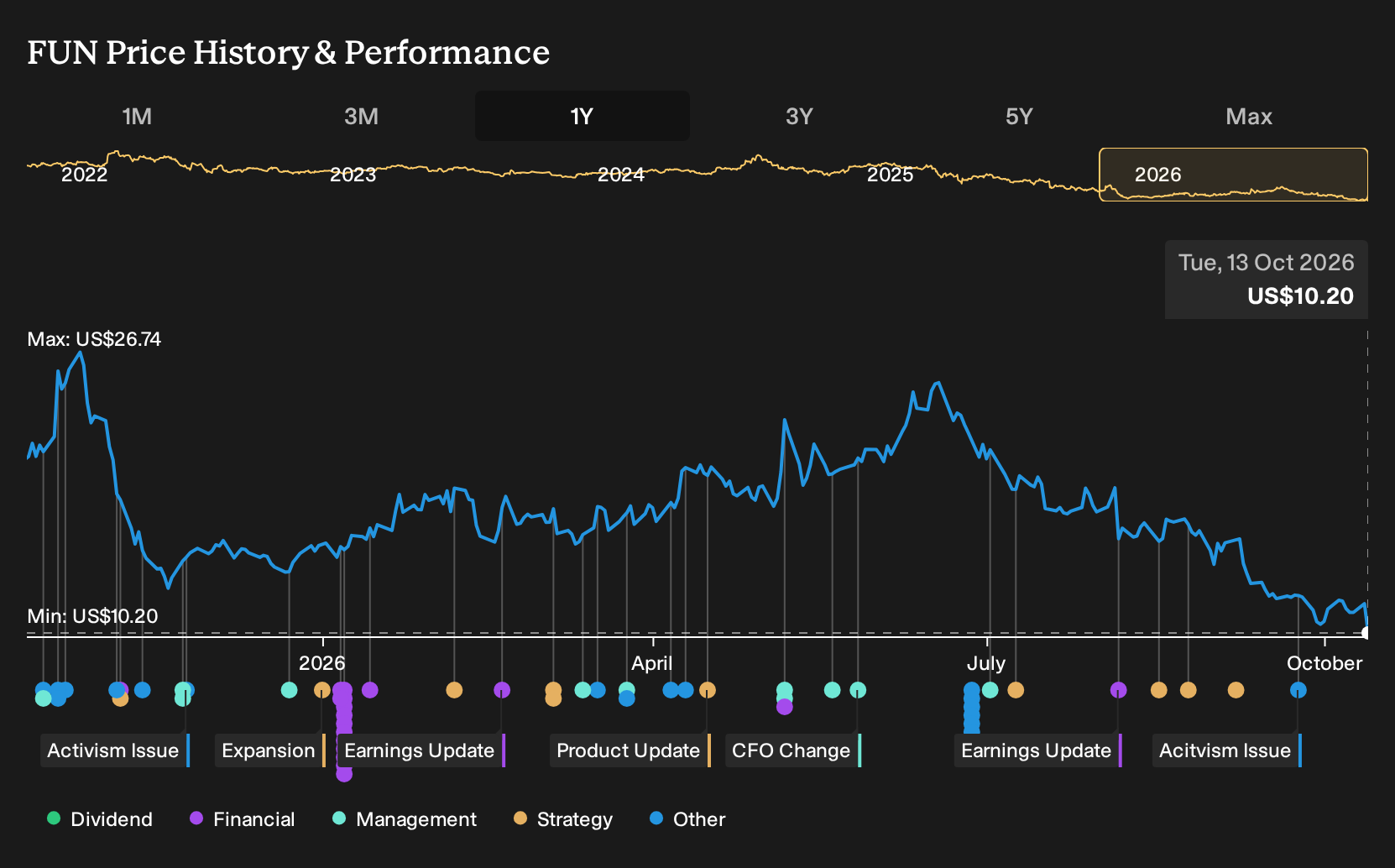
For an investor to stay interested in Six Flags Entertainment, the core belief is that physical park attendance and in park spending can support a healthier earnings profile over time, even with high leverage and a still unprofitable base. The recent Goliath incident and share price drop sharpen the focus on near term safety, regulatory and insurance outcomes, rather than changing that longer term thesis on its own.
The key short term catalyst remains execution on park operations and cost savings, especially as the Cedar Fair combination beds in and digital and premium offerings scale. The biggest risk is still the balance sheet and exposure to revenue shocks. Any sustained attendance pressure or higher operating costs from safety and compliance would make that risk more acute.
The most directly relevant company action to watch now is Six Flags Entertainment’s decision to temporarily close similar rides across its parks following the Goliath accident. This is an operational choice that may weigh on capacity and guest throughput, while aiming to support safety outcomes during the investigation and any technical reviews.
For investors, the question is how this interacts with existing catalysts like higher per capita spend, new attraction rollouts and the push into multi park loyalty products. Extended downtime for headliner coasters or tighter safety protocols could influence capital allocation, insurance costs and near term attendance, which in turn affects progress on earnings recovery and debt reduction.
Six Flags Entertainment's current analyst narrative points to 2029 revenue of US$3.2 billion and earnings of US$97.2 million, based on an assumed 1.2% yearly revenue growth rate. That implies an earnings swing of roughly US$1.9 billion from the current loss of US$1.8 billion to the projected profit, with the forecasts anchored to that 2029 estimate year.
Uncover why Six Flags Entertainment's fair value indicates a 103% potential upside to its current price that could narrow quickly.
Exploring Other Perspectives
Some of the lowest ranked analysts focus less on weather or digital upgrades and more on safety driven attendance risk at Six Flags Entertainment. Before this Goliath tragedy, that group was already treating the stock as fairly valued, using roughly US$3.1b of 2029 revenue and about US$212.4 million of earnings. Those views were set before the incident, so you should expect opinions and models to potentially shift as new facts emerge and explore a range of scenarios rather than rely on a single forecast.
Explore 4 other Six Flags Entertainment fair value estimates, including one that suggests it could be worth just $11.04.
Reach Your Own Conclusion
Disagree with existing narratives? Extraordinary investment returns rarely come from following the herd, so trust your own analysis.
- A great starting point for your Six Flags Entertainment research is our analysis highlighting 3 key rewards that could impact your investment decision.
- See our latest analysis for Six Flags Entertainment. The report includes a comprehensive fundamental analysis summarized in a single visual, the Snowflake, making it easy to evaluate Six Flags Entertainment's overall financial health at a glance.
Looking for more investment ideas beyond Six Flags Entertainment?
If this incident has you reassessing risk at Six Flags Entertainment, it can help to widen the lens and compare it with other businesses that better fit your comfort level on balance sheets, income resilience, or potential upside.
- If capital preservation matters most to you, start with companies that screen for lower overall risk profiles using our 32 resilient stocks with low risk scores.
- If you are hunting for mispriced opportunities with stronger fundamentals, broaden your watchlist by reviewing the 20 high quality undiscovered gems that might not yet be crowded trades.
- If income steadiness is a priority, focus your next step on dividend payers by scanning our 8 dividend fortresses with the yields and payout histories laid out side by side.
This article by Simply Wall St is general in nature. We provide commentary based on historical data and analyst forecasts only using an unbiased methodology and our articles are not intended to be financial advice. It does not constitute a recommendation to buy or sell any stock, and does not take account of your objectives, or your financial situation. We aim to bring you long-term focused analysis driven by fundamental data. Note that our analysis may not factor in the latest price-sensitive company announcements or qualitative material. Simply Wall St has no position in any stocks mentioned.
Have feedback on this article? Concerned about the content? Get in touch with us directly. Alternatively, email editorial-team@simplywallst.com