
Pasqal Holding And 2 Quantum Computing Stocks To Improve Your Portfolio
Rising semiconductor prices are keeping inflation in the spotlight, and that puts advanced computing at the center of every cost discussion. Quantum computing stocks sit at the crossroads of this pressure and long term demand for more processing power. This article walks through three quantum leaders from our screener, how each is approaching the technology, and what that might mean for your portfolio over the next cycle.
The stocks covered below are only a small sample, and the full quantum screen surfaced 22 more companies with equally compelling narratives across hardware, software, and research heavy plays that are not included in this article.
To identify your own highest conviction ideas, head straight to the Quantum Computing Stocks screener to filter the field, analyze key fundamentals, and focus on the quantum computing stocks that best fit your approach.
Pasqal Holding (PSQL)
Pasqal Holding builds neutral atom quantum processors and a full stack platform that lets users program, emulate, and run quantum algorithms over the cloud. The company is valued at about $1.36b by the market.
Pasqal Holding gives investors exposure to neutral atom hardware, cloud QPU access, and commercial trials in areas such as quantum machine learning and life sciences. The company reports early revenue traction and global partnerships, but the path to scale is still unproven and continues to raise questions about potential future demand and pricing power.
That uncertainty around future demand and pricing power makes it worth checking the 1 key reward and 1 important major warning sign before betting on Pasqal Holding's quantum roadmap inflection point.

Western Digital (WDC)
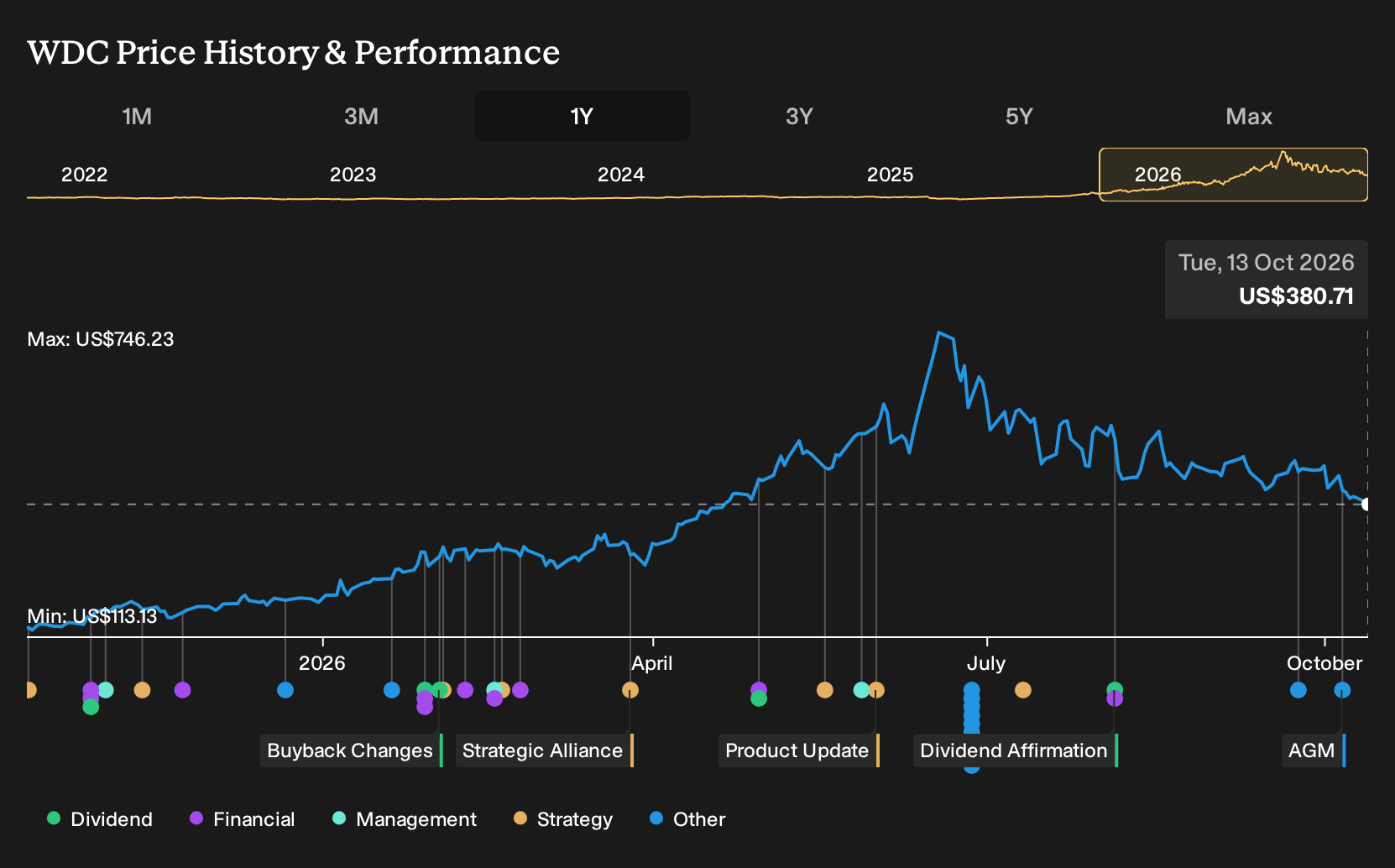
Western Digital is a global storage heavyweight, manufacturing hard disk drives and platforms that underpin data centers, PCs, and external storage, while its work on quantum error correction with Open Quantum Design links that hardware footprint to next generation quantum infrastructure. The business generates about US$12.9b from HDDs and is valued by the market at roughly US$144.8b.
Quantum computing needs somewhere to store and move the flood of data it creates, and Western Digital sits right on that interface, pairing its hard drive focus with research into quantum error correction that could shape how future quantum machines talk to classical storage.
"The moment either player, or a cash-rich new entrant, decides to chase this demand with new plants, the shortage becomes a glut, as it always has in memory and storage."
Everything investors care about here, from pricing to margins, ultimately hangs on how one barely visible supply decision plays out.
That supply swing is exactly what the full narrative for Western Digital unpacks, showing how Western Digital could turn a familiar storage cycle into an accelerating quantum era opportunity.
Rigetti Computing (RGTI)
Rigetti Computing builds superconducting quantum computers and sells access to its Novera, Cepheus and Ankaa QPUs through quantum computing as a service, generating about US$13 million from internet software and services and carrying a market value of roughly US$4.4b.
Rigetti Computing gives you pure play exposure to superconducting qubits and QCaaS, where every technology milestone can shift how quickly real workloads move from experiments to paid usage.
"Multi year government and defense related work, including the US$5.8 million three year AFRL contract for superconducting quantum networking and continued participation in DARPA QBI Phase A, ties Rigetti to long term public sector quantum programs, which can provide recurring contract revenue and more stable gross margin contributions."
What happens if one critical piece of this quantum ecosystem changes the balance between high demand and the cost of keeping systems running efficiently?
If that cost balance is what you care about, the full narrative for Rigetti Computing explains how Rigetti Computing could turn contract momentum into accelerating commercial pull.

Seeking Alternatives Before The Crowd?
Fresh breakouts, early momentum, and sectors quietly flying under the radar rarely stay that way for long. Screen new ideas before the crowd moves, then act now.
- Spot smaller companies where the story is just getting started and use the 11 elite penny stocks with strong financials to see which ones already back that story with real financial strength.
- Capture AI momentum without chasing the headlines by running the 38 AI small caps and focusing on smaller players that still trade before expectations fully catch up.
- Shift attention toward stability while others chase hype and sort through the 8 dividend fortresses to find income ideas that aim to keep paying you while markets swing.
This article by Simply Wall St is general in nature. We provide commentary based on historical data and analyst forecasts only using an unbiased methodology and our articles are not intended to be financial advice. It does not constitute a recommendation to buy or sell any stock, and does not take account of your objectives, or your financial situation. We aim to bring you long-term focused analysis driven by fundamental data. Note that our analysis may not factor in the latest price-sensitive company announcements or qualitative material. Simply Wall St has no position in any stocks mentioned.
Have feedback on this article? Concerned about the content? Get in touch with us directly. Alternatively, email editorial-team@simplywallst.com