
CEO Appointment Might Change The Case For Investing In Kingfisher Stock (LSE:KGF)
- Kingfisher has appointed Sebastian Gundel, former OBI chief executive, as its next CEO from February 2027, following Thierry Garnier’s planned departure and an interim period led by CFO Bhavesh Mistry.
- The hire brings in a leader with experience in turning a European home improvement retailer into a more digital and omnichannel operation, which directly relates to Kingfisher’s focus on e-commerce, marketplaces, and service-led offerings.
- We will examine how Kingfisher's investment narrative is shaped by Sebastian Gundel's appointment and his omnichannel retail background.
Scan how other retail and consumer stocks are repositioning around digital and omnichannel leadership shifts by reviewing our hand picked list of solid balance sheet and fundamentals (9 results) alongside Kingfisher.
Kingfisher Investment Narrative Recap
To own Kingfisher, you need to believe the home improvement group can keep tightening operations while pushing deeper into e commerce and trade customers across the UK, France and Poland. The key near term swing factor is whether like for like sales stabilise in weaker markets without eroding the recent recovery in margins and cash generation.
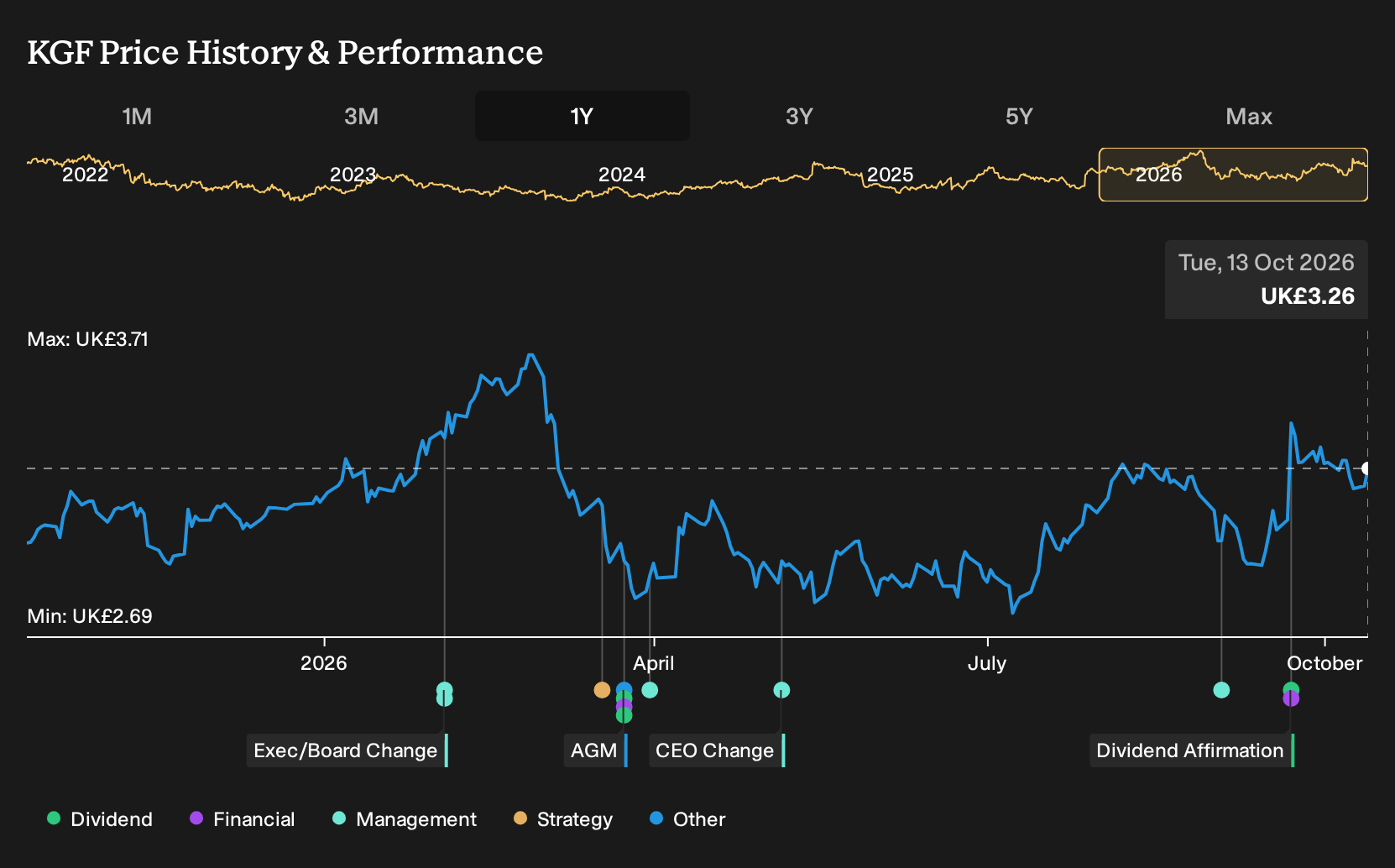
The biggest operational risk still sits in underperforming regions like France and in any slowdown in Polish consumer demand, given earlier comments on soft sentiment. Sebastian Gundel’s appointment looks more medium term in effect. The share price reaction suggests confidence, but the CEO transition itself does not materially change the immediate sales and cost catalysts.
The most relevant development here is the confirmation that Kingfisher is not shifting its stated strategy alongside the CEO change. Management continues to emphasise e commerce, marketplaces and trade focused concepts such as Screwfix and TradePoint, as well as structural cost reduction and tighter inventory management across the group.
For you, that means Gundel is stepping into an agenda already anchored on operational efficiency and online penetration, rather than rewriting it. Execution on French restructuring, handling non cash impairments and managing wage and inflation pressures remain the operational tests that will matter far more to earnings than the short handover period to 2027.
What The Kingfisher Consensus Is Really Pricing In
Kingfisher's narrative projects £13.7b revenue and £476.3m earnings by 2029. This assumes 1.9% yearly revenue growth and an earnings increase of about £231m from £245.0m today.
Analysts sketch out a fairly specific destination for Kingfisher by 2029. The group is modelled to reach about £13.7b of revenue and £476.3m of profit, built on an annual top line expansion of 1.9% and a margin lift from 1.9% to 3.5%. That shift in profitability matters more than the modest sales growth, because it roughly doubles earnings from £245.0m today to the projected consensus level.
For you as a potential or existing shareholder, those numbers become a simple hurdle test. The investment case means asking whether a move to £476.3m of earnings by 2029 and a P/E of 12.9x on those profits feels realistic for a European DIY retailer with ongoing restructuring in France and mixed consumer signals in Poland. The current industry P/E reference point at 13.3x for GB Specialty Retail adds another check, since the scenario assumes Kingfisher trades on a small discount while still lifting its own profitability.
Earnings dispersion inside that consensus is wide enough to matter. The bullish end at £567.7m implies much sharper delivery on cost cuts, mix and digital growth. The bearish view at £422.9m points to softer execution on omnichannel plans or stickier overheads. You can think of that spread as the range of outcomes investors are weighing for Gundel and the wider team, especially given the ongoing focus on e commerce, marketplaces and trade customers that the board has just reaffirmed through this leadership plan.
Uncover why Kingfisher's fair value indicates a 4% potential downside to its current price, a premium that may not be sustained.
Exploring Other Perspectives
One alternate view leans hard into the risk that Kingfisher’s large store estate drags on profitability if online rivals keep taking share. Those more cautious analysts were only pencilling in £13.4b of revenue and about £435.4m of earnings by 2029 before this CEO news, so their story is far more pessimistic on long term economics. You now have a fresh leadership appointment that none of those numbers considered, which means expectations on both sides of the debate could shift. Treat this as a cue to compare several narratives and decide which assumptions feel closest to how you think the next few years play out.
Explore 4 other Kingfisher fair value estimates, including one that suggests as much as 22% downside from the current price.
The Verdict Is Yours
Disagree with existing narratives? Extraordinary investment returns rarely come from following the herd, so consider forming your own view.
- A great starting point for your Kingfisher research is our analysis highlighting 3 key rewards and 2 important warning signs that could impact your investment decision.
- See our latest analysis for Kingfisher. The report includes a comprehensive fundamental analysis summarized in a single visual, the Snowflake, making it easier to review Kingfisher's overall financial position at a glance.
Looking For More Investment Ideas Beyond Kingfisher?
If you want to put Kingfisher in context, the next step is to compare it with other companies that fit different risk and income profiles using the Simply Wall St Screener.
- For income focused investing, check out companies that combine higher yields with balance sheet strength through the 2 dividend fortresses.
- If capital preservation matters most to you, review businesses with steadier financial risk profiles using the 4 resilient stocks with low risk scores.
- When you want future upside tied more to quality than hype, scan through the 5 high quality undiscovered gems and see which lesser known stocks match your checklist.
This article by Simply Wall St is general in nature. We provide commentary based on historical data and analyst forecasts only using an unbiased methodology and our articles are not intended to be financial advice. It does not constitute a recommendation to buy or sell any stock, and does not take account of your objectives, or your financial situation. We aim to bring you long-term focused analysis driven by fundamental data. Note that our analysis may not factor in the latest price-sensitive company announcements or qualitative material. Simply Wall St has no position in any stocks mentioned.
Have feedback on this article? Concerned about the content? Get in touch with us directly. Alternatively, email editorial-team@simplywallst.com