
Our Pick Of The Best British Undervalued Stocks In October 2026
The IMF has warned the UK to avoid unfunded giveaways as government debt and borrowing costs stay under pressure. That kind of message pushes more investors toward British businesses that generate solid cash inflows and currently trade for less than what detailed cash flow models suggest they are worth. This article highlights three UK-listed stocks that appear mispriced on that basis and explains what makes each one interesting.
The three highlights in this piece are only a sample of the opportunities that came out of this cash flow screen, with 24 more UK listed candidates showing similarly interesting stories that are not covered below.
If you want to identify and analyze which of those could fit your own watchlist, head straight to the Undervalued Stocks Based On Cash Flows screener.
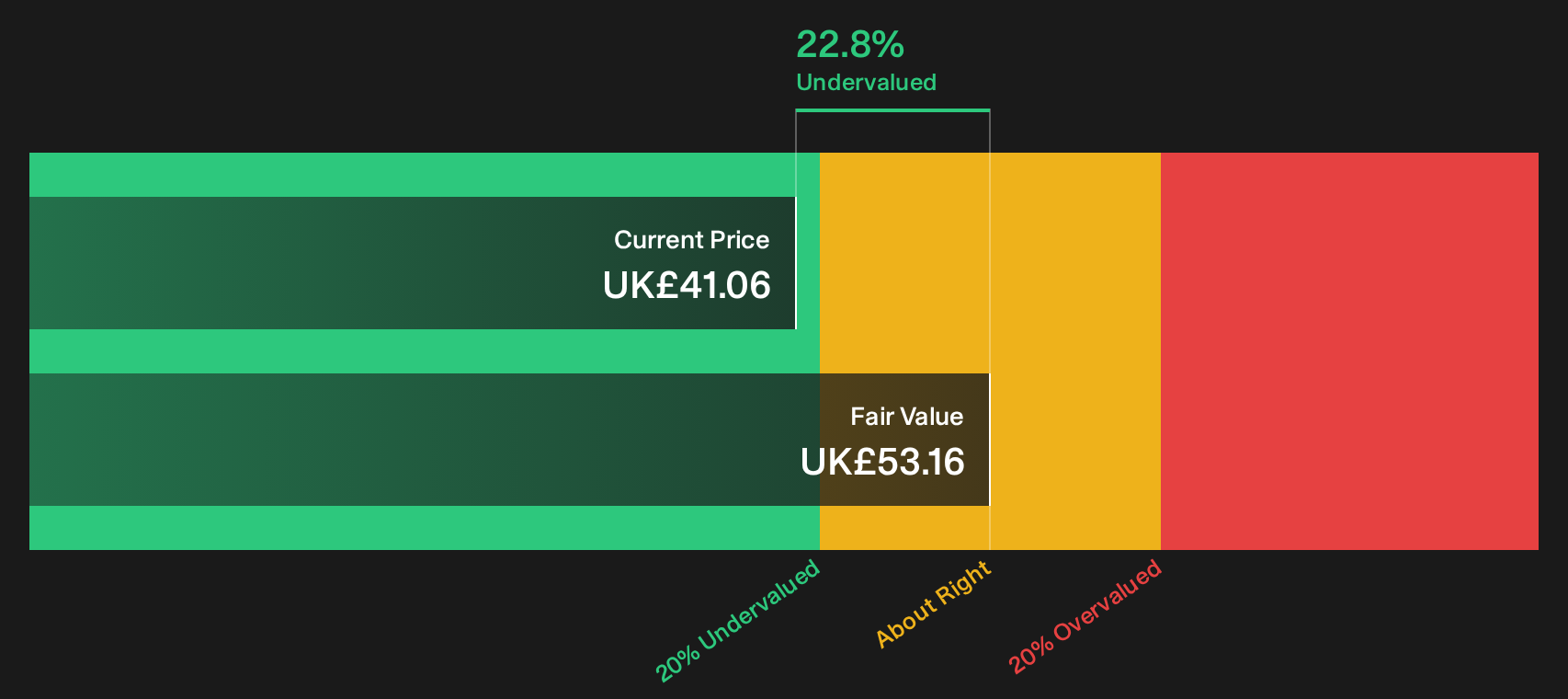
Morgan Sindall Group (LSE:MGNS)
Overview: Morgan Sindall Group is a UK construction and regeneration business, with Partnership Housing providing long-term social and mixed-tenure housing projects that support recurring cash flows.
Operations: The group generated about £1.9b from Fit Out, £921m from Infrastructure, and £845m from Partnership Housing, almost entirely in the UK.
Market Cap: £1.9b
Morgan Sindall Group matters for this cash flow focused screen because its housing partnerships and maintenance work are built around long-dated contracts that feed directly into discounted cash flow models.
"The Group's record-high, rapidly expanding secured order book (up 39% to £12bn) and strong pipeline in both Partnership Housing and Mixed Use suggest robust forward visibility. However, reliance on these large, long-duration projects also increases exposure to risks of regulatory delays, planning bottlenecks, and changes in government policy."
The real swing factor for Morgan Sindall Group is how one unseen pressure ultimately filters through to project economics and long-run margins.
That pressure point is exactly what makes the full narrative for Morgan Sindall Group so useful, because it pulls apart how those long contracts could either amplify returns or quietly cap them.
Premier Foods (LSE:PFD)
Overview: Premier Foods is a UK-based branded and own-label food producer. Its ambient grocery brands drive steady, supermarket-led cash generation.
Operations: Premier Foods generated about £860 million from Grocery and £315 million from Sweet Treats, with roughly £1.1b of sales in the United Kingdom.
Market Cap: £1.7b
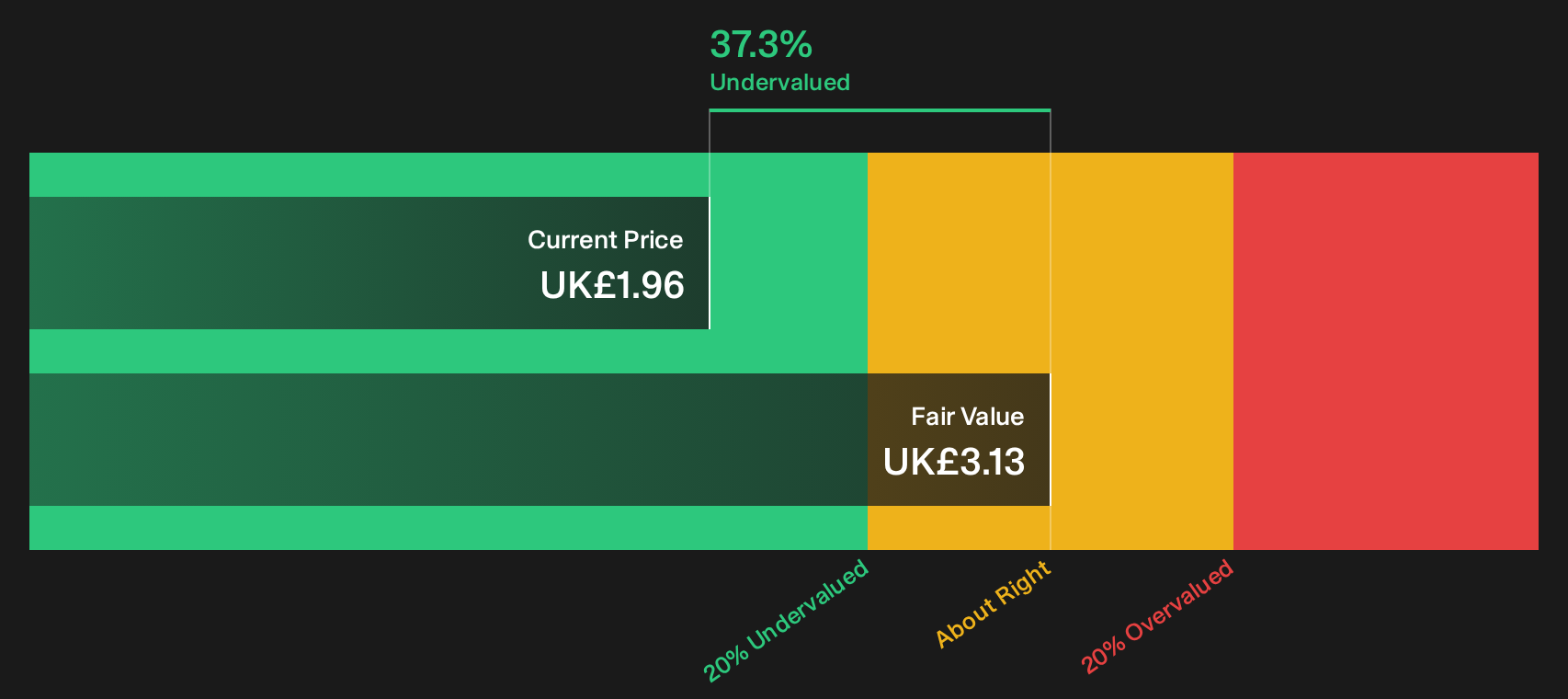
Premier Foods matters for a cash-flow-focused investor because its long-established cupboard staples keep moving through supermarket tills. This helps underpin a discounted cash flow view that points to a mismatch between branded earnings power and where the stock trades today.
"Increased infrastructure investment by 63% to £23 million is set to enhance efficiency and automation, with the expectation that it will improve margins and earnings through cost savings."
The real test for Premier Foods is whether one key assumption about future brand-led growth holds up strongly enough to support that cash flow story.
If that assumption is the real hinge, the full narrative for Premier Foods shows how Premier Foods’ brands, cash flows and risks could be decoupling from what the market currently prices.
Smith & Nephew (LSE:SN.)
Overview: Smith & Nephew develops medical devices for orthopaedics, sports medicine, ENT and advanced wound care that support repeat-use healthcare procedures.
Operations: Smith & Nephew generates about $2.5b from Orthopaedics, $2.0b from Sports Medicine & ENT, and $1.8b from Advanced Wound Management.
Market Cap: £8.7b
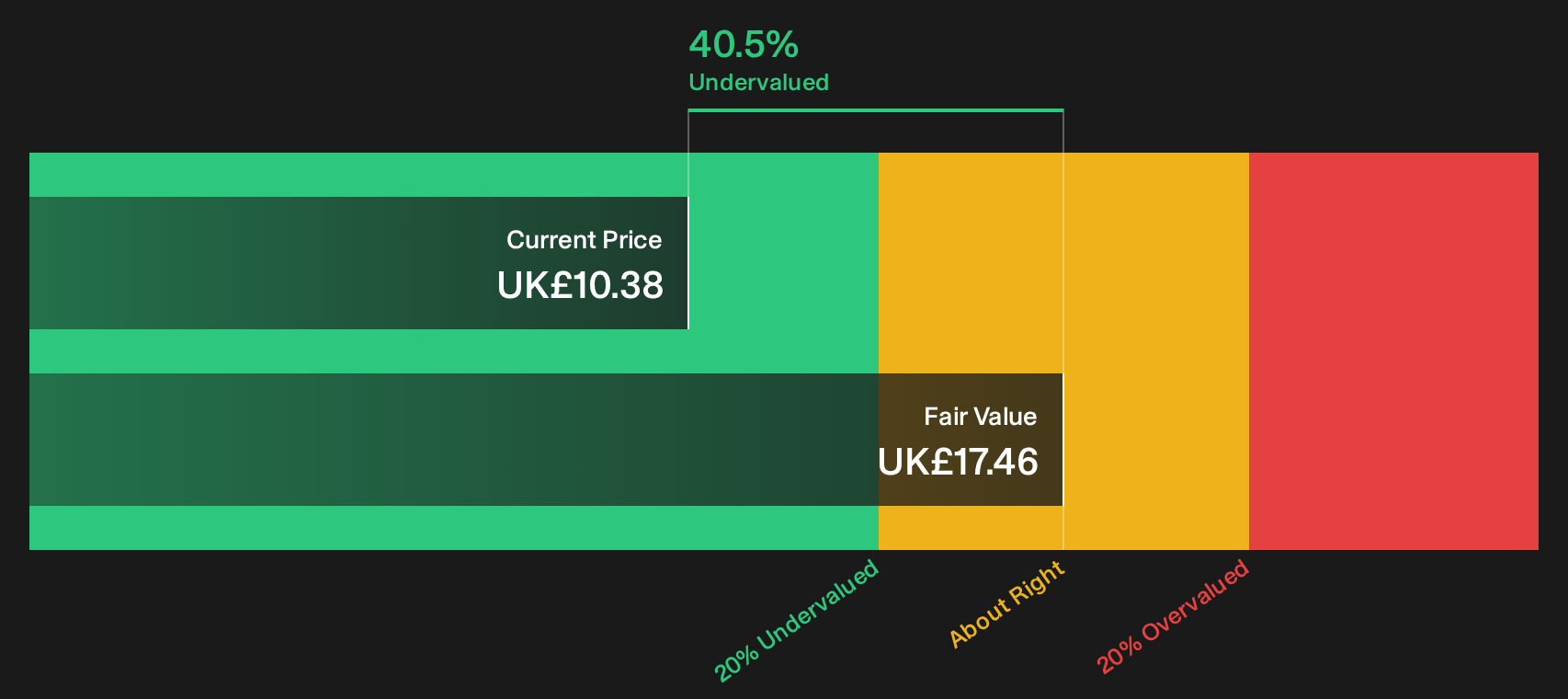
Smith & Nephew matters for this cash flow screen because its Advanced Wound Management products are used again and again in routine care, which can translate into recurring inflows that underpin discounted cash flow models.
"Acceleration in new product innovation, such as expanded robotic-assisted surgery (CORI, CORIOGRAPH), new implants (CATALYSTEM Hip, TRIGEN MAX Tibia Nailing), and significantly increased contributions from recent product launches (75% of H1 growth from products <5 years old), positions the company to capture greater market share and sustain higher long-term revenue growth as global demand for advanced orthopaedic and minimally invasive solutions rises."
The real question for Smith & Nephew is how one unresolved pressure on future pricing shapes the gap between projected cash flows and today’s valuation.
That pricing question is exactly where the full narrative for Smith & Nephew goes further, mapping how accelerating products, pricing pressure and cash flows could be quietly decoupling from today’s valuation.
Seeking Fresh Alternatives Before They Fly
Some of the most interesting ideas often move first. Breakout momentum, fresh stories and quiet cash generators can get caught quickly. Check these while it matters and get in early.
- Target rock-solid income streams by scanning a curated pool of higher yielding companies through the 1 dividend fortresses before the best yields start dropping.
- Spot future compounders early by filtering for financially resilient operators in the list of solid balance sheet and fundamentals (9 results) while they still sit under the radar for now.
- Ride the next leg of AI momentum by tracking cash generative enablers inside the 92 AI infrastructure stocks before capital floods in and reprices them.
This article by Simply Wall St is general in nature. We provide commentary based on historical data and analyst forecasts only using an unbiased methodology and our articles are not intended to be financial advice. It does not constitute a recommendation to buy or sell any stock, and does not take account of your objectives, or your financial situation. We aim to bring you long-term focused analysis driven by fundamental data. Note that our analysis may not factor in the latest price-sensitive company announcements or qualitative material. Simply Wall St has no position in any stocks mentioned.
Have feedback on this article? Concerned about the content? Get in touch with us directly. Alternatively, email editorial-team@simplywallst.com