
Evercore Just Upgraded This Blue-Chip Dividend Stock to Outperform
Procter & Gamble (PG) expects higher raw-material, energy, and transportation costs to reduce fiscal 2027 earnings by about $1 billion after tax. With organic sales flat for the fourth quarter of fiscal 2026, the company is entering the new fiscal year facing higher costs without much sales growth to offset them.
Still, Evercore ISI sees reason for optimism. As reported on Oct. 6, the firm recently upgraded PG stock from “In Line” to “Outperform" with a price target of $166 per share. Investors also have the dividend to consider. As a Dividend King, Procter & Gamble paid $10.2 billion in dividends during fiscal 2026, while its April 2026 increase marked 70-straight years of dividend growth.
The dividend record is strong, but can Procter & Gamble improve sales and profits enough to prove Evercore right? Let’s find out.
A Closer Look at P&G’s Financial Performance
Procter & Gamble sells household and personal-care products that shoppers regularly buy through brands like Tide, Pampers, and Gillette. Shares of PG stock are up less than 1% over the past 52 weeks and up 5% year-to-date (YTD).
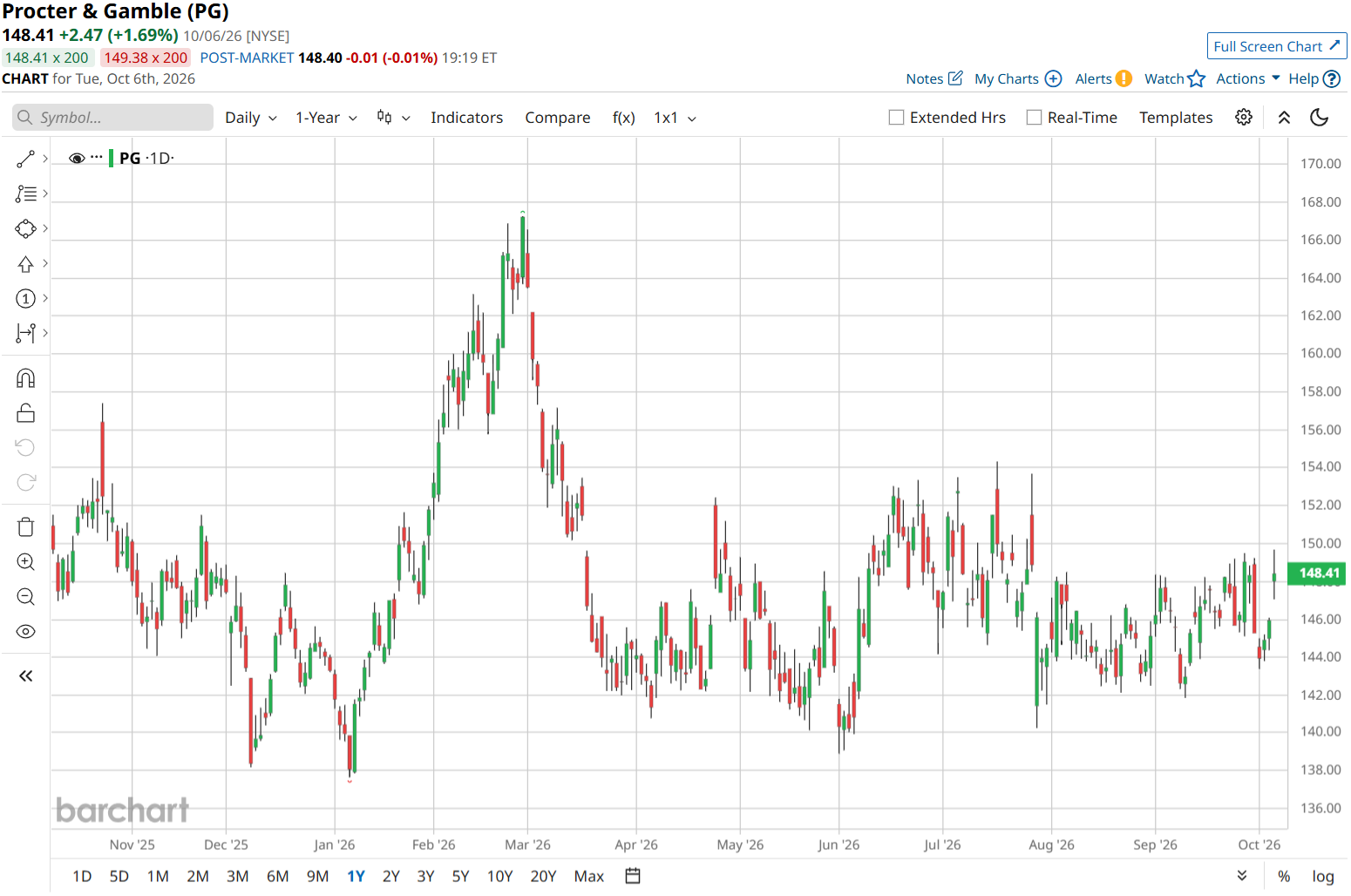
PG stock trades at 21.5 times forward earnings, which is above the sector median of about 14.5 times. So, that steady business comes at a higher price.
Investors also get an annual dividend of $4.29 per share, yielding 2.84%, which is above the consumer staples average yield. Procter & Gamble pays quarterly, with its latest payment of about $1.09 per share made to shareholders of record on July 24. The forward payout ratio of 59.45% also leaves some room for the company to keep paying dividends.
Still, the Q4 fiscal 2026 results reported on July 29 showed a business struggling to grow. Quarterly sales rose 2% year-over-year (YOY) to $21.2 billion, while organic sales and volumes stayed flat. Pricing and product mix added no growth, while the contribution from currency movements was limited. That means higher reported sales did not signal stronger demand.
Gross profit barely changed at $10.28 billion, but operating income fell 9% to $3.95 billion. Net earnings dropped 15% YOY to $3.08 billion, while earnings attributable to Procter & Gamble fell 16% to $3.04 billion. GAAP diluted EPS declined 15% YOY to $1.26, while non-GAAP diluted EPS fell 3% to $1.43, or 5% excluding currency effects. A higher effective tax rate of 21.7%, up from 19.8% in the year-ago period, also weighed on earnings.
Cash flow held up better than profits. Operating cash flow reached $5.1 billion, with adjusted free cash flow productivity of 133%, helping support dividends and share buybacks.
The Business Drivers Behind the Bullish Case
Procter & Gamble’s biggest growth opportunity is its recent agreement to buy Thorne from L Catterton for $3.8 billion in cash. The premium supplement maker brought in more than $500 million in revenue last year and is targeting revenue of $650 million in 2026. The deal would expand Procter & Gamble’s Personal Health Care business and give it a larger presence in wellness.
Thorne’s higher profit margins could lift Procter & Gamble’s profitability. Its customers are mostly health-conscious consumers under 40, giving the company more access to younger buyers. Procter & Gamble could also use its distribution network, retailer relationships, supply chain, and marketing to grow Thorne’s direct-to-consumer business. Shares of PG stock added to their gains after the announcement.
Meanwhile, Tide product upgrades and the waterless, fiber-based Tide Evo have attracted more consumers and reversed declines in laundry. Product campaigns in China and Germany have also reached more consumers and improved how shoppers view the brands. Procter & Gamble is spending more on better products in the U.S. and Europe rather than relying on price cuts to regain market share.
CEO Shailesh Jejurikar said global market share and consumer engagement improved in the year’s second half. However, spending on advertising and product development reduced margins.
Procter & Gamble expects closer retailer partnerships and online marketing to gradually improve organic sales. The company is also expanding its use of artificial intelligence (AI) in advertising and supply-chain management to make campaigns more effective, simplify processes, and improve efficiency.
Can P&G Deliver on Analyst Expectations?
Procter & Gamble will report earnings on Oct. 22 before the market opens. Analysts expect EPS of $1.89, down 5% YOY from $1.99 per share. For fiscal 2027, analysts forecast EPS of $6.98, a more than 1% rise from $6.89 in the year-ago period.
Evercore ISI analyst Robert Ottenstein sees signs of improvement. On Oct. 6, Ottenstein upgraded PG stock from “In Line” to “Outperform” and raised his price target from $161 to $166. The analyst cited better U.S. execution, steadier category sales volumes, and early progress from the company’s new structure. Ottenstein also said efforts to offer shoppers better value were working, with sales and U.S. market-share gains expected to continue.
Not everyone is as confident. TD Cowen analyst Robert Moskow recently kept a “Hold” rating and a $150 target on PG stock. He pointed to tighter household budgets and shoppers choosing cheaper products, weakening Procter & Gamble’s market-share trends in key categories and putting near-term sales growth at risk. Higher freight and raw-material costs could also squeeze profits and make growth efforts less rewarding.
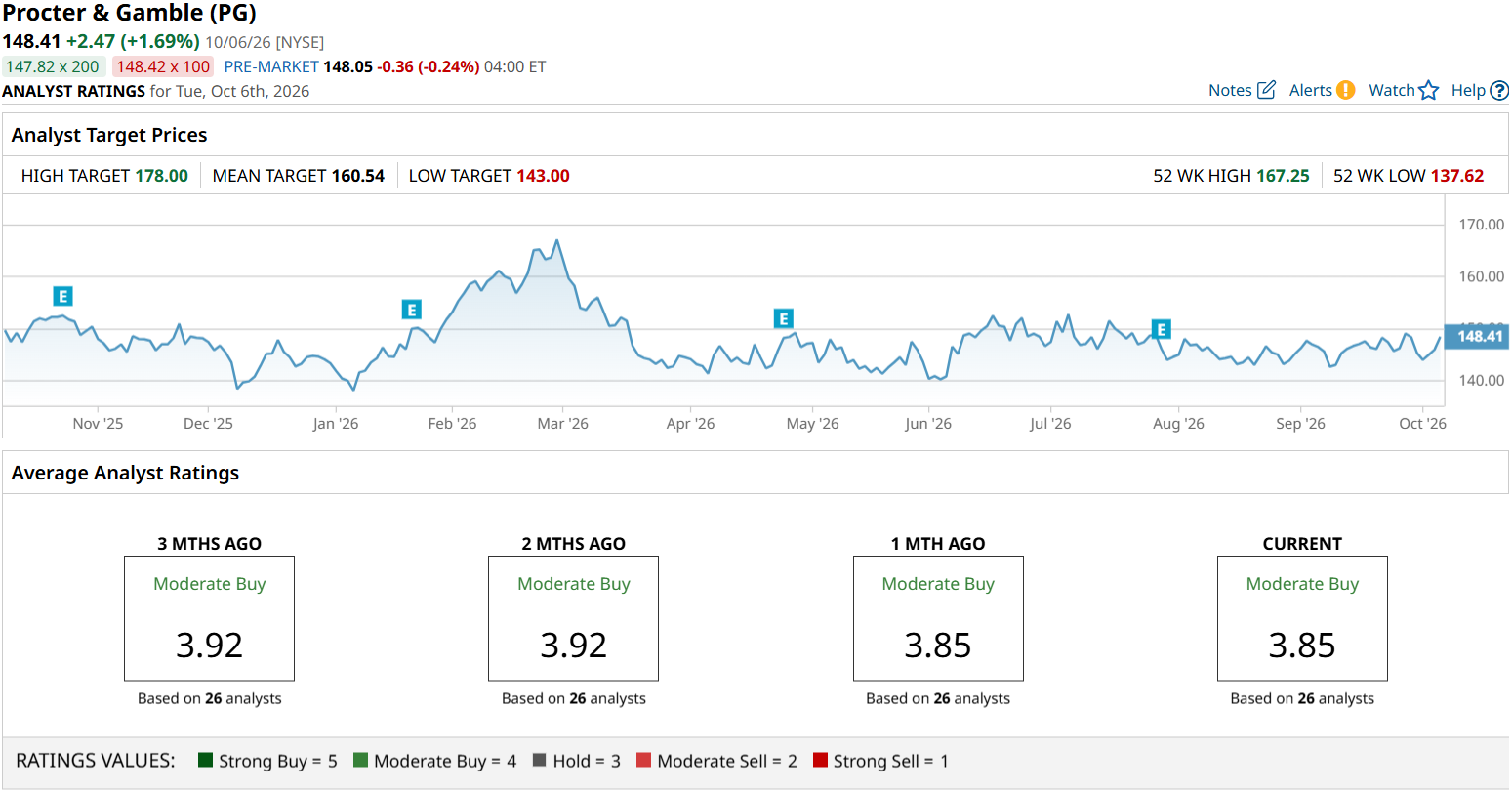
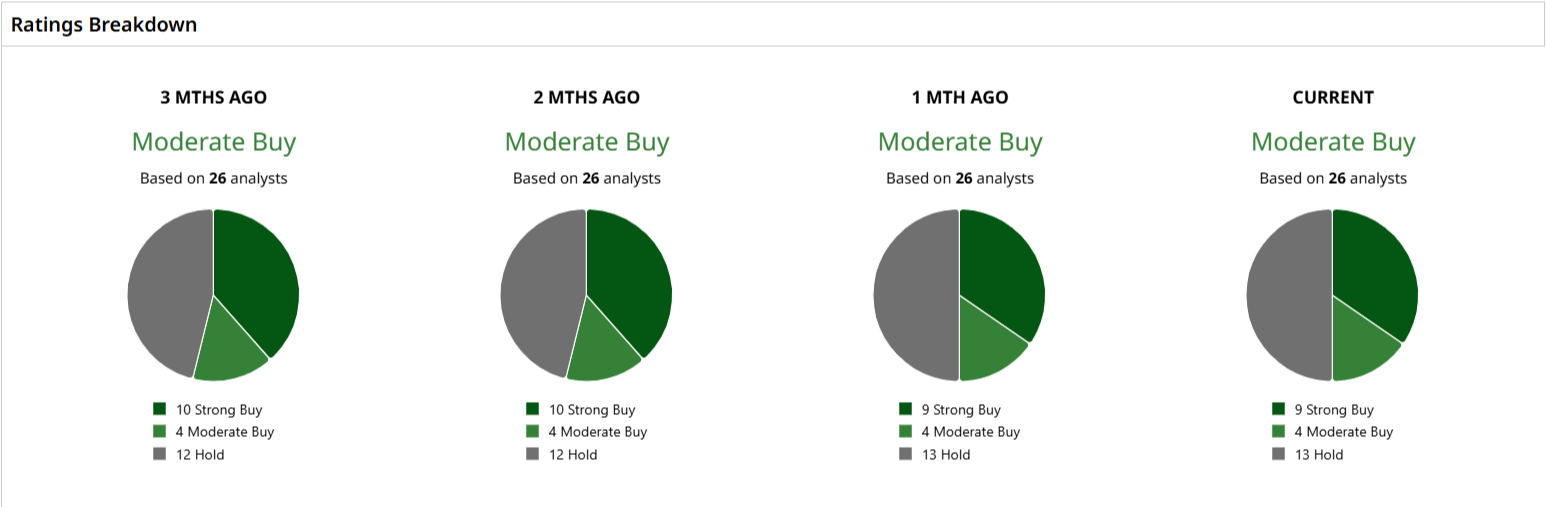
Overall, PG stock has a consensus “Moderate Buy” rating based on 26 analysts with coverage. The average price target of $161.21 per share suggests potential upside of about 7% from current levels.
Conclusion
Procter & Gamble has a credible path to justify Evercore ISI’s upgrade, but dividend dependability alone will not get it there. Better U.S. execution, innovation, and the planned Thorne acquisition support the growth case, while weak demand and rising costs remain obstacles. From here, I anticipate a gradual move higher rather than a sharp rally, provided the company's business improvements translate into stronger sales and earnings. The premium valuation leaves little room for setbacks. For income-focused investors, PG stock looks more like a steady dividend holding with some recovery potential than a bargain, and the next earnings report will help test that view.
On the date of publication, Ebube Jones did not have (either directly or indirectly) positions in any of the securities mentioned in this article. All information and data in this article is solely for informational purposes. For more information please view the Barchart Disclosure Policy here.