
How Investors May Respond To FormFactor Stock Moving Into The S&P 400
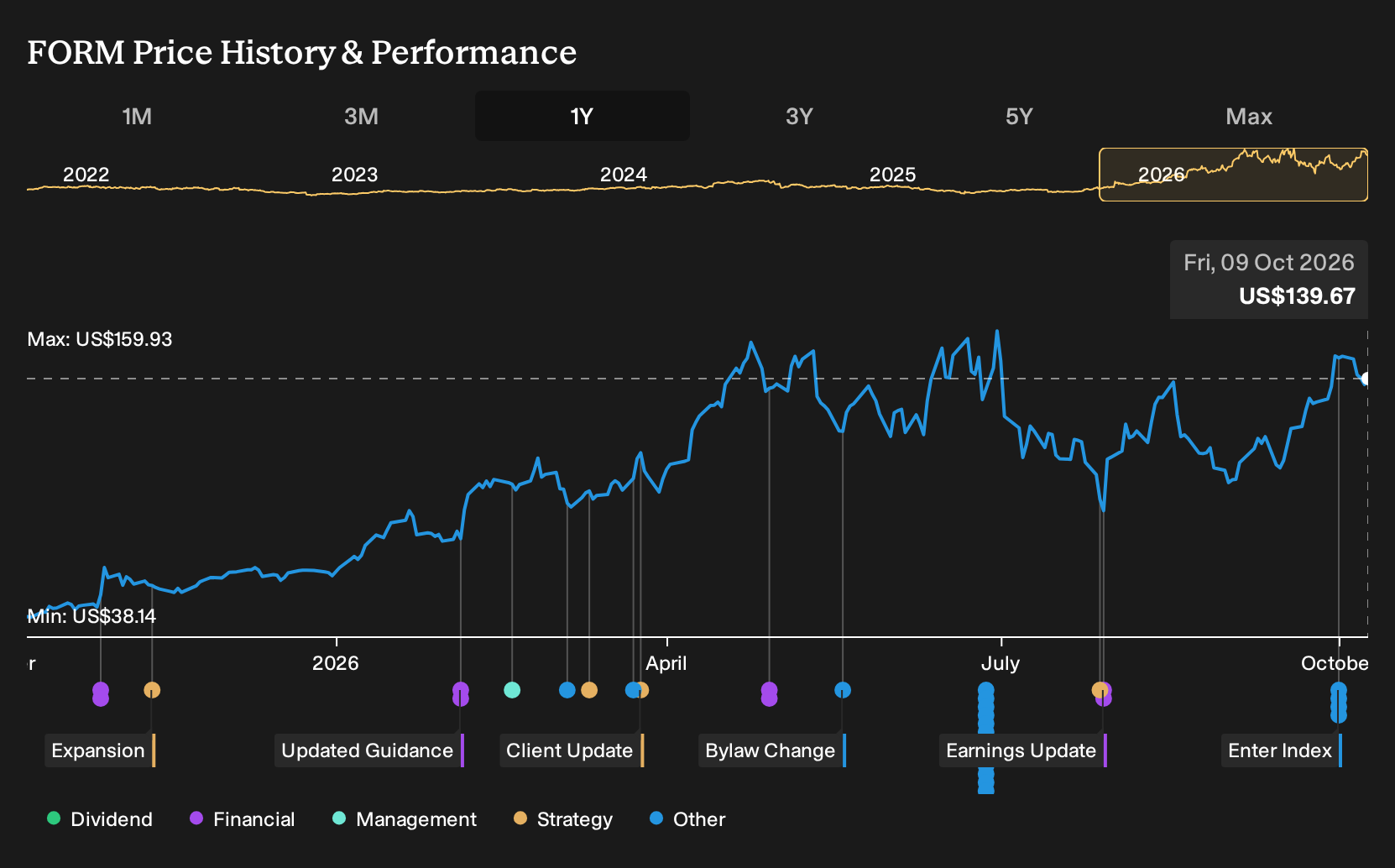
- On 1 October 2026, FormFactor was removed from the S&P SmallCap 600 and its IT sector subset and added to the S&P MidCap 400 and the S&P 400 Information Technology sector.
- This shift into a mid cap index universe highlights FormFactor's role in advanced semiconductor testing for AI and high performance chips, while leaving existing pressures from customer concentration, tariffs, and higher operating costs firmly in focus.
- We will now assess how FormFactor's move into the S&P 400 mid cap universe could reshape the company's broader investment narrative.
Scan how FormFactor's move into the mid cap AI hardware universe compares with hand picked peers by reviewing the 92 AI infrastructure stocks now shaping advanced chip and data center build outs.
FormFactor Investment Narrative Recap
To own FormFactor, you need to believe its exposure to AI, HBM DRAM and complex chip testing continues to drive demand for its probe cards and systems, while margin headwinds gradually ease. In the short term, the key factor remains execution on mix and cost control, as operating expenses and tariffs press against the goal of a 47% gross margin model.
The move into the S&P 400 does not materially change that near-term thesis. Customer concentration, DRAM and HBM cycle swings, and ramp costs at the Farmers Branch site still dominate the risk side. Index reclassification mainly affects who holds the stock, not how well the business converts demand into earnings.
The most relevant announcement here is the shift from the S&P 600 into the S&P 400 and its Information Technology sector subset. That step formally groups FormFactor with mid cap semiconductor and hardware peers that are tied to AI and data center infrastructure, which is where its probe card portfolio is already most exposed.
For you, the practical angle is about flows and scrutiny. Inclusion in the S&P 400 can pull in different index and active funds, potentially amplifying share price volatility around quarterly updates. Execution on AI-driven test demand, margin progression and the timing of benefits from the Texas facility still matter far more than the index label.
FormFactor Consensus Assumptions Behind The Mid Cap Story
FormFactor's narrative projects US$1.6b revenue and US$519.5m earnings by 2029. That lines up with analyst assumptions of 20.7% yearly revenue growth and an earnings increase of about US$404m from US$115.5m today.
Uncover why FormFactor's fair value indicates a 4% potential upside to its current price that could narrow quickly.
Exploring Other Perspectives
One alternate view puts capacity constraints at the center of the FormFactor story. The most cautious analysts already saw future revenue nearer to US$1.4b and earnings of about US$591.1m by 2029 before this index reshuffle. That cohort reads today’s valuation as demanding, which is why you see such a wide gap in opinions. This S&P 400 move could nudge those narratives in either direction, so treat it as a prompt to compare several forecasts, not a single “right” answer.
Explore 3 other FormFactor fair value estimates, including one that suggests it could be worth just $145.44.
Form Your Own Verdict
Disagree with existing narratives? Extraordinary investment returns rarely come from following the herd, so go with your instincts.
- A great starting point for your FormFactor research is our analysis highlighting 3 key rewards and 2 important warning signs that could impact your investment decision.
- See our latest analysis for FormFactor. The report includes a comprehensive fundamental analysis summarized in a single visual, the Snowflake, making it easy to evaluate FormFactor's overall financial health at a glance.
Looking for more investment ideas beyond FormFactor?
If you want to stress test the FormFactor thesis against fresh opportunities, cast the net wider with the Simply Wall St Screener and see how different balance sheets, cash flows and payout profiles line up with your own investing playbook.
- If capital preservation comes first for you, scan a set of 31 resilient stocks with low risk scores and compare how their volatility and fundamentals differ from more cyclical semiconductor exposure.
- If you want quality businesses at what might be undemanding prices, search through the 29 high quality undervalued stocks and weigh those profiles against FormFactor's current setup.
- If steady cash returns matter more than headline growth, line up income-focused holdings using the 8 dividend fortresses and see how their yields and payout histories stack up.
This article by Simply Wall St is general in nature. We provide commentary based on historical data and analyst forecasts only using an unbiased methodology and our articles are not intended to be financial advice. It does not constitute a recommendation to buy or sell any stock, and does not take account of your objectives, or your financial situation. We aim to bring you long-term focused analysis driven by fundamental data. Note that our analysis may not factor in the latest price-sensitive company announcements or qualitative material. Simply Wall St has no position in any stocks mentioned.
Have feedback on this article? Concerned about the content? Get in touch with us directly. Alternatively, email editorial-team@simplywallst.com