
Apple Cuts iPhone Orders Up to 20%. Its $2,000 Gamble May Already Be in Trouble.
The artificial intelligence boom has an expensive side effect: The components powering tomorrow’s technology are making today’s gadgets harder to afford. Reuters reports that demand from AI data centers is squeezing memory supplies and raising costs for smartphone and computer manufacturers. The same memory boom lifting chipmakers’ prospects creates a difficult choice for their customers: absorb the expense or pass it along.
For investors, that choice matters. Higher selling prices can support revenue, but they don’t automatically mean stronger profits. When shoppers postpone upgrades, a strategy built around charging more can start delivering less.
Apple (AAPL) may be approaching that limit just as its most expensive new iPhone prepares to launch.
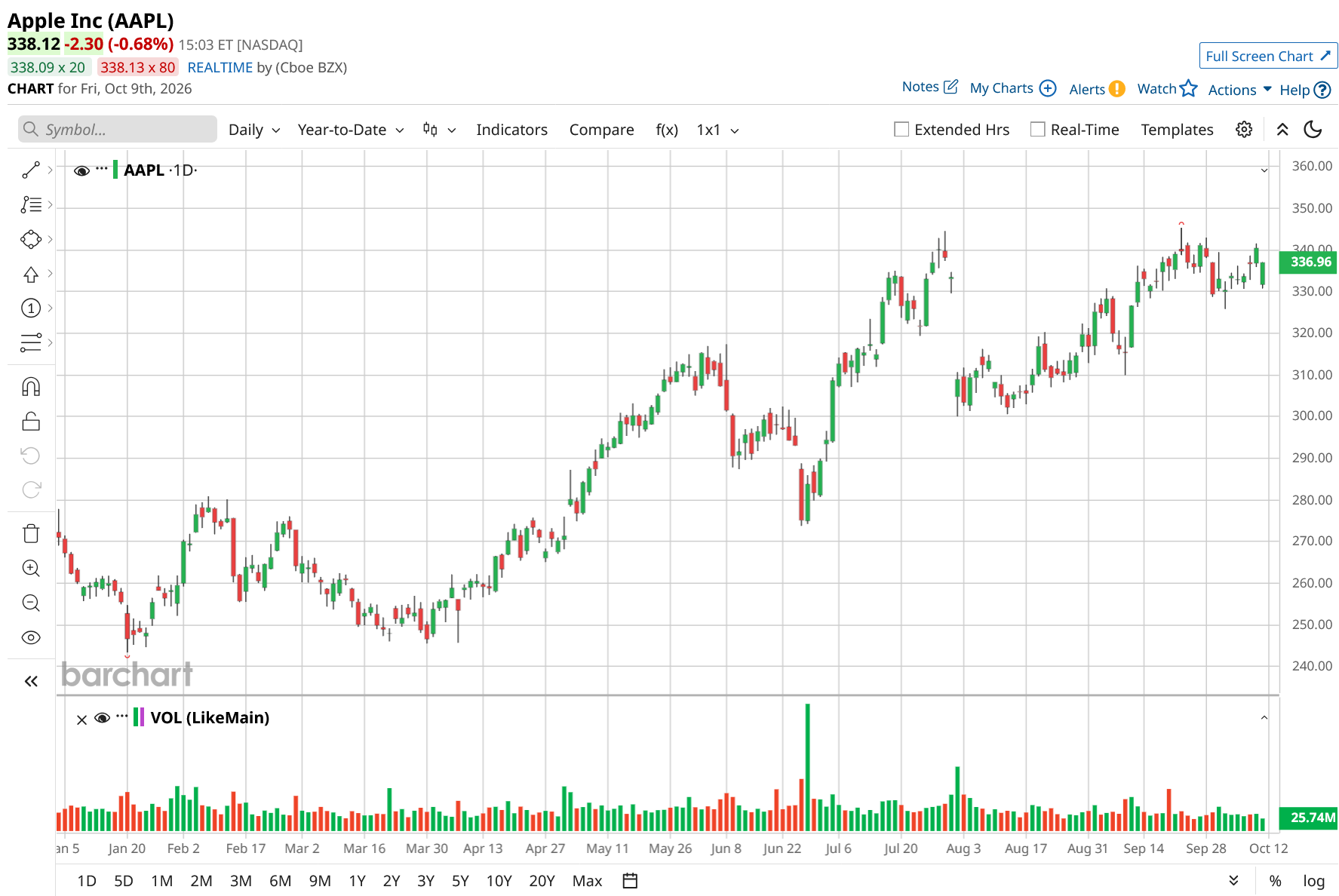
iPhone Order Cuts Flash a Warning
Nikkei Asia reports that Apple has reduced October component orders for the iPhone 18 Pro and Pro Max by 15% to 20% from initial plans. Its sources blame softer demand and higher prices. The reductions affect selected suppliers, with differing production schedules complicating the picture. November adjustments remain uncertain.
Here’s the point investors shouldn’t miss: These cuts concern the Pro models, not the $1,999 foldable iPhone Duo. Apple’s launch announcement puts the Duo’s availability at Oct. 23. Calling it a flop would be premature. Treating the cheaper models’ struggles as a warning is reasonable.
Apple lists starting prices of $1,199 for the Pro and $1,299 for the Pro Max. The Duo therefore asks buyers to spend another $700 over the Pro Max—approximately 54% more. That premium needs to purchase something customers genuinely value.
Higher Prices Have Their Limits
It's important to separate pricing power from pricing necessity. Reuters reports that both Pro models cost $100 more than their predecessors as memory expenses climb. Raising prices to cover rising costs doesn’t necessarily expand profitability. It can simply keep margins from shrinking—provided customers keep buying.
A 10% price increase combined with 15% fewer purchases produces 6.5% less revenue. While that isn’t an Apple forecast, and component orders aren’t consumer sales, it shows why higher prices alone cannot rescue an upgrade cycle.
Apple’s AI partnership with Alphabet's (GOOG) (GOOGL) Google offers another reason to upgrade. But software appeal still must translate into purchases. The Duo’s folding display adds the differentiation Apple needs; its $1,999 entry price adds friction.
Apple's Business Still Has Strength
Granted, Apple enters this launch with financial momentum. Its fiscal third-quarter earnings release reported revenue of $109.4 billion, up 16%, and earnings of $2.02 per share, up 29%.
Those results support the bullish case for Apple’s market leadership, but require context. Tariff refunds added $0.11 to quarterly earnings per share and approximately 2 percentage points to its 50.1% gross margin. Investors shouldn’t assume those benefits repeat.
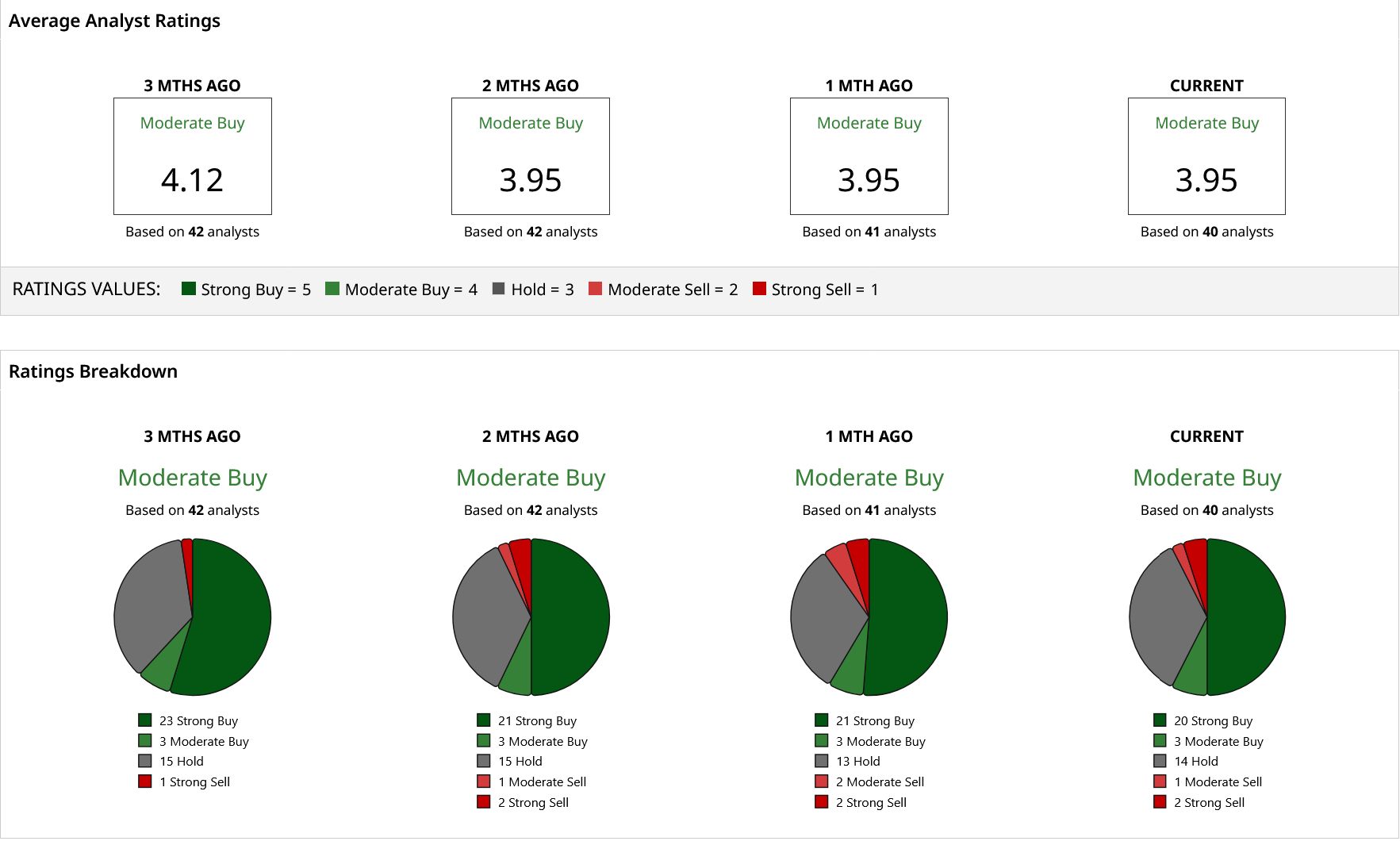
Wall Street remains bullish. Of the 40 analysts covering AAPL stock, half see it as a “Strong Buy,” while three stand at a “Moderate Buy.” With 14 analysts rating it a “Hold,” one a “Moderate Sell,” and two a “Strong Sell.” Taken together, AAPL holds a consensus “Moderate Buy” rating. Its mean price target of $331.58 has already been surpassed, but the high target of $400 leaves room for about 18% more growth.
Key Takeaway
Existing shareholders have reason to hold, but new investors should wait for evidence that holiday demand supports Apple’s premium pricing. Watch iPhone revenue, margins, and further order adjustments together. A $2,000 phone can succeed as a niche product, but it becomes a questionable investment thesis when shareholders assume it must become a mass-market hit.
On the date of publication, Rich Duprey did not have (either directly or indirectly) positions in any of the securities mentioned in this article. All information and data in this article is solely for informational purposes. For more information please view the Barchart Disclosure Policy here.