
Muse Is Nearing 2 Million Daily Users. How Investors Should View META Stock as a Result.
Winning users is one thing. Turning an AI app into a business that investors can value is another. Meta Platforms (META) is now facing that test with Muse, which attracted over 3 million downloads and close to 2 million daily users. That early interest gives investors something tangible to examine beyond the company’s AI ambitions.
Wall Street’s expectations are rising, but the revenue could take longer to follow. Bank of America does not expect meaningful income from Muse’s advertising, subscriptions, or commissions before 2028.
That gap leaves investors weighing promising adoption against a longer wait for financial results. Does Muse strengthen the case for buying META stock, or are expectations moving faster than the business? Let’s take a closer look.
What Muse’s User Growth Means for Meta
Headquartered in Menlo Park, California, Meta operates Facebook, Instagram, WhatsApp, Messenger, and Threads, with advertising providing its principal revenue stream. Valued at approximately $1,837.54 billion, the company is extending its business into AI assistants and wearable devices.
Muse is approaching 2 million daily active users, giving investors an encouraging sign of adoption. Bank of America (BofA) also reported rising usage for ChatGPT and Gemini, placing Muse’s momentum within a broader expansion in consumer AI adoption. However, those simultaneous gains do not establish that Muse is taking market share from either competitor.
The distinction between downloads and active users matters. Muse launched on Sept. 8 and attracted 2.8 million downloads across the U.S. and Canada in its first 12 days. Downloads show initial interest, while daily active users show actual usage. Neither figure alone establishes whether people keep returning.
Muse’s appeal rests on doing more than answering questions. Its capabilities include sending emails, booking travel, and completing transactions, activities that could make an AI assistant useful in everyday routines. Meta also brings substantial distribution with approximately 3.6 billion people using at least one of its apps daily, providing a large potential audience for the product.
Muse’s growth strengthens Meta’s AI story, but it is not a standalone reason to buy META stock. The app has yet to demonstrate a meaningful earnings contribution, leaving Meta’s core business, spending, and valuation central to the investment case. Strengthening that case will require Meta to retain users, convert engagement into revenue, and earn returns that justify the service’s development and operating expenses.
Meta’s Financial Strength
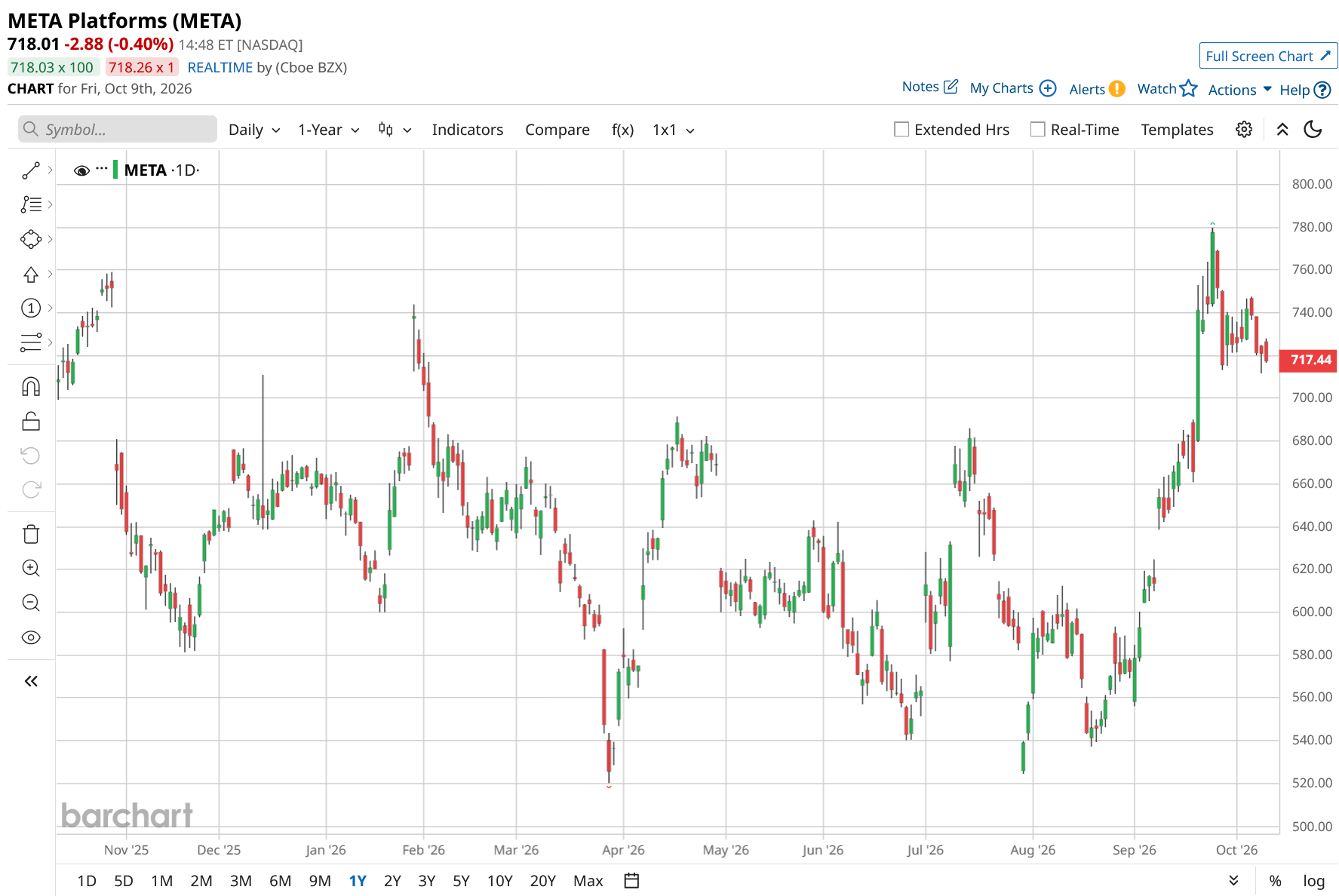
On Oct. 8, META shares closed at $720.89, posting a 9.21% gain year-to-date (YTD) and a modest 0.42% rise over the preceding 52 weeks.
Meta Platforms released second-quarter results on July 29, 2026, reporting revenue of $60.8 billion, up 28% year-over-year (YoY). This exceeded analyst expectations of $60.23 billion by approximately 1%.
Their advertising business generated $59.36 billion in Q2 2026, up approximately 27.5% from $46.563 billion a year earlier. That accounted for roughly 97.6% of Meta’s $60.8 billion total revenue.
META’s third-quarter revenue guidance still fell short of expectations, with a $62.5 billion midpoint versus the $63.08 billion consensus. Their adjusted EPS of $6.18 missed the $7.40 estimate by 16.5%. The earnings miss came alongside a decline in operating margin to 30.9% from 43% a year earlier.
It also reported a lower free cash flow margin of 1.3%, compared with 22% in the previous quarter. That financial pressure contrasted with audience growth as daily active people reached 3.6 billion, increasing by 120 million YoY.
Meanwhile, Muse Charm packages the assistant into a device with microphones, cameras, speakers, and a customizable character; shipments are expected in December. Commerce offers another growth route through Walmart (WMT), Best Buy (BBY), Wayfair (W), and Shopify (SHOP) integrations, with Meta targeting small fees on transactions.
Wall Street’s Expectations for Meta
Meta is scheduled to report its next earnings on Nov. 4, 2026. Wall Street currently forecasts third-quarter EPS of $6.39, representing an 11.86% decline from the $7.25 reported in the same period last year. That decline puts Muse’s growing audience in perspective, but strong adoption does not necessarily mean stronger earnings in the next report.
J.P. Morgan analyst Doug Anmuth makes that distinction clear. “Meta is not focused on the monetization of Muse in the near term,” he notes, pointing to its free tier. His optimism rests on what Muse could eventually become, with a total addressable market worth tens of trillions of dollars. Anmuth nonetheless maintained an “Overweight” rating and raised his META price target from $820 to $920.
Tigress Financial takes a similarly bullish view. Analyst Ivan Feinseth raised the firm’s target from $945 to $995 while retaining a “Strong Buy” rating. The firm described Muse’s launch as a paradigm shift that could turn Meta’s global network into a personal AI platform. Feinseth sees several new ways for Meta to monetize its AI investments.
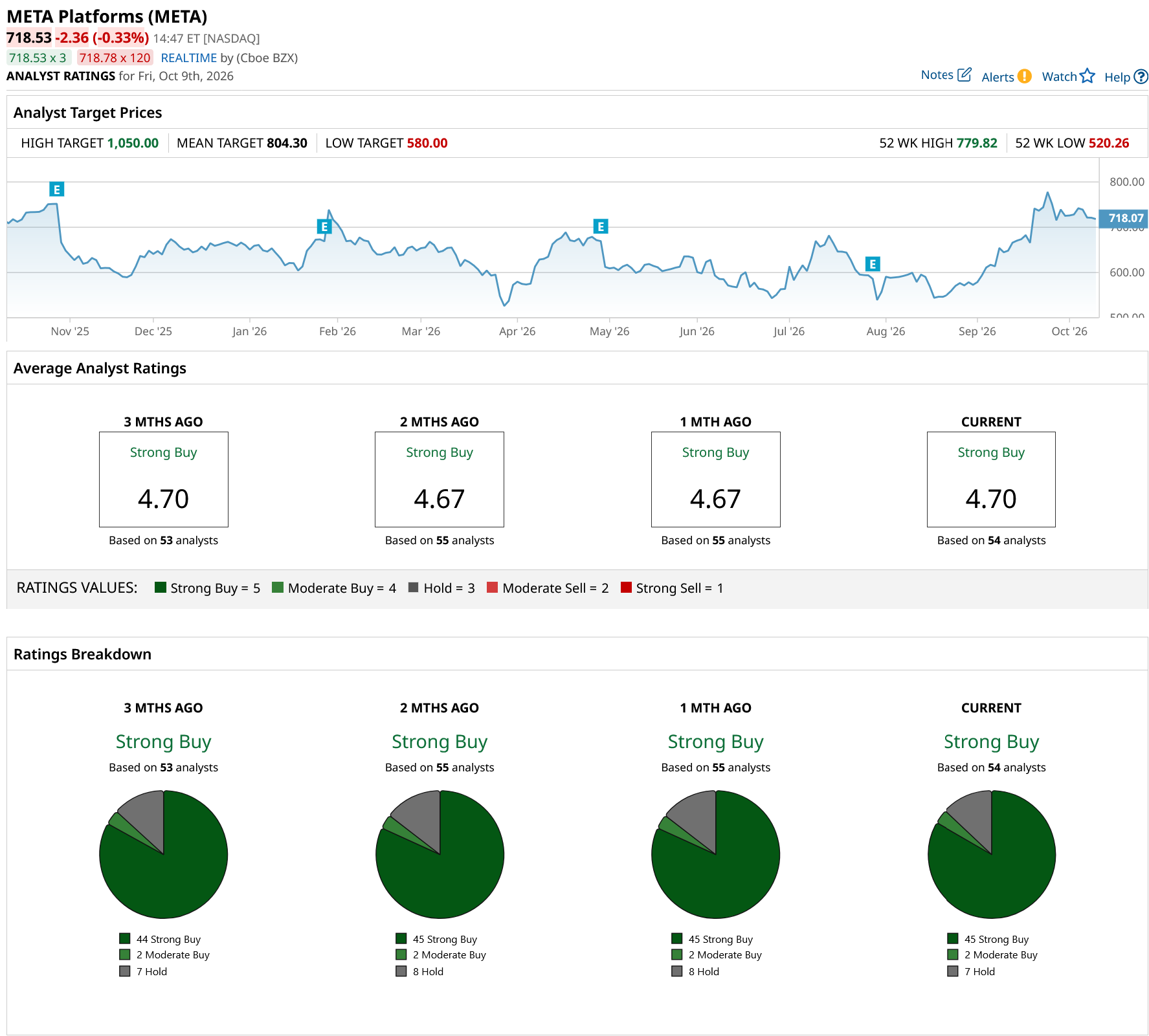
The broader analyst view is positive, though less aggressive than those two targets. Across the 54 analysts, META stock carries a consensus “Strong Buy” rating. Its $803.30 average target implies 11.43% upside from the Oct. 8 price.
Conclusion
META stock looks like a cautious buy, with Muse adding potential rather than an immediate earnings boost. Its growing audience is encouraging, but weaker margins and lower expected quarterly earnings deserve attention. Adoption is likely to move faster than monetization, making the advertising business more important to near-term returns. Investors should watch for repeat usage and transaction revenue before assigning Muse much added value.
On the date of publication, Ebube Jones did not have (either directly or indirectly) positions in any of the securities mentioned in this article. All information and data in this article is solely for informational purposes. For more information please view the Barchart Disclosure Policy here.