
Learn Why The Bull Case For Tyson Foods Stock Could Change Following Beef Loss Outlook
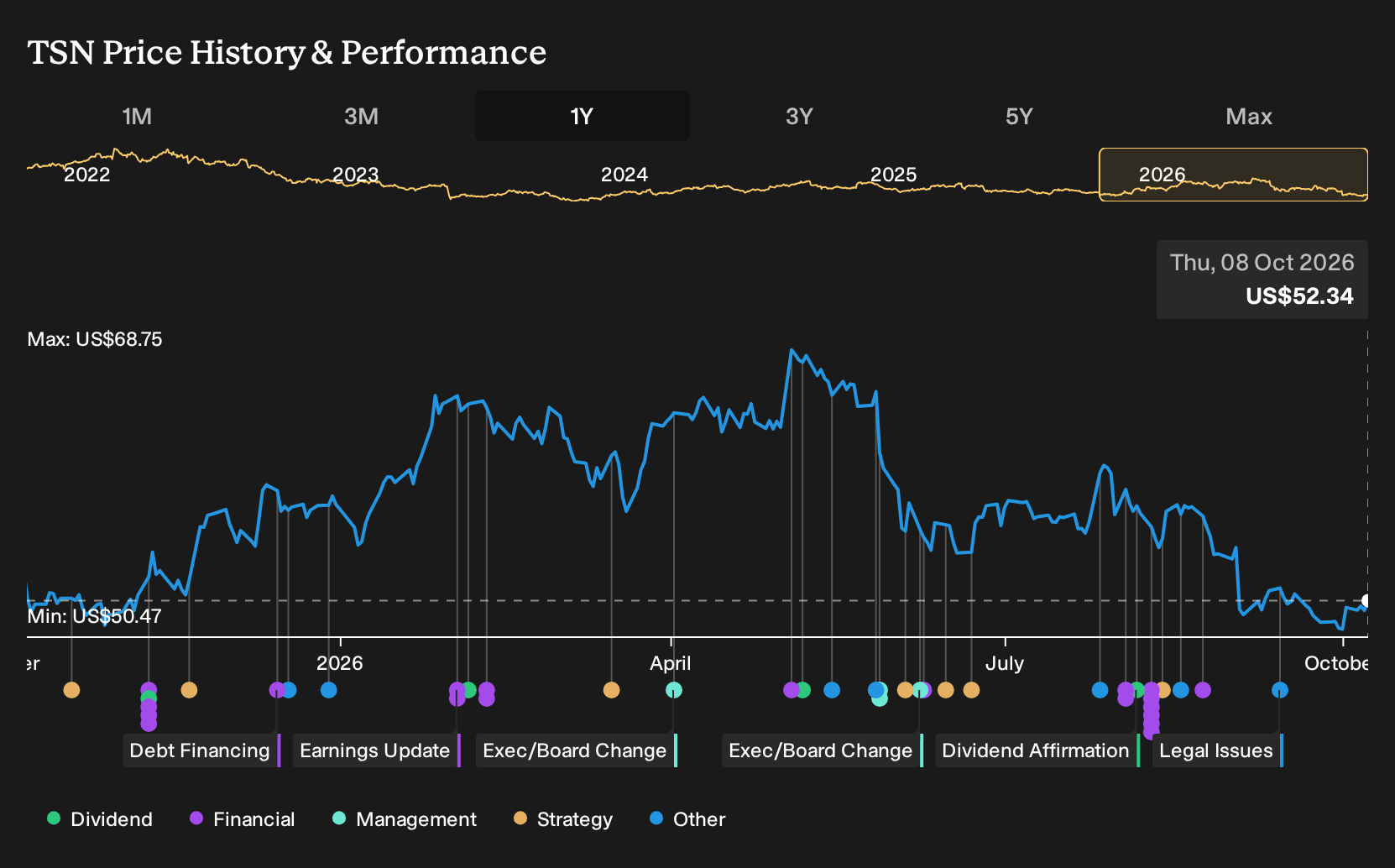
- Tyson Foods management recently projected a full year beef segment loss of $500 million to $650 million, linking the shortfall to elevated cattle costs, while other divisions such as chicken and prepared foods show comparatively stronger performance.
- The guidance highlights a growing split inside Tyson Foods between a pressured beef operation and higher margin prepared and value added products that rely heavily on brand strength and product mix.
- We will now look at how Tyson Foods' investment narrative could shift as beef losses reshape the balance between its protein segments.
Scan beyond Tyson Foods and compare this beef challenged story with other protein and food producers in our hand picked 27 high quality undervalued stocks list that combine quality with potential mispricing.
Tyson Foods Investment Narrative Recap
To own Tyson Foods, you need to believe the profit engine eventually tilts toward chicken and prepared foods while beef remains a drag but not a permanent anchor. The current guidance for a US$500 million to US$650 million beef loss keeps pressure on near term earnings, yet leaves the core branded prepared foods story intact.
The key short term catalyst is execution in higher margin prepared products, where volume and dollar share gains in brands like Tyson, Hillshire Farm, and Jimmy Dean matter more than ever. The biggest risk is that cattle supply constraints and elevated input costs linger longer than expected, extending beef losses and compressing group margins.
The management update that Tyson Foods expects a sizeable full year beef segment loss sits at the center of the story right now. That disclosure gives investors a clearer bracket around how much beef can weigh on consolidated profits, and it raises the bar for what chicken, pork, and prepared foods must deliver to offset that headwind.
This same guidance also shines a light on execution risk. Prepared and value added foods are gaining momentum through new products and mix, which can support net margins if Tyson holds pricing and controls costs. If those businesses stumble while beef remains under pressure, the current expectations for earnings growth and cash flow could prove too optimistic.
Tyson Foods' analyst narrative points to US$56.2b in revenue and US$2.5b in earnings by 2029, with earnings today at US$574.0m and analysts expecting an earnings increase of about US$1.9b to reach that forecast level, while revenue is assumed to remain fairly flat over the period.
Discover how Tyson Foods' fair value indicates a 23% potential upside to its current price that may not last much longer.
Exploring Other Perspectives
One optimistic twist in the Tyson Foods story comes from bullish analysts who focus on cost efficiency as the key catalyst. Before this beef loss update, the most upbeat forecasts were built around earnings reaching about US$3.0b on roughly US$59.6b of revenue by 2029. That is far more ambitious than the baseline view, and it shows how strongly opinions can differ. Treat this new guidance as a reason to revisit both narratives and decide which assumptions feel closer to how you see the business playing out.
Explore 3 other Tyson Foods fair value estimates, including one that suggests potential upside of as much as 248% from the current price.
Reach Your Own Conclusion
Disagree with existing narratives? Extraordinary investment returns rarely come from following the herd, so go with your instincts.
- A great starting point for your Tyson Foods research is our analysis highlighting 4 key rewards and 1 important warning sign that could impact your investment decision.
- See our latest analysis for Tyson Foods. The report includes a comprehensive fundamental analysis summarized in a single visual, the Snowflake, making it easy to evaluate Tyson Foods' overall financial health at a glance.
Looking For More Ideas Beyond Tyson Foods?
If the Tyson Foods story has you rethinking where you want to take protein and packaged food exposure, it can help to line it up against a broader watchlist. Use the Simply Wall St Screener to filter for other businesses that match your preferences on value, balance sheet strength, income potential, or risk profile.
- If you want to focus on quality at a potentially attractive entry point, start with a 27 high quality undervalued stocks that already score well on fundamentals.
- Income focused investors who care about consistency as much as yield can scan a curated group of 8 dividend fortresses that might suit a long term portfolio.
- For a steadier ride, concentrate on resilience first and price second by working through a 31 resilient stocks with low risk scores that screen well on financial health and volatility.
This article by Simply Wall St is general in nature. We provide commentary based on historical data and analyst forecasts only using an unbiased methodology and our articles are not intended to be financial advice. It does not constitute a recommendation to buy or sell any stock, and does not take account of your objectives, or your financial situation. We aim to bring you long-term focused analysis driven by fundamental data. Note that our analysis may not factor in the latest price-sensitive company announcements or qualitative material. Simply Wall St has no position in any stocks mentioned.
Have feedback on this article? Concerned about the content? Get in touch with us directly. Alternatively, email editorial-team@simplywallst.com