
How Investors May Respond To HF Sinclair (DINO) Mixed EPA Rulings
- HF Sinclair recently launched Innovate DTC25, a propylene glycol based direct to chip cooling fluid for data centers, while also receiving a mixed set of EPA small refinery exemption rulings that change how its Renewable Fuel Standard obligations are applied across refineries.
- The new data center coolant extends HF Sinclair’s reach in liquid cooling beyond immersion solutions, and the varied EPA decisions reshape its RIN cost profile and highlight how tightly the refining business is linked to US fuel regulation.
- This article will examine how HF Sinclair's investment narrative is affected by the mixed EPA exemptions and the new data center cooling initiative.
Scan for other refiner and infrastructure plays tied into the same data center and fuel regulation story by running the curated 43 power grid technology and infrastructure stocks alongside HF Sinclair on your watchlist.
HF Sinclair Investment Narrative Recap
To own HF Sinclair, you need to believe the refining cycle can stay solid enough for the business to turn current strength into steadier, lower capital intensity cash flows across midstream, renewables and Lubricants & Specialties. In the near term, the main swing factor still looks like execution on projects such as Go West and Western Gateway, not the latest headlines.
The biggest live risk remains policy and demand pressure on traditional fuels, especially Renewable Fuel Standard costs and long term gasoline and diesel volumes. The mixed EPA small refinery exemptions and the new data center coolant product adjust that picture at the margin, but do not rewrite the short term earnings story.
The Innovate DTC25 launch is the most relevant operational update. It nudges HF Sinclair a little further into specialty fluids tied to data centers, using existing chemical capabilities to serve direct to chip cooling rather than just immersion setups. That keeps the Lubricants & Specialties segment connected to higher specification end markets where reliability and performance matter more than volume alone.
For an investor watching catalysts, this coolant is a small but tangible example of HF Sinclair leaning into products that appear less exposed to long term declines in transport fuels. The key questions are scale and execution. If specialty fluids linked to computing and power infrastructure gain traction, they could modestly support the planned earnings mix shift that HF Sinclair is already pursuing with its spin off and midstream plans.
What The HF Sinclair Forecasts Assume
HF Sinclair's current analyst framework leans on a fairly flat revenue profile over the next few years while assuming that profit margins compress from 6.1% today to 4.1% by 2029. That setup leaves earnings moving from US$1.9b today to a consensus forecast of US$1.3b in 2029, which is a decline of US$0.6b rather than an earnings build.
Consensus thinking effectively prices in the idea that today’s refining strength is already in the rearview mirror and that future returns hinge more on mix and capital discipline than on top line expansion. With analysts expecting revenues of about US$30.4b and earnings of US$1.3b by 2029, the model bakes in lower profitability on broadly similar scale, which matters if you are comparing HF Sinclair with data center exposed peers that carry structurally higher margins.
The spread between analyst earnings views also tells you something about risk. The most optimistic forecast calls for US$1.6b of earnings in 2029 while the most cautious sits at US$1.1b. This implies a swing of roughly US$0.5b around the midpoint on the same rough revenue base. That range leaves plenty of room for EPA rulings, RIN prices and data center coolant adoption to push realised outcomes toward either end of the spectrum.
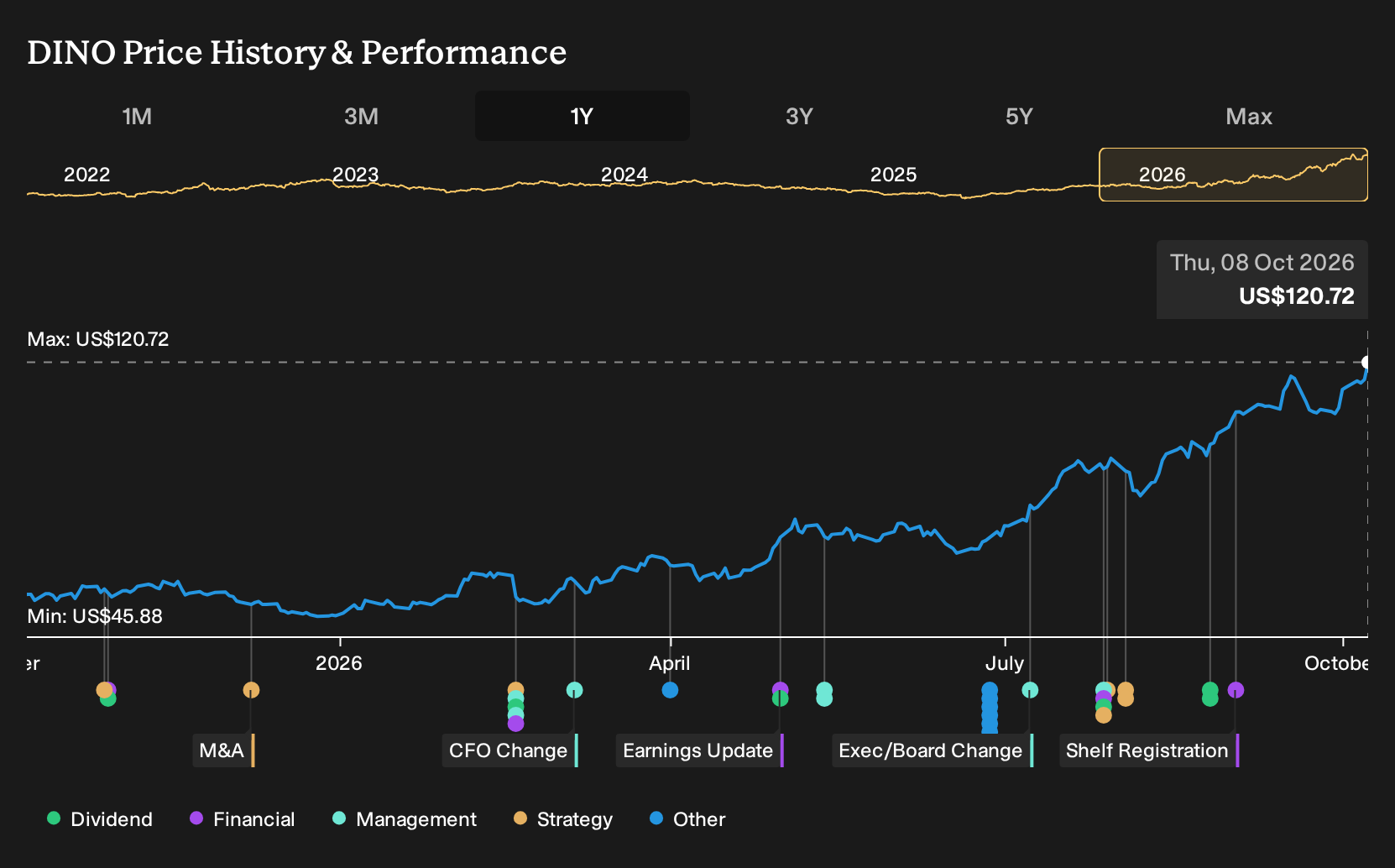
On these numbers, the analyst price target of US$102.33 is anchored on HF Sinclair trading on a 16.1x P/E on 2029 earnings, compared with about 10.6x today and an industry multiple cited at 12.3x. Anyone using this framework is assuming that by 2029 the market is willing to pay a richer multiple for a lower earnings base, with the difference justified by a cleaner balance of midstream, renewables and specialty cash flows that feel less dependent on pure refining spreads.
HF Sinclair's narrative projects US$30.4b revenue and US$1.3b earnings by 2029. This is built on analysts expecting fairly flat yearly revenue growth and an earnings decline of US$0.6b from US$1.9b today.
Uncover why HF Sinclair's fair value indicates a 15% potential downside to its current price, which leaves little room for error.
Exploring Other Perspectives
The key swing factor in the alternate view is fuel demand risk. Bearish analysts saw HF Sinclair’s revenue dropping toward about US$26.8b and earnings sliding to roughly US$1.1b by 2029, even before this coolant launch and the mixed EPA rulings. You can treat that as a stress test and compare it with your own read on how these updates might shift the story.
Explore 4 other HF Sinclair fair value estimates, including one that suggests as much as 30% downside from the current price.
Reach Your Own Conclusion
Disagree with existing narratives? Extraordinary investment returns rarely come from following the herd, so go with your instincts.
- A great starting point for your HF Sinclair research is our analysis highlighting 2 key rewards and 2 important warning signs that could impact your investment decision.
- See our latest analysis for HF Sinclair. The report includes a comprehensive fundamental analysis summarized in a single visual, the Snowflake, making it easy to evaluate HF Sinclair's overall financial health at a glance.
Looking For More Investment Ideas Beyond HF Sinclair?
If the HF Sinclair story has you thinking about where refinery exposure, data center demand and balance sheet strength intersect, it can be useful to line it up against other candidates using the Simply Wall St Screener.
- For investors who want potential mispricing with support from fundamentals, scan a curated set of quality opportunities through the 27 high quality undervalued stocks.
- If capital preservation and stability matter most to you, focus on businesses with stronger financial footing by starting with the list of solid balance sheet and fundamentals (25 results).
- When you prefer to limit downside swings and sleep a bit easier during volatile periods, filter for steadier profiles by reviewing the 31 resilient stocks with low risk scores.
This article by Simply Wall St is general in nature. We provide commentary based on historical data and analyst forecasts only using an unbiased methodology and our articles are not intended to be financial advice. It does not constitute a recommendation to buy or sell any stock, and does not take account of your objectives, or your financial situation. We aim to bring you long-term focused analysis driven by fundamental data. Note that our analysis may not factor in the latest price-sensitive company announcements or qualitative material. Simply Wall St has no position in any stocks mentioned.
Have feedback on this article? Concerned about the content? Get in touch with us directly. Alternatively, email editorial-team@simplywallst.com