
3 U.S. Bank Stocks Retail Investors Are Watching for Higher Rate Earnings
Rates look set to stay higher for longer, Fed officials keep talking tough on inflation, and that puts U.S. banks and life insurers right in the spotlight. Higher yields can reshape what these firms earn on every dollar they lend or invest, which can reward or punish shareholders in very different ways. This article examines that dynamic and highlights 3 stocks exposed to this rate narrative that may warrant closer attention.
The three stocks below are just a sample, and the full screen surfaced 34 more U.S. banks and life insurers with equally compelling rate stories that are not covered here. To go straight to the broader opportunity set, identify and analyze your own higher-conviction ideas with the U.S. Rate-Sensitive Financials (Banks & Life Insurers) screener.
Horizon Bancorp (HBNC)
Overview: Horizon Bancorp is a Midwest community bank that focuses on commercial and retail lending and deposit services across Indiana and Michigan.
Operations: The group currently reports a decline in commercial banking revenue of about $12 million, entirely generated within the United States.
Market Cap: US$990 million
For investors focused on rate sensitive financials, Horizon Bancorp offers an example of how a regional lender can respond to a higher yield backdrop through its lending mix and balance sheet choices.
"Horizon Bancorp is still reallocating its balance sheet toward higher yielding commercial and industrial lending, with commercial balances rising and C&I loans reaching about 31% of the commercial portfolio in Q2 2026."
From here, an important factor is how one unresolved pressure on funding costs shapes the bank’s ability to sustain those higher margins.
That funding squeeze is the real hinge for Horizon Bancorp’s story, and the full narrative for Horizon Bancorp shows how that pressure could either stall or accelerate earnings power.

National Bank Holdings (NBHC)
Overview: National Bank Holdings runs NBH Bank, offering deposits, loans, and treasury services to commercial, business, and consumer clients across several U.S. regions.
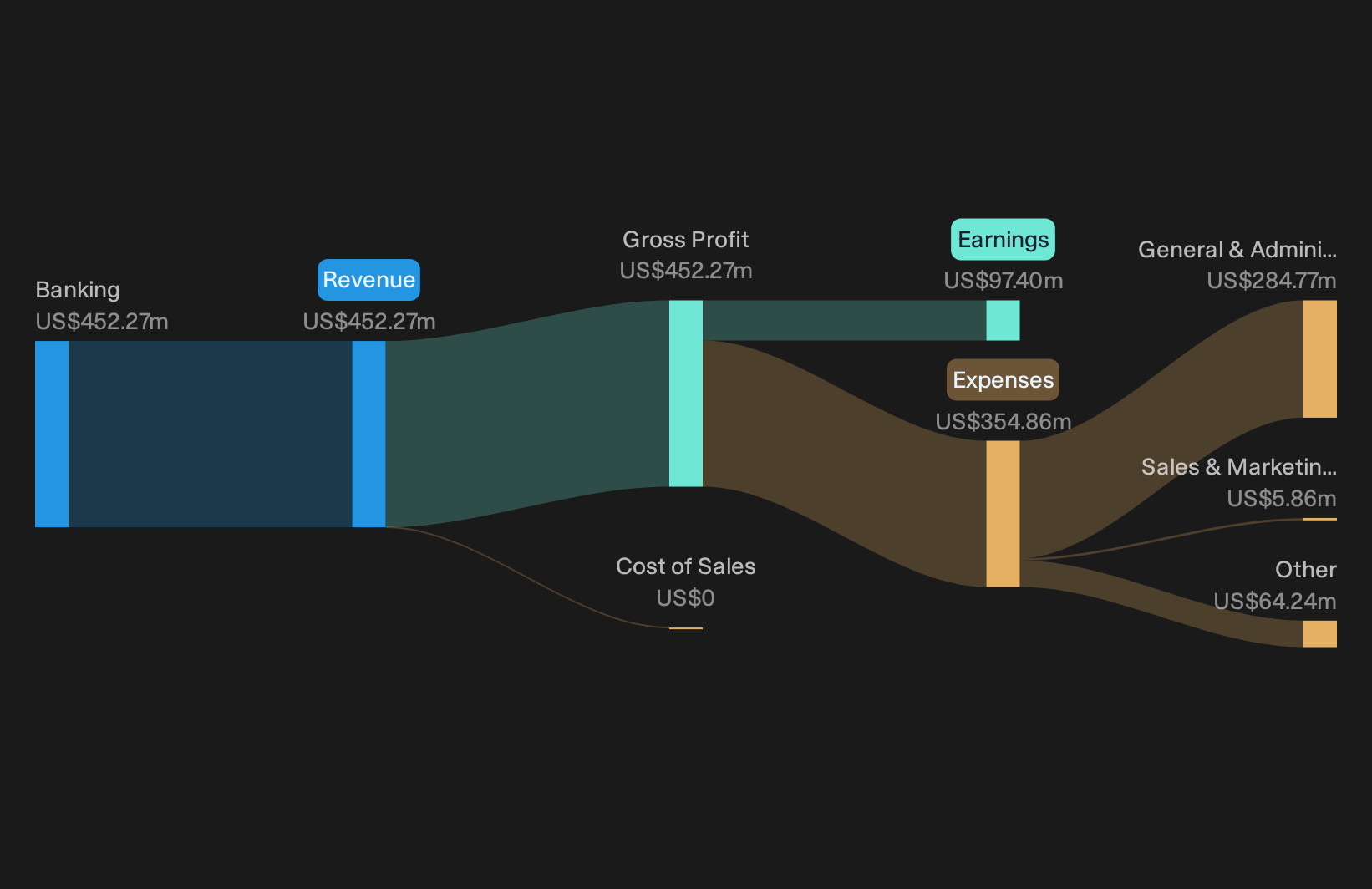
Operations: National Bank Holdings generates about US$452 million of banking revenue entirely from within the United States, reflecting its focused domestic footprint.
Market Cap: US$1.68 billion
National Bank Holdings fits the rate sensitive bank theme because its lending spreads, deposit mix, and earnings profile are tightly linked to where the Fed holds policy rates.
"The 2UniFi small business platform is still in the investment phase, with expenses of about US$20 million to US$22 million in 2026 and guided revenue of US$2 million to US$4 million. Any improvement in credit conversion or monetisation could lift National Bank Holdings noninterest income and narrow the drag on earnings."
It is worth watching closely what happens when a single efficiency swing tips the balance between steady dividend income and pressure on net interest margins.
That pivot point is exactly what the full narrative for National Bank Holdings unpacks, showing where today’s spending could be masking a more resilient earnings engine.
First Hawaiian (FHB)
Overview: First Hawaiian operates First Hawaiian Bank, providing consumer and commercial banking, lending, and wealth services across branch, online, and mobile channels.
Operations: First Hawaiian generates about US$632.8 million from Retail Banking and US$249 million from Commercial Banking, with a small Corporate and Other loss.
Market Cap: US$3 billion
For a rate sensitive screen that favors larger, relatively lower risk financials, First Hawaiian offers a clear example of how a broad deposit base and lending book can tie earnings closely to where the Fed holds policy rates.
"The all stock acquisition of TriCo Bancshares, which is expected to close near the end of 2026, is planned to create a combined First Hawaiian platform with about US$34b of assets, US$29b of deposits and 117 branches. Execution risk around the TriCo Bancshares acquisition, including integration of systems, retention of key TriCo leaders and delivery of the targeted 25% cost savings with no branch closures, could undermine the expected 6% earnings per share accretion and high teens internal rate of return."
What happens to First Hawaiian margins and earnings power ultimately hinges on how one quiet funding and cost pressure resolves over time.
That quiet funding and cost pressure is exactly what the full narrative for First Hawaiian examines, revealing how integration risk could be masking a much stronger earnings trajectory.

Seeking Alternatives Before Momentum Flies
Fresh opportunities can move from quiet to breakout before most investors react. Use that window while it still matters, while prices stay under the radar for now, and consider acting during that period.
- Consider resilient income plays built for staying power by reviewing the curated 8 dividend fortresses before yields change and the strongest payouts are more fully reflected in prices.
- Track real-world infrastructure behind AI momentum by scanning the focused 91 AI infrastructure stocks while these backbone providers remain less widely followed.
- Explore potential future power trends by reviewing the hand picked 16 nuclear energy infrastructure stocks before momentum builds and these grid and reactor suppliers attract broader attention.
This article by Simply Wall St is general in nature. We provide commentary based on historical data and analyst forecasts only using an unbiased methodology and our articles are not intended to be financial advice. It does not constitute a recommendation to buy or sell any stock, and does not take account of your objectives, or your financial situation. We aim to bring you long-term focused analysis driven by fundamental data. Note that our analysis may not factor in the latest price-sensitive company announcements or qualitative material. Simply Wall St has no position in any stocks mentioned.
Have feedback on this article? Concerned about the content? Get in touch with us directly. Alternatively, email editorial-team@simplywallst.com