
We're Interested To See How Kontigo Care (FRA:3KT) Uses Its Cash Hoard To Grow
Even when a business is losing money, it's possible for shareholders to make money if they buy a good business at the right price. For example, although Amazon.com made losses for many years after listing, if you had bought and held the shares since 1999, you would have made a fortune. But while history lauds those rare successes, those that fail are often forgotten; who remembers Pets.com?
Given this risk, we thought we'd take a look at whether Kontigo Care (FRA:3KT) shareholders should be worried about its cash burn. For the purpose of this article, we'll define cash burn as the amount of cash the company is spending each year to fund its growth (also called its negative free cash flow). Let's start with an examination of the business' cash, relative to its cash burn.
How Long Is Kontigo Care's Cash Runway?
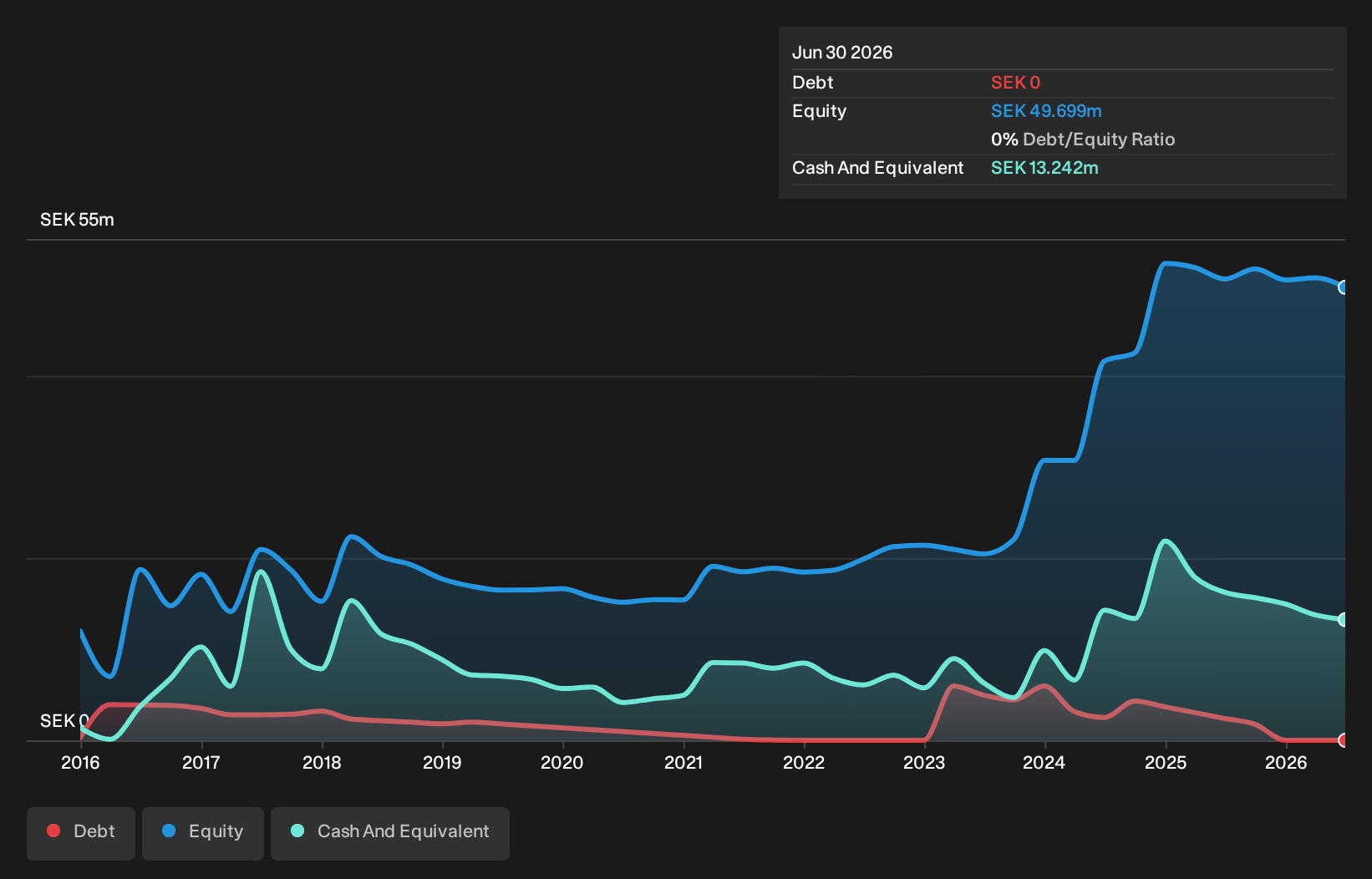
A company's cash runway is the amount of time it would take to burn through its cash reserves at its current cash burn rate. As at June 2026, Kontigo Care had cash of kr13m and no debt. Importantly, its cash burn was kr602k over the trailing twelve months. So it had a very long cash runway of many years from June 2026. Even though this is but one measure of the company's cash burn, the thought of such a long cash runway warms our bellies in a comforting way. You can see how its cash balance has changed over time in the image below.
Check out our latest analysis for Kontigo Care
How Well Is Kontigo Care Growing?
Kontigo Care managed to reduce its cash burn by 89% over the last twelve months, which is extremely promising, when it comes to considering its need for cash. Mundanely, though, operating revenue growth was flat. We think it is growing rather well, upon reflection. In reality, this article only makes a short study of the company's growth data. This graph of historic earnings and revenue shows how Kontigo Care is building its business over time.
How Hard Would It Be For Kontigo Care To Raise More Cash For Growth?
There's no doubt Kontigo Care seems to be in a fairly good position, when it comes to managing its cash burn, but even if it's only hypothetical, it's always worth asking how easily it could raise more money to fund growth. Issuing new shares, or taking on debt, are the most common ways for a listed company to raise more money for its business. Many companies end up issuing new shares to fund future growth. We can compare a company's cash burn to its market capitalisation to get a sense for how many new shares a company would have to issue to fund one year's operations.
Kontigo Care has a market capitalisation of kr500m and burnt through kr602k last year, which is 0.1% of the company's market value. That means it could easily issue a few shares to fund more growth, and might well be in a position to borrow cheaply.
How Risky Is Kontigo Care's Cash Burn Situation?
It may already be apparent to you that we're relatively comfortable with the way Kontigo Care is burning through its cash. For example, we think its cash burn reduction suggests that the company is on a good path. On this analysis its revenue growth was its weakest feature, but we are not concerned about it. After considering a range of factors in this article, we're pretty relaxed about its cash burn, since the company seems to be in a good position to continue to fund its growth. Separately, we looked at different risks affecting the company and spotted 4 warning signs for Kontigo Care (of which 2 are significant!) you should know about.
Of course, you might find a fantastic investment by looking elsewhere. So take a peek at this free list of companies with significant insider holdings, and this list of stocks growth stocks (according to analyst forecasts)
Have feedback on this article? Concerned about the content? Get in touch with us directly. Alternatively, email editorial-team (at) simplywallst.com.
This article by Simply Wall St is general in nature. We provide commentary based on historical data and analyst forecasts only using an unbiased methodology and our articles are not intended to be financial advice. It does not constitute a recommendation to buy or sell any stock, and does not take account of your objectives, or your financial situation. We aim to bring you long-term focused analysis driven by fundamental data. Note that our analysis may not factor in the latest price-sensitive company announcements or qualitative material. Simply Wall St has no position in any stocks mentioned.